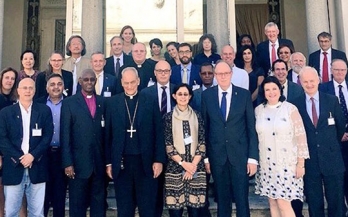
Final statement of the workshop on food safety and healthy diets
This declaration is based on the presentations and findings of a meeting of global experts on food safety and nutrition convened by the Pontifical Academy of Sciences with support from the Global Alliance for Improved Nutrition (GAIN) held at the Vatican, 12-13 September 2018.
More milk, please?
Dairy consumption is a much debated topic among nutritionists. The World Health Organisation (WHO) recommends reducing saturated fats to less than 10 percent of total energy intake and reducing trans-fats to less than 1 percent of total energy intake. A study published this month in the leading medical journal The Lancet casts doubt on the epidemiological evidence base for discouraging dairy consumption.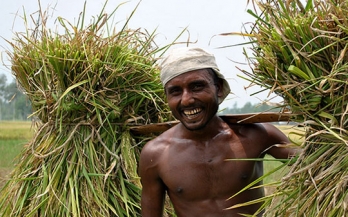
Elevator pitch contest for aflatoxin control winners revealed
The Global Alliance for Improved Nutrition (GAIN) has announced the winners of the Elevator Pitch Contest, which called for innovative ideas to remove aflatoxins from our food system. Kumwe Harvest and Future Food Now were chosen from six finalists who pitched their ideas to a panel of experts and potential investors at the 19th World Congress of Food Science and Technology (IUFoST) in Mumbai, India.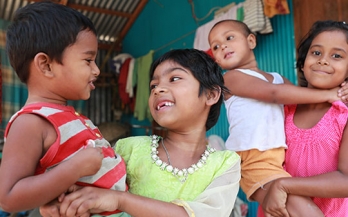
GAIN part of winning bid for new five-year USAID Advancing Nutrition programme
GAIN is part of the consortium led by JSI Research & Training Institute, Inc. (JSI) selected by USAID to improve nutrition for women and children in low- and middle-income countries around the globe. The five-year programme will bring together international and local organisations from various sectors and different disciplines to design, implement, and evaluate activities that combat malnutrition.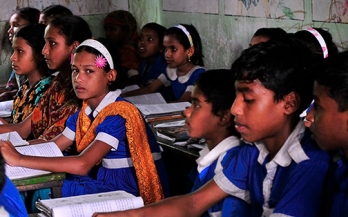
Best reads in 2018 from the GAIN staff
We at GAIN like to think of ourselves as a learning organisation and I invited our staff to tell us about the standout thing from 2018 that they were reading that had meaning for their work, and to tell us why they chose it. Twenty-five of them responded and here are their contributions. Like our staff the selections embrace diversity. Enjoy, and keep being curious!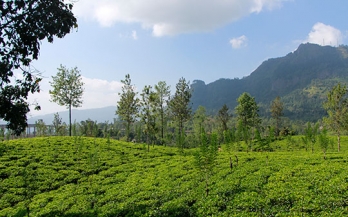
Increasing tea productivity through improved nutrition: a call to action
- 01/01/2013
This concept brief advocates for addressing nutrition security of tea farmers to break the vicious cycle of under-nourished coffee families over generations. The successful integration of interventions in tea certification training programs could lead to a more diversified and nutritious local diet, resulting in healthier and more productive tea farmers.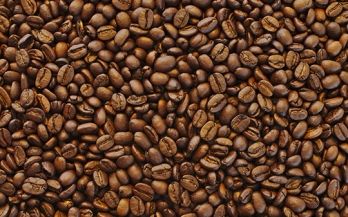
Increasing coffee productivity through improved nutrition: a call to action
- 01/01/2013
This concept brief advocates for addressing nutrition security of coffee farmers to break the vicious cycle of under-nourished coffee families over generations. The successful integration of interventions in tea certification training programs could lead to a more diversified and nutritious local diet, resulting in healthier and more productive coffee farmers.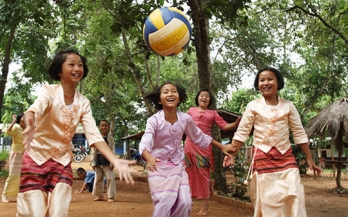
Accelerating progress against malnutrition at Rio 2016
The Olympic Games in Rio de Janeiro provided a platform for raising the issues of malnutrition and hunger. Here are some of the highlights.