The event is intended for youth from all around the globe to participate and engage in efforts and movements around food security under a changing climate. The event also aims to create awareness of the Pledge initiative - a youth-led promise galvanising action to defeat hunger, improve health and heal the planet.
The World Benchmark Alliance has today announced the results of its 2021 Food and Agriculture Benchmarks, which evaluates the performance of 350 keystone companies – those with a disproportionate impact on the global food system – on key environmental, nutritional and social inclusion topics.
USAID, through Feed the Future, and the Eleanor Crook Foundation (ECF) have announced their intention to support the establishment of the Nutritious Foods Financing Facility (N3F), a first of its kind investment fund that will bolster these critical SMEs and promote well-nourished communities in Sub-Saharan Africa.
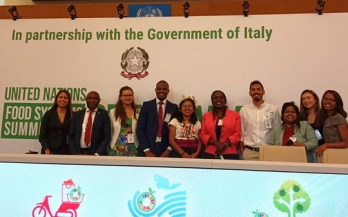
This is a side event to the United Nations Food Systems Summit (taking place on September 23, 2021). This session will feature some of the co-authors of a forthcoming call for a rigorous, science-based monitoring framework to track food systems and their transformation.
Submission to the UN Food Systems Summit (UN FSS) Commitment Registry – Global Alliance for Improved Nutrition (GAIN). The United Nations Food Systems Summit (UN FSS), taking place on September 23, 2021, marks a key milestone on the journey towards food systems transformation to achieve the Sustainable Development Goals by 2030.
UPDATE: Since publication the number has now risen to 100,000. Alarm bells are ringing – set by 70,000 young people and allies around the world, distressed by the state of current food systems, which are letting the planet, current, and future generations down.
Today, 42 companies have pledged a promising USD 345 million to contribute to ending global hunger as part of a new initiative led by key international organizations. The Zero Hunger Private Sector Pledge is a game-changing solution emerging from the UN Food Systems Summit (UNFSS) Action Tracks.
This webinar will i) provide an overview of the global and country status of adolescent nutrition; ii) reflect on learnings from a programmatic experience to deliver a nutrition intervention as part of a comprehensive set of offerings to address the particular needs of this group.
This webinar place five priority areas of food safety in front of regional thought leaders to move us toward Actions for Food Safety Transformation. Regional leaders will share their insights on these priorities and the realities on the ground for making them happen considering, politics, financing, scalability, inclusivity and gaps in capacity and infrastructure.
After a year of planning, the UN Food Systems Summit is just days away. A catalyst for an extraordinary outpouring of energy and creativity over these past 12 months - hundreds of thousands of people from governments, civil society, business, and development agencies have participated in the preparations.