Market Assessment Tools for Traditional Markets
- 25/07/2024
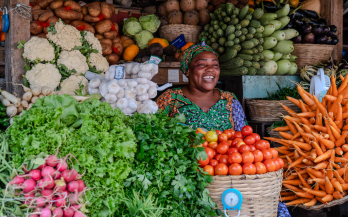
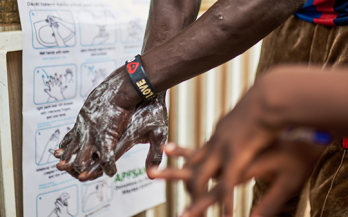
The purpose of this assessment tool is to gather data from vendors, consumers, and key stakeholders in traditional markets to identify food safety challenges and perceptions. This information helps design effective behaviour change interventions to enhance food safety practices. The tool includes methods for comprehensive data collection through interviews, observations, and discussions.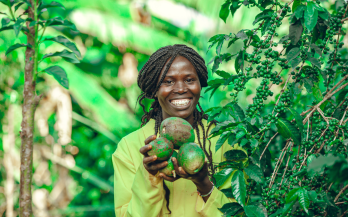
The Case for Investment in Nutritious Foods Value Chains: An Opportunity for Gender Impact
- 23/07/2024
This report demonstrates that investing in nutritious food value chains allows investors to achieve significant gender impact. The hope is that more funding will be unlocked for nutritious food value chains, particularly for small and medium enterprises (SMEs), which critically lack access to financing in emerging markets.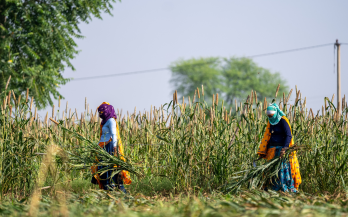
Navigating Climate Change: Impacts on Health and Nutrition
- 22/07/2024
Environmental factors impact human health and nutrition through various pathways, and these impacts can be felt disproportionately by already vulnerable groups like women and children.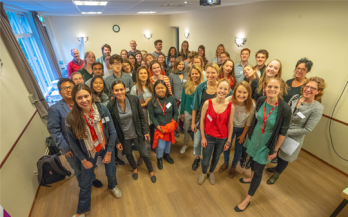
GAIN Student Challenge 2024
- Arnhem, Netherlands , Global
With this Student Challenge, GAIN aims to engage students from diverse backgrounds raising awareness of our work on food, nutrition and food systems. Through expert sessions, we will deepen the students’ understanding of food systems and the global nutrition situation including the link to climate. The students will get insights into the challenges faced when trying to improve international food systems and nutrition. Coaching will be provided on interdisciplinary teamwork and on how to pitch their solutions to a professional jury.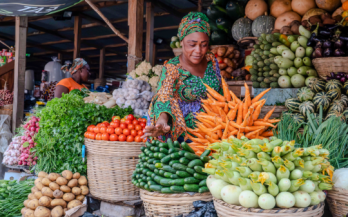
Reaching Lower-Income Consumers with Nutritious Foods: Bespoke Last-mile Distribution Networks
Final distribution to the consumer is a key challenge in addressing affordability for lower-income consumers, particularly in rural and remote areas or crowded lower-income urban neighbourhoods. One way to address this, particularly in places where there are few existing retail outlets, is through creation of a bespoke last-mile distribution (LMD) network. Creating such a network involves recruiting and training distribution/sales agents; equipping them for the job; and providing them with appropriate pay, incentives, and supervision. The agents can be employees, contactors, or micro-franchisees and can sell on foot, bike, using a pushcart or adapted motorcycle, from their homes, or through stalls.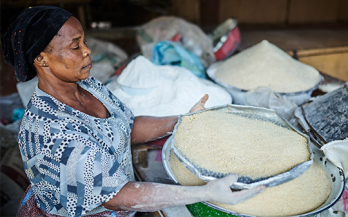
Fortifying Nations: Forging New Alliances for Food Fortification
Global
In this webinar, we will learn from the experience of advocacy coalitions in Bangladesh, Nigeria, and Ethiopia. Representatives from these efforts will discuss how they have pursued joint action on fortification in their countries, what they have learned from this work, and plans for the future, including plans to utilise the World Health Assembly resolution on food fortification and the global N4G Summit to strengthen national efforts through contributing to significant global moments. The workshop will be a great opportunity to discuss the theory and practice of advocacy for food fortification and strategies to accelerate progress in the coming years.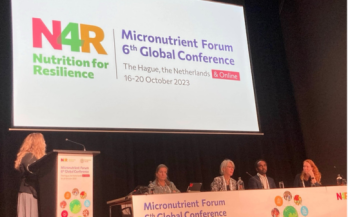
GAIN Convening Paper 9: Multi-Sectoral Governance - Learning from the Dutch National and International Experience
- 20/06/2024
A symposium on local Dutch and international experiences of multisectoral food security and nutrition initiatives was held at the Micronutrient Forum 6th Global Conference, on 16 October 2023 in The Hague (The Netherlands). Three case studies - one each from Ghana, Ethiopia, and The Netherlands - were presented.
World MSME Day 2024
- Global
World Micro, Small, and Medium Enterprises (MSME) Day is celebrated on June 27th every year. Founded by the United Nations General Assembly to raise awareness of the tremendous contributions of enterprises to the achievement of the United Nations Sustainable Development Goals (SDGs).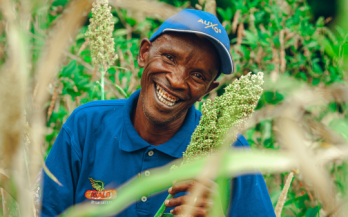
GAIN Working Paper n°41: A Review of the Aggregation Models Used in the Commercialisation of Biofortified Crops Programme
- 20/06/2024
Biofortification (also known as nutrient enrichment) of staple crops, is a cost-effective and sustainable agricultural technology that enhances the quantity, bioavailability and bioaccessibility of micronutrients, with the aim of reducing micronutrient deficiencies. From 2019-2022, GAIN and HarvestPlus coordinated the Commercialisation of Biofortified Crops (CBC) Programme, which sought to scale up the production and consumption of biofortified foods (i.e., wheat, maize, cassava, rice, pearl millet, and beans) through commercial pathways in six countries in Africa and Asia. The programme used a variety of strategic scaling pathways to ensure commercialisation (e.g., increased production and availability of surplus for sale in markets), where aggregation was a key step. The objectives of this paper are to: (1) document the types of aggregation models employed by the CBC programme and their challenges, and (2) make recommendations for improving biofortified crop value chains to better achieve commercialisation. The insights in this paper are based on a desk review of CBC programme documents and semi-structured interviews with programme implementers.