- 25/03/2026
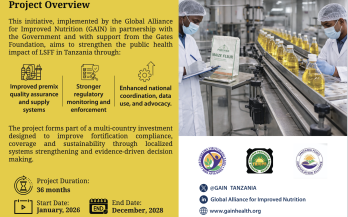
Tanzania has established a strong policy and regulatory framework mandating the fortification of staple foods, including wheat flour, maize flour, edible oils, and salt. Despite this progress, implementation and compliance gaps persist, limiting the public health impact that fortification programmes can achieve Market evidence and engagement with Millers for Nutrition (M4N) highlight that inconsistent compliance and coverage stems from structural barriers within Tanzania’s fortification ecosystem.
- 25/03/2026
Despite progress in policy development, Tanzania’s school feeding
programs still face significant implementation challenges, particularly in delivering nutritionally adequate meals. Although
96% of public primary schools provide meals, these often rely onmonotonous staples like maize and beans, which lack essential micronutrients. As a result, 25% of school-aged children remain stunted, with over one-third experiencing vitamin A deficiency or anemia.
- 18/03/2026
This white paper was commissioned by Partners in Food Solutions, SNV*, and GAIN and prepared with research,
technical, and drafting support from Earth Partners Ltd. The authoring organisations extend their sincere gratitude to the funders, partners, and food processors for their generous contribution in making this research possible.
The analysis reflects an independent synthesis of evidence and stakeholder perspectives and should not be interpreted as representing the official views, policies, or positions of the authoring organisations, their governing bodies, partners, or funders.
- 09/03/2026
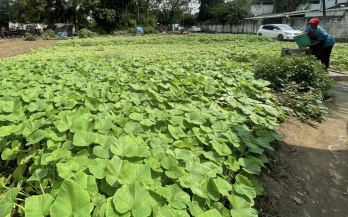
Transformation towards just and sustainable food systems is needed to ensure the health of people and the planet. Current large-scale industrial agri-food systems practices across an increasingly urbanised system are increasing soil degradation. These practices, alongside intersecting environmental challenges and widening socio-economic inequalities, are negatively impacting food security and access to healthy diets and increasing interest in climate-smart, agroecological, and regenerative food production. Cities are dynamic places of human settlement where food systems innovation can be catalysed. This makes them key to food policy and delivering nourishing, just and sustainable food systems. In 2024-5, the Transforming Urban Rural Food Systems (TURFS) Consortium conducted a mixed-methods exploratory inquiry in Dar es Salaam, Tanzania to explore how cities can incentivise regenerative agricultural transitions.
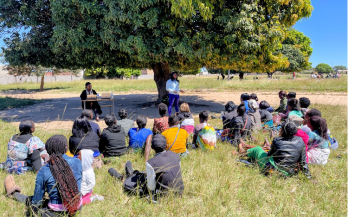
Good Nature Agro (GNA), a Zambia-based enterprise with presence in Malawi and South Africa, produces high-quality groundnut and bean seeds and commodities, distributed across Southern and Central Africa, including Zambia, Malawi, Zimbabwe, South Africa, and Namibia. Founded in 2014, GNA has supported over 20,000 smallholder farmers this season with seeds, training and market access to improve incomes and livelihoods.
From its early years, GNA set a target of 40% female farmer representation and invested in key programs to improve female farmers’ experience. Initiatives included co-farmer registration for digital payments, family financial literacy training, pre-harvest payments and loans, asset financing, and gender training for all field staff. These efforts created measurable impacts on productivity and strengthened women’s engagement in high-value markets. Recent surveys confirmed that female farmers continue to experience increased production efficiency and have a positive experience with GNA, reflected in a 60 Decibels net promoter score of 57 (the likelihood of farmers recommending GNA to others, on a scale from -100 to +100).
- 02/03/2026
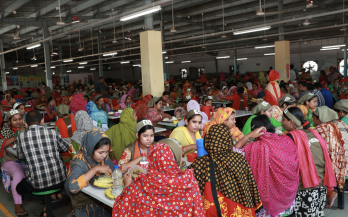
Many adults spend most of their waking hours in the workplace, making it an important—yet underappreciated—leverage point for change. In the context of food systems, workplaces can contribute to significantly improved nutrition through employer-provided nutrition programmes (also known as ‘workforce nutrition programmes’ (WFN)). However, the process of gaining support for these initiatives and the potential for institutionalising them within policy remain underexamined. This case study aims to address this by examining the development of WFN in Bangladesh, including at the factory level and through the government-led National Workforce Nutrition Alliance (NWNA). It also considers opportunities for integrating nutrition considerations into occupational safety and health (OSH) policies, regulations, and practices in Bangladesh.

Unpacking the 2025 Zero Hunger Accountability Report
Ep 29
The episode covers the 2025 Zero Hunger report, highlighting $440M invested by 100+ companies…
48 minutes▶ Play this episode
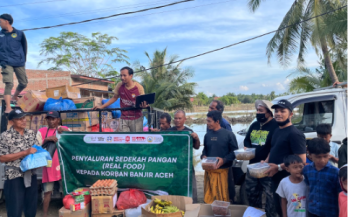
By the end of 2025, The Meteorology, Climatology, and Geophysics Agency (BMKG) of Indonesia recorded extreme rainfall, with intensities reaching 300–500 mm per month, occurring in 3 provinces in Sumatra. Indonesia is facing a combination of relatively complex atmospheric dynamics, including the active Asian Monsoon, the Madden–Julian Oscillation (MJO), atmospheric waves, the formation of tropical cyclone seeds and tropical cyclones, as well as the influence of a weak La Niña and a negative Indian Ocean Dipole (IOD). These conditions increased rainfall intensity, particularly from mid-December 2025 to early January 2026.
- 13/02/2026
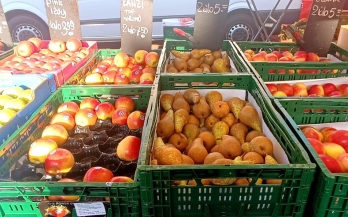
To strengthen evidence and practice about local fresh food markets and food systems governance, in 2025, ICLEI CityFood, the Global Alliance for Improved Nutrition (GAIN), and World Farmers Markets Coalition published two editions of a handbook about markets and resilient cities. The second edition comprises 31 city-market case studies and is structured around the CityFood Market Action Framework. Between May and December 2025, following the launch of the first edition, ICLEI CityFood and GAIN co-convened eight online sessions of a Community of Interest focused on markets and cities. The sessions were structured around four thematic areas: an introduction to how cities shape food markets; gender and social intersectionality; managing food waste; and access to nutrition. Across all eight sessions, a total of 327 participants from 27 cities and 56 organisations took part. This paper shares a summary of those prior sessions and signposts upcoming sessions
- 13/02/2026
Tempeh is a popular traditional plant-based protein that plays a vital role in Indonesian diets. Indonesia’s reliance on imported soybeans (2.6 million tons/year) for tempeh production, however, creates market instability and food vulnerabilities, particularly regarding cost and supply fluctuations. This paper analyses the technical, economic, and market feasibility of alternative legumes—specifically, jack beans, mung beans, and peanuts—as sustainable substitutes for soybeans in tempeh production. The aim is to identify the most viable option for immediate scale-up to support local food systems and improve nutritional outcomes.