
Launch of the Innovative Food System Solution (IFSS) Portal
As a global community we urgently need to reimagine how our food systems work to ensure both human and planetary health. To this end, the Global Alliance for Improved Nutrition (GAIN), the Alliance of Bioversity-CIAT, EAT, CSIRO’s Food Systems and Global Change group, and the Cornell Atkinson Center for Sustainability are excited to announce the launch of the Innovative Food System Solution (IFSS) portal on NutritionConnect.org on May 19, 2021.
GAIN Interview Cruncher - Food Systems Dashboard: A Year On
Online Webinar, Global
Almost a year ago, the Food Systems Dashboard, the first dashboard that collects country-level data across all components of the food system, was launched. Today, the Dashboard contains over 200 indicators that measure components, drivers, and outcomes of food systems at the country level.
Youth Act4Food Act4Change Launch
Online Webinar, Global
Act4Food Act4Change is a global youth-led movement promising to ignite a campaign action to combat hunger, improve health and heal the planet. The #Act4Food and #Act4Change campaign takes the form of a simple pledge and list of actions. The pledge brings together young people from around the world to focus on personal action and advocacy as a contribution to systemic change.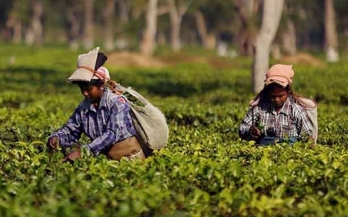
Healthy diets for tea communities - GAIN and ETP partnership
Healthy Diets for Tea Communities is a coalition led by the Global Alliance for Improved Nutrition (GAIN) and the Ethical Tea Partnership (ETP), with funding from with eight leading tea companies to address poor nutrition in tea supply chains in Assam (India), Kenya, and Malawi.
Reflections on UN Food Systems Summit progress to date
Dubbed a "Peoples Summit", it is open to unprecedented engagement in every country, from every sector, and every constituency. It is also dubbed a "Solutions Summit" with a focus on action. I lead one of the five thematic areas or "Action Tracks" (ATs) on "Ensuring access to safe and nutritious foods for all". There are four other ATs, a Science Group, a Champions Group, 4 cross-cutting Levers and the over 100 Summit Dialogues to date.
Marketplace for Nutritious Foods Project - Learning event
Online Webinar, Kenya
GAIN invested in the Marketplace for Nutritious Foods project as a model to support SMEs in the Agri-Food sector. The learning from this project creates an opportunity to GAIN and its partners to scale up and support more SMEs. Additionally, it is creates an opportunity to share with partners the successes, the challenges and improvements that can help future implementation better.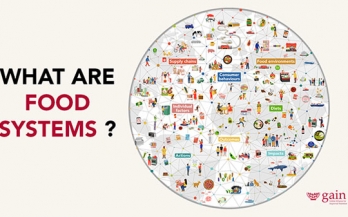
What are food systems?
Our food systems profoundly impact our ability to achieve universal goals of human and planetary wellbeing, with food directly or indirectly linked to several of the United Nations (UN) Sustainable Development Goals. With the UN Food Systems Summit scheduled to convene a wide group of stakeholders from all walks of life in September 2021, food systems are rising up the agenda.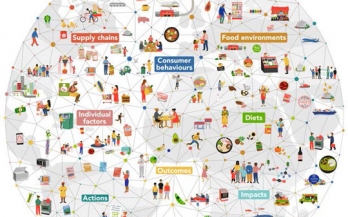
What are food systems?
- 21/04/2021
Food Systems are the people, places, and activities that bring us food. They make food available in diverse ways that influence and shape the choices we make about what to eat, when, and how. They are complicated and constantly changing – comprising a host of moving and interconnected pieces. They support many people’s livelihoods.
High level panel on the road towards the 2021 Food Systems Summit
Online Webinar, Global
Following opening remarks by the moderator, panelists will be invited to address the guiding questions (see below). Following these interventions, Member States, observers and civil society are encouraged to ask questions or raise issues in response to the interventions made.