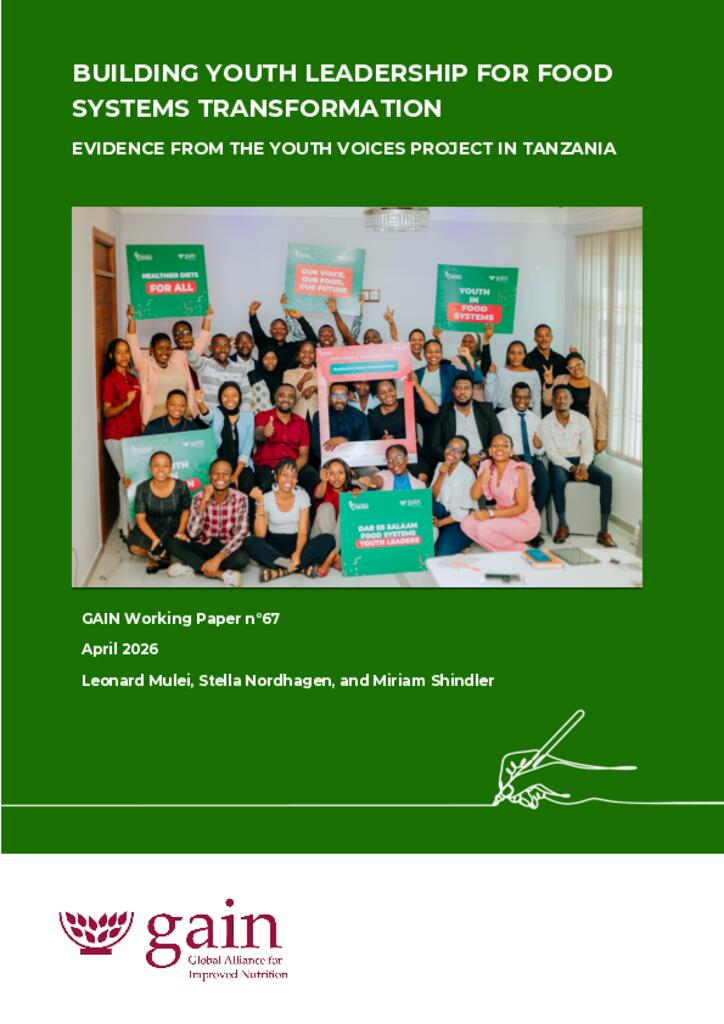
Globally, the youth population is rapidly growing, particularly in low- and middle-income countries, where food systems are central to livelihoods and significantly influence nutritional outcomes. Despite this, young people remain underrepresented in food systems policy and decision-making processes.
Addressing this gap requires youth leadership programmes that integrate systems thinking, cross-sectoral collaboration, and experiential learning to better prepare young people for meaningful engagement in food systems transformation. This case study explores how a youth leadership programme implemented in Arusha, Tanzania, enhanced young people’s ability to influence food policy processes, advocate for inclusive reforms, and drive meaningful change in their communities.
The findings of this study indicate that personal transformation and identity shifts, community support, and the acquisition and application of leadership skills are key enabling factors for youth leadership development in food systems. However, several constraining factors — including perceived lack of technical expertise among the youth, unclear administrative processes at government offices, insufficient financial resources, misalignment between community expectations and project objectives, and lack of tools, facilities, and equipment — limited the ability of young people to influence food systems processes. Overall, this case study provides insights into how supporting youth engagement through leadership programmes can serve as a catalyst for amplifying their voices in food systems transformation.