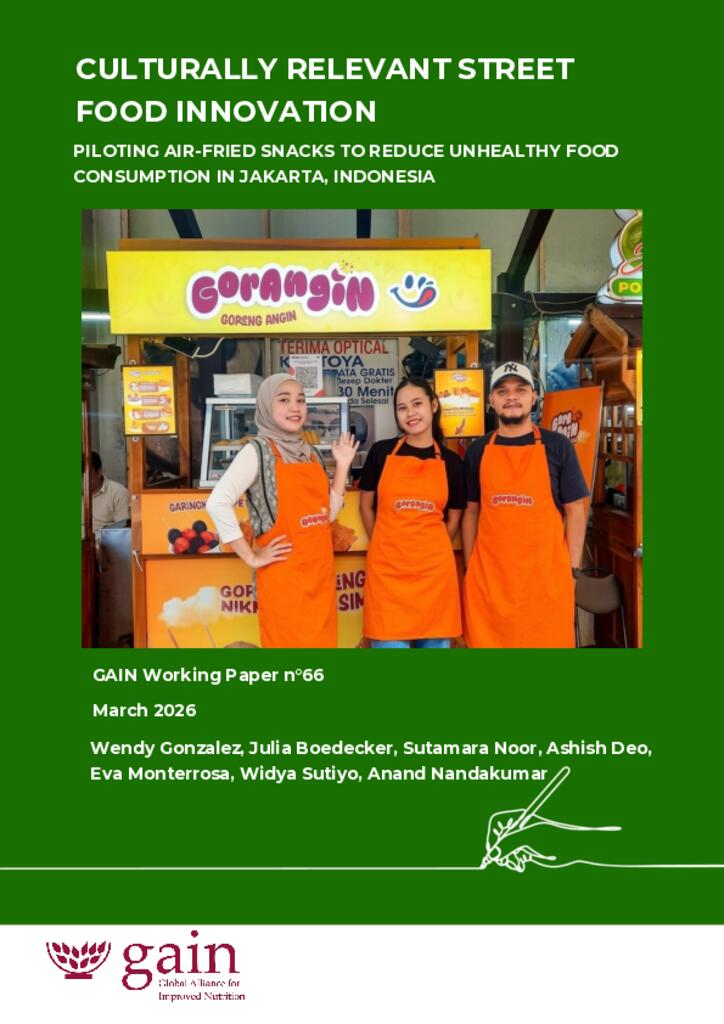
In Indonesia, over 98% of households have food budgets sufficient to purchase a healthy diet, yet most allocate a substantial share of their spending to discretionary foods such as fried snacks and sugary drinks. The challenge is therefore not one of financial access to healthy food, but of how existing food budgets are allocated. This paper documents a proof-of-concept pilot in Jakarta that tested whether Indonesia's ubiquitous deep-fried street snacks, gorengan, could be transformed into healthier air-fried alternatives, examining both consumer acceptance and business model viability.
The pilot found strong consumer acceptance of air-fried snacks when products were properly communicated about and positioned, with all first-time buyers stating willingness to purchase again and 84% willing to recommend the product to others. However, a standalone kiosk model proved financially unviable, generating revenues that covered only 7% of fixed operating costs--confirming that strong consumer demand does not guarantee business viability. Four alternative business models are proposed for future testing: food service chain integration, cloud kitchen distribution, direct-to-consumer delivery, and manufacturer partnerships.