
Reports and publications
Refine your search
GAIN Discussion Paper n°20 Integrating Gender Into Large-Scale Food Fortification for Greater Impact
- 04/09/2026
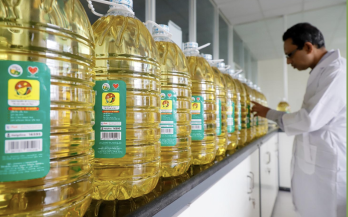
Large-scale food fortification (LSFF) is widely implemented to reduce micronutrient deficiencies at the population level. LSFF programmes involve an array of decision-makers and actors across the value chain. Understanding how gender norms, roles, decision- making power, and consumption patterns shape participation across the LSFF value chain can help identify opportunities to improve programme effectiveness, equity, and sustainability.
GAIN Working Paper n°76: Advocating for Workforce Nutrition
- 04/09/2026
Successful implementation of workforce nutrition programmes relies on gaining employer commitment; without it, activities cannot be adopted or sustained. Prior to the implementation of workforce nutrition programmes, employers must thus be brought on board with the approach. This paper draws on primary data from GAIN programme teams in Bangladesh, Ethiopia, India, and Uganda to analyse the strategies and processes used to gain this employer buy-in, including which strategies were effective, what challenges arose, and the underlying reasons.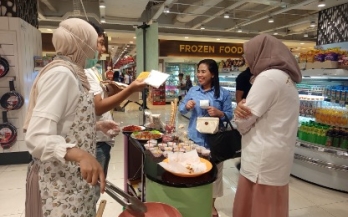
GAIN Working Paper n°75: Unlocking New Markets for Tempeh-The Viability of Jack Bean-Based Products
- 24/08/2026
This paper assesses the potential of jack bean as a viable diversification strategy within Indonesia’s soybean-dependent tempeh industry. Such a change could address structural challenges including dependence on imported soybeans, exposure to global price fluctuations, and supply chain vulnerabilities. As a locally sourced, nutritionally competitive, and climate-resilient crop, jack bean offers an alternative protein source that could strengthen Indonesia’s food security and sovereignty. Given Indonesia’s large tempeh market, capturing even a small share represents a significant commercial opportunity.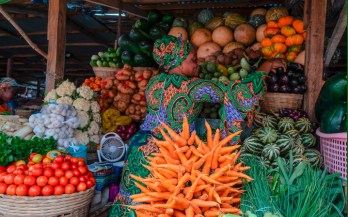
GAIN Working Paper n°74: Improving Diet Quality in West Africa- The Role of Intra-regional Food Trade
- 20/08/2026
Food trade plays a significant role in shaping food security and nutrition worldwide, with both positive and negative implications for diet quality. This is particularly relevant in West Africa, where persistent challenges such as low dietary diversity and limited affordability of healthy diets coexist with rapidly changing food consumption patterns. Intra-regional food trade is especially important in this context, yet its scale and nutritional significance remain poorly understood due to the large share of trade that goes unrecorded in official statistics.
GAIN Working Paper n°71: Crowdsourcing in Food Systems Research: Lessons from Indonesia and Kenya
- 07/08/2026
Crowdsourcing, i.e., leveraging digital platforms to mobilise distributed contributors for data collection, harnessing the collective power of large, distributed networks of people to accomplish such tasks through open calls has gained traction in recent years, yet practical guidance for implementation in low- and middle-income countries (LMICs) remains limited. This paper examines lessons from three food systems research case studies conducted by the Global Alliance for Improved Nutrition in Indonesia and Kenya between 2019-2024, analysing what worked, what didn't, and why.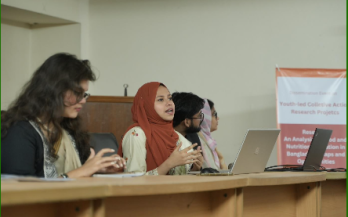
Beyond Tokenism: Meaningful Youth Engagement in Bangladesh's Food Systems
- 27/07/2026
Youth participation is increasingly recognised as essential for transforming food systems, yet many young people remain underrepresented in formal decision-making, particularly in low- and middle-income countries. In Bangladesh, recent policy momentum and growing youth mobilisation have created new spaces for engagement, yet how these developments translate into meaningful influence over planning and policy processes in practice remains unclear. This qualitative case study explored how youth engage in Bangladesh's food system policy development through 27 semi-structured interviews with youth leaders and policymakers. Youth participants were purposively selected from GAIN's Food System Youth Leadership initiative while policymakers were selected based on their roles in nutrition, food systems policy, and youth development. Data were analysed thematically using hybrid deductiveinductive approach.
How Youth Are Turning Food System Learning Into Community Action in Bangladesh
- 27/07/2026
Young people are increasingly recognised as important contributors to food system transformation: raising awareness, leading community initiatives and bringing new perspectives to food system challenges. However, opportunities for them to move beyond these roles and engage in decision-making processes remain limited. In Bangladesh, the Food Systems Youth Leadership Initiative was introduced to strengthen youth leadership in food system transformation and deepen young people's understanding of food systems. This initiative also encouraged community-driven actions through collective action campaigns, helping young people build the confidence and capacity needed to engage more effectively in policy and decision-making spaces.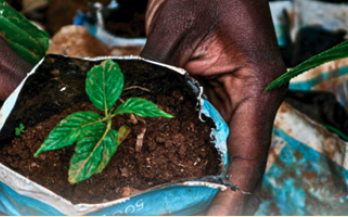
I-CAN Landscaping Analysis on Climate and Nutrition Policies and Stakeholders in Somalia
- 21/07/2026
The I-CAN Landscaping Analysis on Climate and Nutrition Policies and Stakeholders in Somalia provides a comprehensive evaluation of the integration between climate action and nutritional outcomes within the national policy framework. Supported by the Agrifood Systems Transformation Accelerator (AFST-A), this analysis examines how Somalia—a nation facing concurrent climate shocks and high malnutrition—aligns its strategic objectives to build systemic resilience.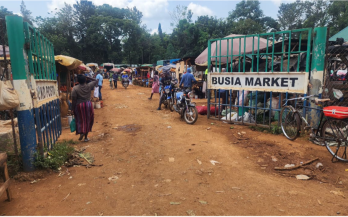
GAIN Briefing Paper n°17: Strengthening Traditional Food Markets for Inclusive Food Systems in Kenya
- 08/07/2026
Traditional food markets are central to Kenya’s food systems, providing fresh and affordable food to consumers as well as jobs, income, and livelihoods to farmers and traders. However, despite Kenya’s strong food policy environment, governance of traditional food markets is often weakly integrated and under-prioritised. This prevents unlocking the markets’ full potential for food security, nutrition, and inclusive growth. This briefing paper examines governance in three traditional food markets in Bungoma and Busia County, Western Kenya, using a mixed-methods approach combining key informant interviews, vendor surveys, direct market observations, participatory workshops, and a review of relevant policy and governance documents to assess how governance arrangements shape market performance.