- 14/05/2026
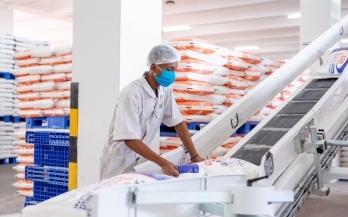
Chemical exposure is a growing occupational health concern as industrialization and technological change increase workers’ contact with hazardous substances. While occupational safety and health frameworks focus on managing exposure, they do not fully address chemicals that accumulate in the body and weaken immune function. Chemical exposure and poor nutrition can reinforce each other, increasing vulnerability to illness Integrating workforce nutrition into chemical risk management strengthens resilience, supports immunity, and provides an additional layer of protection for workers.
- 27/03/2026
This paper provides brief descriptions of eight key tools available to support national and sub-national transformation of food systems. Produced in advance of the Asia and the Pacific Food Systems Transformation Forum 2026, descriptions and cases provided focus on the Asia region.
- 24/04/2026
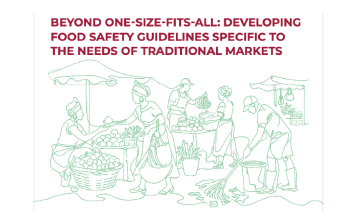
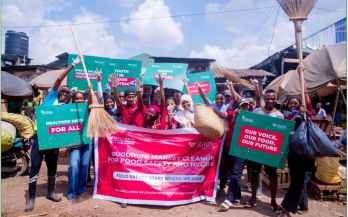
Ensuring access to safe food is one of the core goals of food systems, yet millions of people worldwide get sick from unsafe food every year. This case study examines the development and adoption of international guidelines for food safety – specific to the traditional markets where many lower-income-country consumers buy their
food. It shows how considering the needs and challenges of specific contexts when formulating guidelines or more formal policies can make for a more equitable enabling environment for food system transformation.
- 24/04/2026
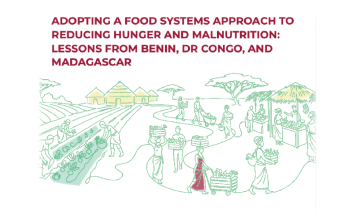
Adopting food-related policies, governance approaches, and action plans that cut across sectors is key to food systems transformation – but how to do so is not always clear.
This case study examines how policy stakeholders in three African countries were able to adopt food systems thinking, adapt their governance approaches to enable cross-sectoral food systems approaches, and start to move towards action.
- 20/04/2026
Many adults spend most of their waking hours at the workplace, making the latter a strategic, yet underappreciated, environment for health and well-being interventions. In the context of food systems, an impactful change that can be fostered through workplaces is improved nutrition through workforce nutrition (WFN) programmes. However, the process of gaining support for such programmes and the potential for having employers lead their design and uptake remain underexamined.
- 08/04/2026
Young people represent a critical yet underutilised force in transforming food systems. By actively engaging youth in transformation processes, they can co-lead initiatives, shape agendas, and influence policymakers to address their priorities and make decision-making more inclusive.
Collective action is a powerful mechanism through which young people organise around shared food systems priorities to generate sustained pressure for policy change while building capacity for long-term engagement in governance processes. However, despite the growing visibility of youth-led movements, the pathways through which young people’s collective voices shape and become institutionalised within national food and nutrition policies remain underexamined, particularly in low- and middle-income countries.
- 08/04/2026
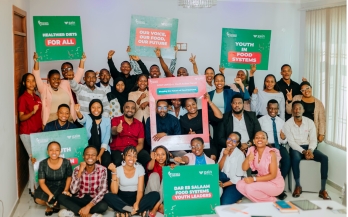
Globally, the youth population is rapidly growing, particularly in low- and middle-income countries, where food systems are central to livelihoods and significantly influence nutritional outcomes. Despite this, young people remain underrepresented in food systems policy and decision-making processes.
Addressing this gap requires youth leadership programmes that integrate systems thinking, cross-sectoral collaboration, and experiential learning to better prepare young people for meaningful engagement in food systems transformation. This case study explores how a youth leadership programme implemented in Arusha, Tanzania, enhanced young people’s ability to influence food policy processes, advocate for inclusive reforms, and drive meaningful change in their communities.
- 30/03/2026
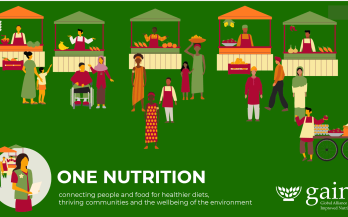
The ONE Nutrition Toolkit brings together practical guidance and training materials to support a systems-based approach to nutrition. It helps practitioners link food systems, human health, and environmental sustainability to drive better diets and stronger communities.
It includes a Facilitator’s Guide and Slide Deck designed to support training, learning, and real-world application of the ONE Nutrition approach across diverse contexts.
- 26/03/2026
Nutrient deficiencies and related undernutrition (including stunting, wasting, and anemia) are widespread in low- and middle-income countries (LMICs), with as many as 9 in 10 females being deficient in ≥1 micronutrient and 1 in 2 females experiencing anemia in several countries in South Asia and sub-Saharan Africa.
- 26/03/2026
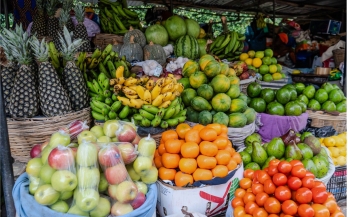
New analysis provides first-ever global estimates of how fortified foods improve nutrition and the untapped potential to dramatically expand benefits at a minimal cost.