Bite The Talk EP 30
Nutrition Futures Initiative
The Nutrition Futures Initiative (NFI) seeks to strengthen the nutritional impact of social protection programs by employing a "co-innovation" strategy that brings together governments, innovators, and community members to design more effective systems. This approach utilizes human-centered design and a digital platform to move beyond traditional program development, creating inclusive and scalable solutions that prioritize the lived experiences and feedback of beneficiaries.
Mark Gachagua: Hello everyone and welcome back to Bite the Talk, the podcast where we explore the stories, systems, ideas, and innovations shaping the future of nutrition and food systems. I'm your host, Mark Gachagua.
Today's episode is a special deep dive into something bold and forward-looking: the Nutrition Futures Initiative. It's an effort designed to strengthen the nutritional impact of social protection systems through a powerful approach known as co-innovation. Why does it matter? Because today, across Africa and around the world, millions of people rely on social protection programs—cash transfers, public works, food support, school meals—but these systems often don't fully meet people's nutritional needs. The Nutrition Futures Initiative aims to change that.
To help us unpack all this, I'm joined by three incredible guests:
Dr. Anthony Wenndt: GAIN’s lead on social protection. Anthony has been instrumental in building the conceptual and methodological foundation of the Nutrition Futures Initiative, working side-by-side with governments, development partners, and innovators. Welcome, Anthony.
Anthony Wenndt: Thank you very much, Mark. It's a pleasure to be here.
Thomas Schuumanns: Co-founder of Proportion Global, GAIN’s partner in developing the co-innovation approach, and co-founder of the Innovators Team Platform—a global community of social innovators working on real-world problems in food, nutrition, and social protection. Thomas, it's great to have you on the show.
Thomas Schuumanns: Thank you very much, Mark. It's great to be here.
Commissioner Patrick Mugisha: From the Uganda Ministry of Trade, Industry, and Cooperatives. They've been deeply involved in improving policies to strengthen food systems and working to integrate nutrition more meaningfully into public programs. Thank you for being with us.
Commissioner Mugisha: Thank you so much, Mark. A pleasure to be here. Asante sana.
Mark Gachagua: Karibu sana. And for Anthony and Thomas, karibu means welcome. Commissioner, the biggest news out of Uganda right now is the recent election. How is everything so far?
Commissioner Mugisha: Everything is well-contained. These are normal systemic issues that are spread across the continent, but with a good democracy, we believe there is something for everyone.
Mark Gachagua: I agree with you, and we wish you all the best with that. Now, before we dive deep into the conversation, I usually ask my guests: what was your favorite childhood snack? Commissioner, let’s start with you. What did you like eating when you were about ten years old?
Commissioner Mugisha: Ah, very well. I am half Kenyan and half Ugandan. I left Uganda when I was four, so a large part of my childhood and teenage years was spent in Kenya. I was really fond of cornflakes. Today they taste a little different—maybe we were just in a different era—but I really loved them. I also recall the time when the late President Daniel Arap Moi was in charge; they used to give us milk in schools (maziwa ya nyayo). Those are very good memories.
Mark Gachagua: That’s lovely. It sounds like you really enjoyed your childhood. What about you, Thomas?
Thomas Schuumanns: I grew up in the rural parts of the south of the Netherlands. We lived near the woods and maize fields, so my brother and I played outdoors constantly—climbing trees, swimming in lakes, and running through fields. When we came home, my mother would have cooked thin pancakes. We liked them sour and sweet at the same time, so we topped them with cheese and syrup. It was delicious.
Mark Gachagua: I’m envious, Thomas! A slice of heaven, right? Anthony, what about you?
Dr. Anthony Wenndt: This wonderfully blends the themes of corn and rural life. I grew up on a farm in a part of the US known for maize production. There is nothing more nostalgic for me than a hot summer day with sweet corn, butter, and salt. It’s a delicacy in my hometown.
Mark Gachagua: It’s interesting—all our snacks are connected to corn! My favorite was roasted maize on coal with chili and lemon. It’s zesty and spicy. But now, let’s dive into the conversation.
Anthony, social protection systems reach millions, but they don’t automatically improve nutrition. Why is that?
Dr. Anthony Wenndt: Nearly all social protection systems have the potential to impact nutrition, but the challenge is ensuring the benefits are designed to be responsive to local people's nutritional needs and the specific constraints that limit their access to nutritious foods. Design is a huge part of it, which is why we support governments in implementing better designs.
Mark Gachagua: Commissioner Mugisha, where do you see the gaps from a policymaker's perspective?
Commissioner Mugisha: It begins with the policy landscape being inclusive and meeting dynamic needs that evolve with climate and economic changes. In sub-Saharan Africa, the issues are often systemic. There is often a misalignment between the government, the funders, and the community. When there’s a disconnect between these actors, you never achieve the real impact you want to see.
Mark Gachagua: That brings us to "co-innovation." Anthony, what does that mean in this context?
Dr. Anthony Wenndt: It’s reflected in our tagline: Innovating Together. We believe the cleverest solutions come from bringing various stakeholders together—from senior officials to farmers—to leverage unconventional viewpoints. The Nutrition Futures Initiative creates a "playground" for these diverse voices to aggregate their views and create solutions for the future.
Mark Gachagua: Thomas, how is co-innovation different from traditional program design?
Thomas Schuumanns: Traditional design often comes from a "top-down" approach where the scope is already decided by donors or experts with decades of experience. That experience is valuable, but it can also be a barrier to a fresh mindset. Co-innovation requires putting your "expert mindset" aside and looking at a challenge with open eyes. You have to step out of the office and put yourself in the shoes of the people you are designing for.
Mark Gachagua: Commissioner, what changed when you adopted this mindset?
Commissioner Mugisha: My background is in synthetic organic chemistry and intellectual property law, so innovation has always been part of my journey. Co-innovation is like the story of creation in Genesis 1:26, which says "Let us make man"—not "let me." It shows that partnership started at the very beginning. From a government perspective, the most challenging thing is scaling interventions through the public sector. If they misalign with policy priorities, they are "dead on arrival." This initiative triggers nutrition in a much more sustainable way.
Mark Gachagua: What does it take for a government to fully embrace this?
Commissioner Mugisha: It requires awareness. Often, an innovator is emotionally attached to a solution that cannot be scaled. We need to demystify innovation for each sector. In food and nutrition, the government must advocate for "open innovation"—believing that external ideas from the community and partners must inform internal policy.
Mark Gachagua: Thomas, what advice would you give to hesitant governments?
Thomas Schuumanns: There is no risk in just listening. People often listen only to find a space to talk, but you need to listen with deep intention. I think of Einstein, who said if he had an hour to solve a problem, he’d spend 55 minutes understanding the problem and five minutes solving it. Don't jump to solutions too quickly.
Mark Gachagua: Anthony, what unlocks success in this area for GAIN?
Dr. Anthony Wenndt: Success is a factor of our ability to "listen to the system." We want to move away from "grievance redressal mechanisms"—where feedback is only seen as a complaint—and toward iterative feedback loops where users are equal co-partners.
Mark Gachagua: Tell us more about the Nutrition Futures Initiative platform.
Dr. Anthony Wenndt: It’s a community of actors from across the Global South. We realized that policymakers were leaning on the same old nutrition solutions while needs were growing. Together with Thomas and Proportion Global, we built the Innovators Team, a digital platform that fuels collective action and guides stakeholders through the human-centered design process.
Mark Gachagua: Commissioner, how is this showing up in Uganda?
Commissioner Mugisha: We are currently reviewing our MSME policies from 2015 and our standards policies from 2012. Usually, this is a rigid process. But using the NFI strategy, we can get views from the people. For example, in Uganda, millers producing less than 20 tons a day aren't required to fortify flour—yet they are the biggest sellers in the informal space. This initiative helps us turn those gaps into opportunities by bringing everyone to the table.
Mark Gachagua: Thomas, what makes an innovation "scalable"?
Thomas Schuumanns: We developed a "Scaling Innovation Canvas" with three pillars:
The Innovation: Proof of concept that it is desired, feasible, and viable.
The Future: A clear long-term mission and roadmap.
Resources: Having the human, financial, and intellectual capital in place.
Mark Gachagua: Commissioner, a final thought on the future of nutrition in Uganda?
Commissioner Mugisha: I am optimistic. Radical solutions aren't always the answer; sometimes it's incremental change. Partnership is the driver. Co-innovation brings the bright idea, the money, and the ability to scale together. Remember the story of the discovery of the drug for erectile dysfunction (Viagra)—it was an accidental discovery made because the researchers listened to the feedback of the trial participants. As an innovator, you must be humble and listen.
Mark Gachagua: Thank you, Commissioner, Dr. Anthony, and Thomas. This has been a wonderful conversation about building systems that are more human-centered and impactful. To our listeners, visit nutritionfutures.org or innovators.team to join the movement.
We'll see you on the next episode of Bite the Talk.
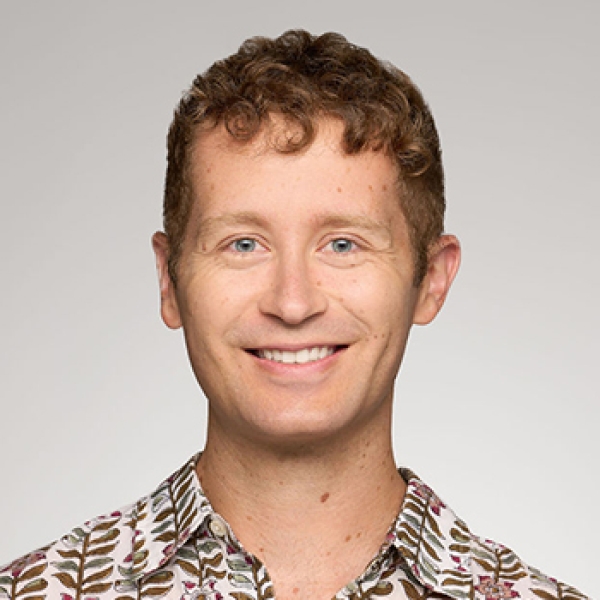
Lead, Social Protection
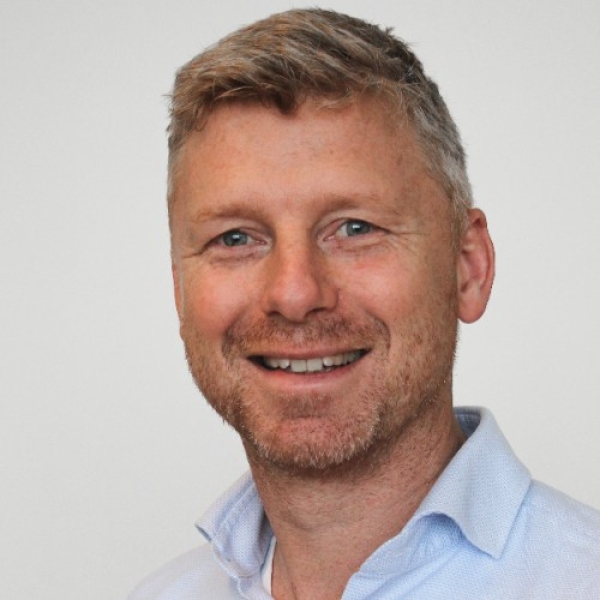
Founder and Director of Proportion Global

Commissioner for Business Development and Quality Assurance at the Ministry of Trade, Industry and Cooperatives in Uganda.
Mark is a policy and advocacy specialist. He joined the Policy and Advocacy team at GAIN in March 2023. His role focuses on strengthening GAIN’s policy and advocacy work and its ability to engage with and influence global and national policy processes around food and nutrition security.
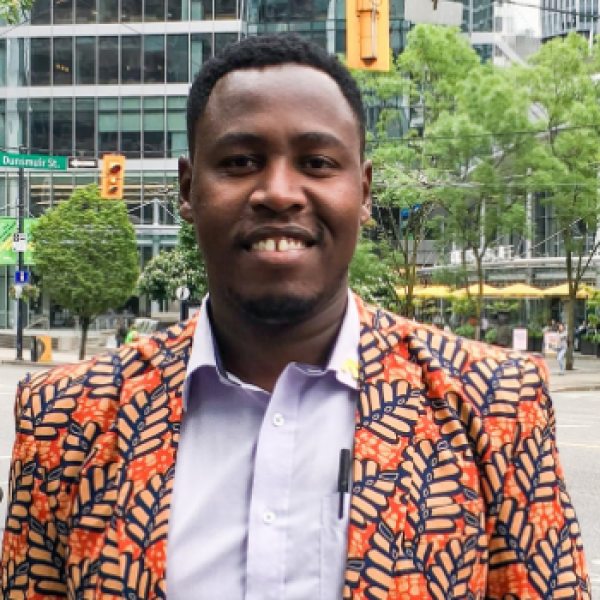
Senior Associate, Policy Engagement and Advocacy Support
 Spotify
  Apple Podcasts