A New Small Fish Restocking Model Projects 20x Production Improvement in Indonesia
Authors: Michelle Nova Lauwrhetta, Ibnu Budiman
6th/January/2026, Indonesia
Authors: Michelle Nova Lauwrhetta, Ibnu Budiman
6th/January/2026, Indonesia
As an archipelagic nation, Indonesia ranks third globally in fisheries and aquaculture production. Despite these abundant, nutrient-rich aquatic resources, the country still faces significant malnutrition challenges stemming from insufficient intake of protein, micronutrients, and essential fatty acids. In 2021, the average per capita fish consumption in Indonesia reached 25.33 kg, notably lower than Malaysia (52.7 kg), a nation with fewer resources (KKP, World Population Review). This disparity highlights the gap between resources availability and dietary outcomes.
Indonesia's high aquatic biodiversity underpins its commitment to Blue Foods within Blue Economy Roadmap and national food security agenda. However, this resource is now under threat. Rising water temperatures, weak fisheries management, and over-exploitation can reduce fishery stocks. Furthermore, pollution and scarcity drive up prices, limiting access for low-income households (Blanchard et al., 2012; Kaczan et al., 2023)
To reconcile nutrition and environment goals, GAIN conducted a Nutritional Life Cycle Assessment (nLCA), which identified small fish as an outstanding protein source. A value chain study by GAIN Indonesia further pinpointed Bilih (Mystacoleucus padangensis) and Wader Pari (Rasbora lateristriata) as strong candidate for targeted interventions. These findings are reinforced by a wider study recommending both species as sustainable healthy local foods.
However, production of these fish relies heavily on wild capture, and populations have steadily declined due to ineffective, poorly monitored restocking programs implemented since the 1990s. Building on these findings, the GAIN small fish program was initiated to improve effectiveness of restocking and increase Bilih and Wader production in Yogyakarta and West Sumatera.
National Wader production reached 9,523.98 tons in 2018, far below other species such as Sepat Siam (34,208.18 tons) and Nilem (12,184.56 tons) in the following year (KKP). Meanwhile, Bilih data has been inconsistently reported after 2018, underscoring gaps in monitoring systems.
Wader is immensely popular in Java, with market demand often exceeding sustainable supply. Average annual per capita consumption of freshwater and brackish fish (of which Wader is a key species) is high, around 16.75 kg (SUSENAS, 2016). This shortage is forcing local restaurants to replace Wader with alternatives like baby tilapia, which offers lower nutritional value.
Between 2022 and 2024, local authorities restocked 1,691,346 local fish (including 542,346 Wader) and 195,100 Giant Freshwater Prawn (Udang Galah) across nearly 200 different locations, following a long-standing restocking model.
However, recent ecological assessments in the Belik River, where past restocking occurred, revealed that Wader Pari was not readily detected, while non-native predators (Nila, Red Devil, and Sapu-sapu) and habitat stress (including agricultural and industrial effluent) may be limiting population recovery.
These findings indicate that sustainable population restoration requires a new, science-backed approach, incorporating rigorous pre-restocking assessment and strengthened long-term community protection mechanisms.
Recognising the need for an advanced strategy, GAIN Indonesia collaborated with Gadjah Mada University (UGM) and the National Research and Innovation Agency (BRIN) to implement a new Wader restocking model.
The project kicked off with an extensive stakeholder participation involving key policymakers from the DKP DIY (Department of Marine and Fisheries), BAPERIDA DIY (Regional Development Planning), experts from UGM and BRIN, and representatives from local resource groups like POKWASMAS (community surveillance) and POKDAKAN (fish farmer groups). This multi-stakeholder meeting successfully achieved consensus on the strategic roadmap, established shared ownership, and ensured that local community needs were directly integrated into the program design.
The new restocking model began with a comprehensive, multi-parameter initial assessment designed to pinpoint the most viable locations and understand the specific threats faced by these fish populations. This assessment was far more detailed than previous efforts, incorporating existing fish population measurements, rigorous water quality parameter assessments, evaluations of biological threats such as predators, and advanced molecular techniques, such as environmental DNA (eDNA) assessment and DNA barcoding. This scientific groundwork is crucial because it not only determines the suitability of the restocking locations but also provides an essential baseline for calculating long-term impact. Out of five options assessed, we selected two locations: the Baros River and the Gandok River, as the pilot sites.
The technical scientific groundwork is seamlessly integrated with decisive community action. Discussions were conducted with local residents in Tirtohargo and Bambanglipuro to document the historical presence of yellow rasbora and collaboration for the restocking area conservation. Collaboration with local government and community groups (DKP, Pokwasmas, Kalurahan Tirtohargo, and Kalurahan Bambanglipuro) supported the finalization of the restocking plan and its monitoring.
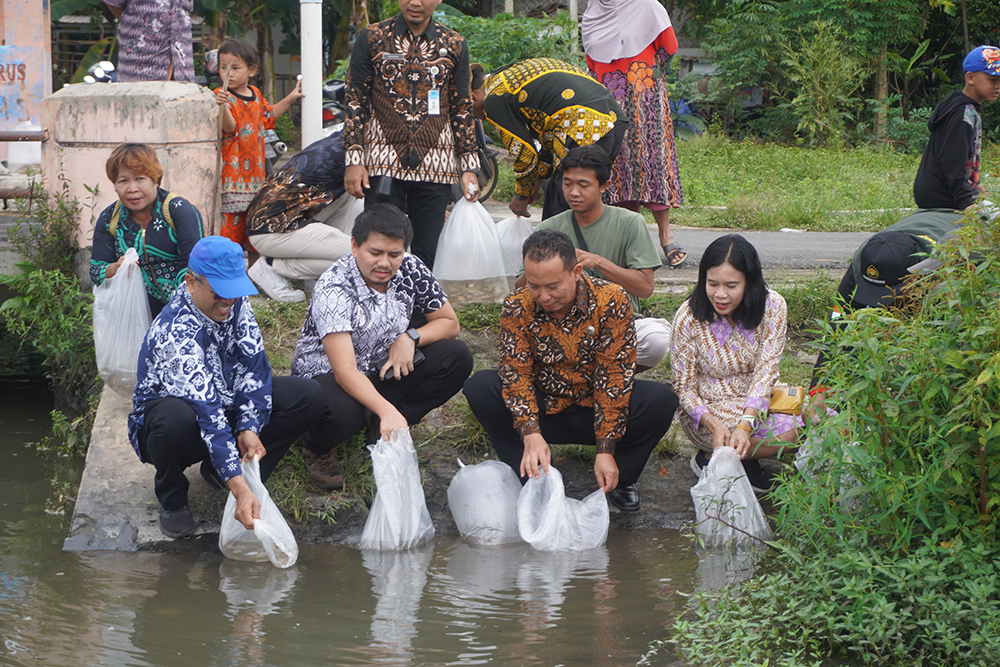
The actual fish restocking activities were then carefully planned based on the initial assessment results. The first restocking phase was successfully held on 15 September 2025, in the Baros River, Tirtohargo, Bantul, releasing 5,000 Wader Pari. The second restocking phase was completed on 30 October 2025 in the Gandok River, Bambanglipuro, Bantul, also releasing 5,000 Wader Pari.
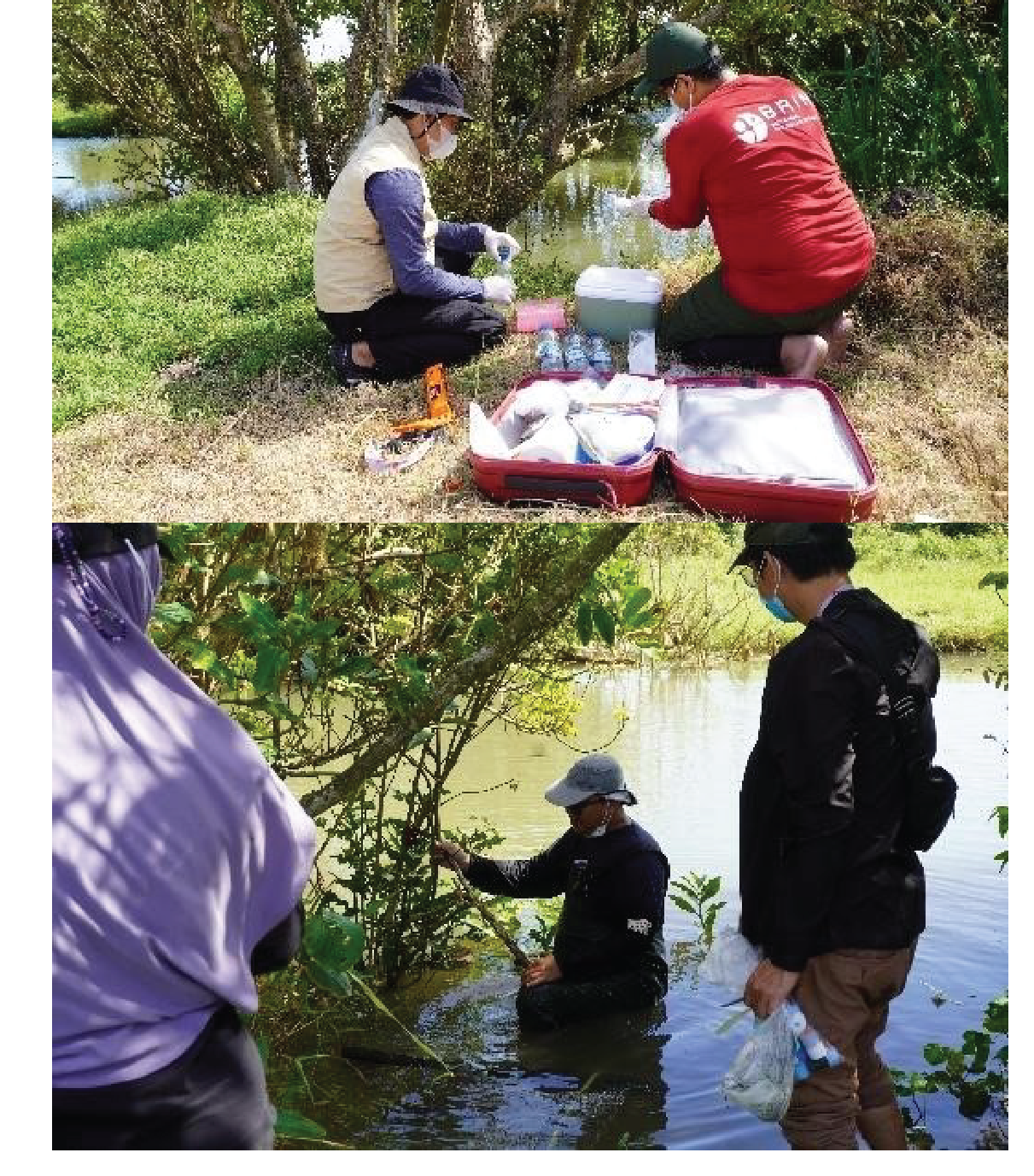
Initial Ecological Assessment
The second restocking phase was held on 30 October 2025 in Gandok River, Bambanglipuro, Bantul, Yogyakarta
Furthermore, this model embeds the integration of traditional knowledge through Local Ecological Knowledge (LEK) surveys and, critically, involves the establishment of village policies for fish conservation, providing formal, grassroots protection against threats such as destructive fishing.
Monitoring Progress and Projecting Success
Effective long-term monitoring is the cornerstone of our new model, going beyond general readiness requirements. Our strategy ensures the sustainability of the restocked Wader Pari population through rigorous, continuous data collection and community involvement.
To ensure the program’s sustainability, a joint monitoring team that includes local communities, government agencies (DKP), and BRIN, follows a strict protocol. Monitoring is scheduled monthly for the first six months, focusing on key indicators:
Based on initial data and conservative survival estimates (e.g., 40% adult survival rate and 1.0% offspring survival rate), projections indicate the total population could reach more than 90,000 fish in one year. This projected success is a testament to the new model's emphasis on scientific assessment, genetic integrity, and sustainable, community-driven conservation, setting a new standard for restoring native fish species in Indonesia.
The success of the first phase of restocking and promising population projections are only the beginning. The next critical steps involve rigorously testing the effectiveness of this new model and ensuring its widespread adoption to maximize conservation impact across the region.
Our key objective moving forward is to use our evidence base to influence government guidelines, making the new approach the standard practice.
Based on robust data and the demonstrated success of the integrated approach, we plan to present our findings in February 2026 to high-level stakeholders, including the National House of Representatives (DPR), as these legislative bodies often conduct restocking programs in collaboration with the Department of Marine and Fisheries (DKP). The ultimate goal is to propose that this approach be adopted as the new standard model and guideline for use by DKP in its 2026 restocking plan and future initiatives.
We will specifically pursue policy advocacy to mainstream the new methodology into the Decision of The Director General of Marine Spatial Management, Ministry of Marine and Fisheries of the Republic of Indonesia Number 66/2022 on Technical Guidelines for Restocking, Habitat Rehabilitation, and Handling of Bycatch of Protected Fish Species and/or Fish Species Listed In The Appendices of The Convention on International Trade in Endangered Species of Wild Fauna and Flora (CITES). Our policy brief and advocacy efforts will be specifically targeted at updating the methodology of restocking for small fish in Indonesia.
By institutionalizing this new model, we aim to improve effectiveness of fish restocking efforts, ensuring that future restocking initiatives can restore small fish populations and increase production, and protected by informed policy.

Environment Team Intern

Environment Manager