100 Million FullCare Tablets and Counting: A Milestone for Maternal Nutrition in Bangladesh
We are thrilled to share a major milestone in Bangladesh’s journey to improve maternal nutrition: more than 100 million Multiple Micronutrient Supplement (MMS) tablets, marketed under the brand name “FullCare”, have been sold since the launch of the country’s first locally produced UNIMMAP-formulated MMS.
This achievement marks a significant step forward for maternal nutrition in Bangladesh. The MMS project, implemented by the Social Marketing Company (SMC) with support from the Children’s Investment Fund Foundation (CIFF), the Global Alliance for Improved Nutrition (GAIN) and the Sight and Life (SAL) Foundation, has established a market-based model that now reaches around 15% of all annual pregnancies in Bangladesh. The International Centre for Diarrhoeal Disease Research, Bangladesh (icddr,b) played a critical role in ensuring project quality through external evaluation. An icddr,b evaluation in five subdistricts of Bangladesh found that 46% of pregnant women in the addressable market - those willing to purchase antenatal supplements rather than receiving them free of charge - purchased and consumed FullCare throughout their pregnancy. This evidence underscores the potential of market-based approaches to meaningfully contribute to maternal and child nutrition outcomes in Bangladesh.
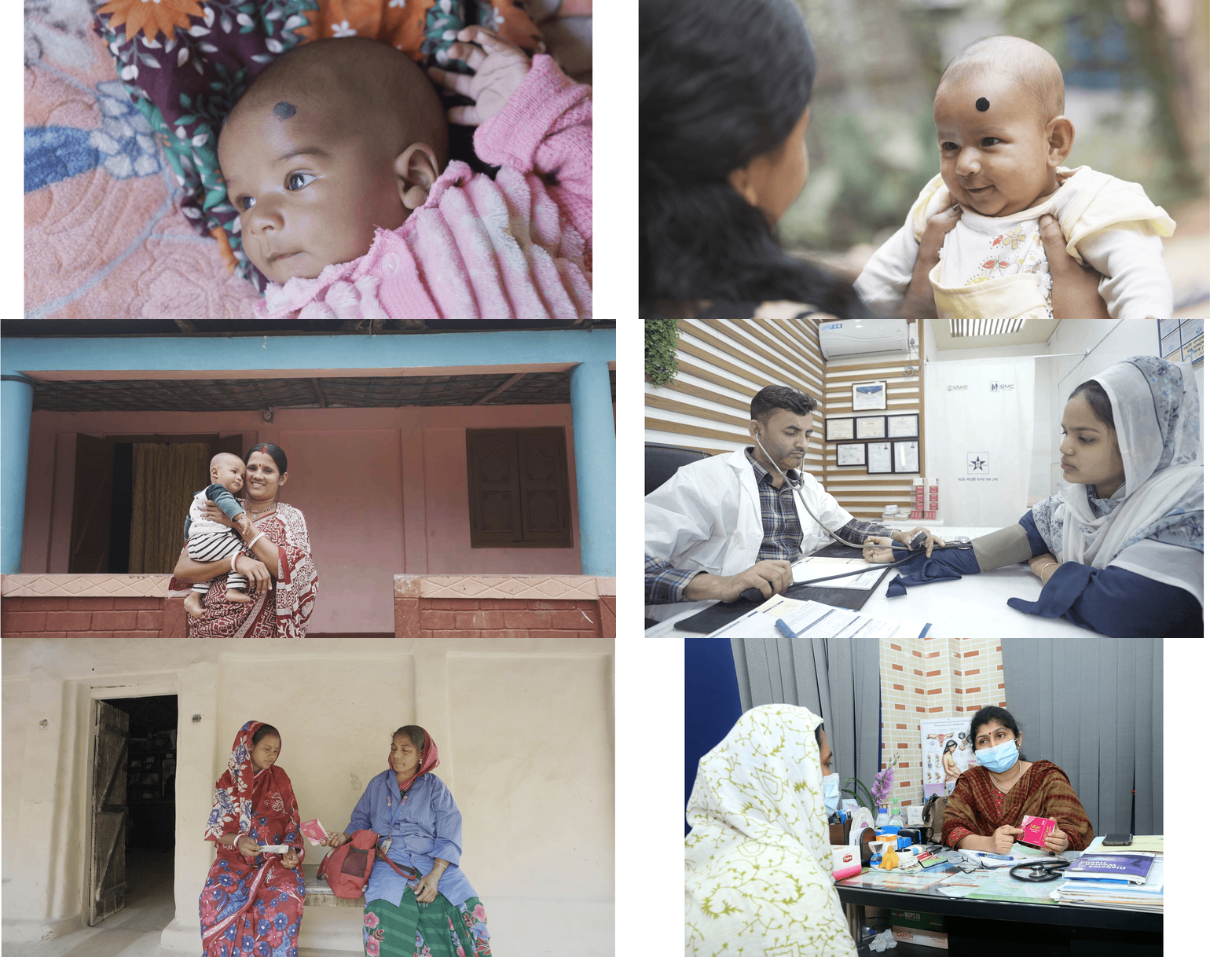
Local production and strong supply chains
FullCare is Bangladesh’s first locally produced UNIMMAP - formulated MMS, helping ensure quality, affordability and a reliable supply. Leveraging SMC’s extensive nationwide distribution network of pharmacy and franchise outlets such as Blue Star Providers (BSP), Green Star Providers (GSP) and Pink Star Providers (PSP) has led the product stocked in 72k unique pharmacies, covering 61% of all registered pharmacies in Bangladesh. This wide availability has been essential in reaching women across the country.
Smart brand promotion and community demand generation
Demand for FullCare has been driven through a combination of nationwide sensitization workshops with obstetricians and gynaecologists, through OGSB network alongside large-scale behaviour change communication (BCC) activities. Community sessions embedded within antenatal care (ANC) services raised awareness of the benefits of MMS and encouraged uptake. Among pregnant women attending community sessions, 54% went on to purchase FullCare directly from Gold Star Members (GSM)-trained women entrepreneurs working in the community.
Expanding maternal care at the community level
A key innovation of the MMS project has been the integration of basic ANC services within communities. This was achieved by mobilizing the women entrepreneurs (Gold Star Members) and trained paramedics across 137 sub-districts; by bringing services closer to women and offering MMS as part of pregnancy care therefore, pregnant women are more likely to purchase and consume MMS.
Enabling Policy Environment and National Leadership
Strong national leadership has been central to this success. The National Technical Committee (NTC), working closely with the Technical Advisory Group (TAG) led by the Ministry of Health and Family Welfare (MOHFW) alongside partners such as UNICEF (which is implementing a parallel pro-poor model) helped position MMS as a critical tool to improve maternal health, reduce anaemia and support better birth outcomes. Pro-Poor and Public-private partnerships created the enabling environment for the transition from iron-folic acid (IFA) to MMS.
This milestone is more than a number, it represents healthier pregnancies, stronger babies, and meaningful progress in reducing anaemia and micronutrient deficiencies among women in Bangladesh. FullCare stands as a testament to the collaborative efforts of CIFF, GAIN, SMC, SAL, Renata Limited, icddr,b, and the Government of Bangladesh along with thousands of community workers, paramedics, pharmacists, and women entrepreneurs - who made this journey possible.