As countries develop their National Pathways for food systems transformation, one emerging need is to
ensure policies land at different levels. A truly effective ‘national’ policy must span all sub-national areas.
“Be the voice of the children” - that was a key messages of a panel discussion held at the 2024 Sankalp Africa Summit on a sunny morning in Nairobi. It focused on how investors and those who work with them can adapt their approaches to better support children’s nutrition.
Among the five panellists — representing GAIN, the World Food Programme, UNICEF, Save the Children, and a local enterprise, Shalem Investment Limited — the motivation for doing this was clear. Children are the future, comprising nearly half of the African population at present and growing fast — expected to reach 1 billion by 2055. They thus have the potential to accelerate development not only in Africa but worldwide. But that potential is currently limited by malnutrition.
The Kenya Food Systems Dashboard, unveiled in February 2024 and managed by the Ministry of Agriculture and Livestock Development, brings together much-needed data to support this food systems transformation. It includes an overview of Kenya’s food system, offering valuable insights into both opportunities and challenges.
Complementary feeding, the practice of providing infants and young children with a variety of nutritious and safe foods while continuing to breastfeed, is essential for their health and development. However, Kenya, despite being a fast-growing economy with a constitutional right to nutrition and health for every child, has made little progress on this front.
The Africa Climate Week 2023 will bring together government leaders, businesses, civil society organizations, and communities from across the continent to share their experiences, insights, and solutions.
In 2019, in an effort to improve the efficiency and sustainability of its programming, GAIN’s Workforce Nutrition Programme (WFN) shifted away from the traditional project development and evaluation cycle towards a nimbler "Quality Improvement" (QI) approach.
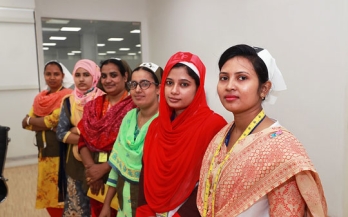
Workforce nutrition is an opportunity to deliver proven benefits for employers, workers, and communities. A definition and framework for workforce nutrition can be found here.
Healthy diets are unaffordable to over 2 billion people worldwide and food access remains a challenge for many. The food environment illustrates the interaction of consumers with different food retail outlets to acquire and consume food.