Global Alliance for Improved Nutrition (GAIN)
  • About

    About

    About

    The Global Alliance for Improved Nutrition (GAIN) is a Swiss-based foundation launched at the United Nations in 2002 to tackle the human suffering caused by malnutrition.

    Learn more about GAIN

    • Who we are
      • Vision and mission
      • Strategy
      • Core values
      • Policies
    • Malnutrition
      • Definition
      • Quick facts
    • Partnerships
      • All Partners
      • GAIN Nordic Partnership
      • Global Fortification Data Exchange (GFDx)
      • Act4Food Act4Change
      • Zero Hunger Private Sector Pledge
    • Leadership
      • Strategic Management Team and Country Directors
      • Board of Directors
      • Partnership Council
      • Get to know our Executive Director
    • Sustainable Development Goals
    • Donors
      • See current donors
  • Programmes

    Programmes

    • All programmes

      All programmes

      Our programmatic work directly impacts over a billion people worldwide and drives the policy changes we advocate with partners. These programmes aim to transform food systems, ensuring sustainable, healthier diets for everyone especially those most at risk of malnutrition and vulnerability.

      All programmes

      • Food Fortification
        • Nutrient Enriched Crops
      • Thriving Nutrition Enterprise
        • Nutrition Investing
        • Nutrition Impact at Scale
        • Nutrition Enterprise Development
        • SUN Business Network
      • Empowering Food Systems Actors
        • Food Systems Governance
        • Children and Young People
      • Social Protection
      • Workforce Nutrition
      • Enhancing Value Chains for Underconsumed Foods
        • Explore Enhancing Value Chains for Underconsumed Foods
      • Shifting Demand
        • EatSafe
        • Consumer demand generation
        • Food Culture Alliance
        • Multiple Micronutrient Supplementation (MMS) Project
      • Enhancing Nutrition with Data & Evidence
        • Food Systems Countdown Initiative
        • Mainstreaming Nutrition: Improving the Impact of IFAD Investments on Diet Quality
        • Global Diet Quality Project
        • Food Systems Dashboard
        • Initiative on Climate Action and Nutrition (I-CAN)
        • Exemplars of Food Systems Transformation
    • Cross Cutting Themes

      Cross Cutting Themes

      Cross-cutting themes are co-benefits of work that we do with the primary aim of healthier diets for all.

      All Cross Cutting Themes

      • Environment
      • Food Safety
      • Gender
      • Youth
      • Food System Resilience
      • Reaching the Very Poor
    • Key Projects

      Key Projects

      Driving innovative solutions to improve nutrition and build healthier, more resilient food systems.

      Key Projects

      • A1: Transforming Food Systems To Improve Diet Quality and Resilience For The Most Vulnerable
      • Nourishing Food Pathways
      • CASCADE (CAtalyzing Strengthened policy aCtion for heAlthy Diets and resiliencE)
      • Large-Scale Food Fortification
      • DELIVER Nigeria
  • Impact

    Impact

    Impact

    Explore how GAIN has reached over one billion people since 2001, transforming their lives with improved nutrition through concerted action and effective policy change.

    Read our Stories of Impact

    • Stories of Impact
    • Nourishing Food Pathways
    • Our response to COVID-19
    • Outcomes
  • Resources

    Resources

    • Publications

      Publications

      Explore a full range of publications and documents related to our work.

      Explore our Publications

      • Reports and Publications
      • Datasets
      • Annual reports
      • Nutrition Connect
    • Multimedia

      Multimedia

      Have a look at our photos, listen to our latest podcast and watch our videos.

      Explore our Multimedia

      • Videos
      • GAIN Interview Cruncher Series
      • Bite the Talk - GAIN Podcast Series
      • Glossary
      • Brand identity
    • Newsroom

      Newsroom

      Our dedicated newsroom that includes our latest news releases and statements, as well as curated blogs and interviews

      Explore our Newsroom

      • News releases
      • Blogs
      • Statements
      • Speeches
      • Programme and project updates
      • Interviews
      • GAIN in the news
      • Stories
  • Countries

    Countries

    Countries

    Headquartered in Geneva, Switzerland, GAIN has offices in countries with high levels of malnutrition: Bangladesh, Benin, Ethiopia, India, Indonesia, Kenya, Mozambique, Nigeria, Pakistan, Rwanda, Tanzania and Uganda. To support work in those countries, we have representative offices in the Netherlands, the United Kingdom, and the United States.

    Countries

    • Country Offices
      • Bangladesh
      • Benin
      • Ethiopia
      • India
      • Indonesia
      • Kenya
      • Mozambique
      • Nigeria
      • Pakistan
      • Tanzania
      • Uganda
    • Representative Offices
      • The Netherlands
      • United Kingdom
      • United States of America
    • Headquarter
      • Switzerland
  • Careers
    • Careers at GAIN
    • Open Vacancies
    • FAQ
  • Request for proposal
  • Financials
  • Events
    • All events
    • Campaigns
  • Contact us
  • Donate
In‐depth assessment of snacking behavior in unmarried adolescent girls living in urban centers of Java, Indonesia

In‐depth assessment of snacking behavior in unmarried adolescent girls living in urban centers of Java, Indonesia

- 01/05/2019

Adolescence is a critical period characterized by physical, social and developmental changes that impact on health and eating behavior. Qualitative research was conducted in Java, Indonesia to examine individual, social, environmental and macrosystem factors affecting snacking behaviors in unmarried adolescent girls 16‐19 years of age.
The International Social and Behaviour Change Communication Summit 2018

The International Social and Behaviour Change Communication Summit 2018

16 April 2018- 20 April 2018Nusa Dua, Indonesia

GAIN is proud to be a sponsor of the SBCC Summit which is organized to better understand what works in shifting social norms, changing behaviors and in amplifying the voice of those who have most at stake in the success of development efforts.
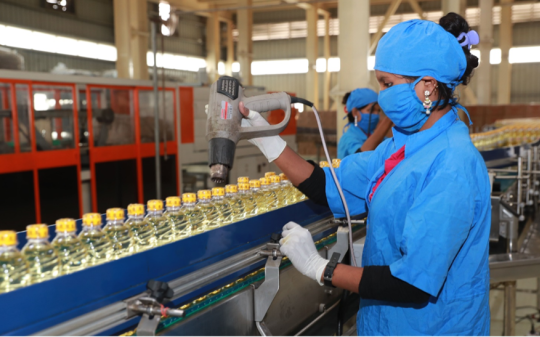
Vitamin A-fortified cooking oil reduces vitamin A deficiency in infants, young children and women: results from a programme evaluation in Indonesia

Vitamin A-fortified cooking oil reduces vitamin A deficiency in infants, young children and women: results from a programme evaluation in Indonesia

- 01/10/2015

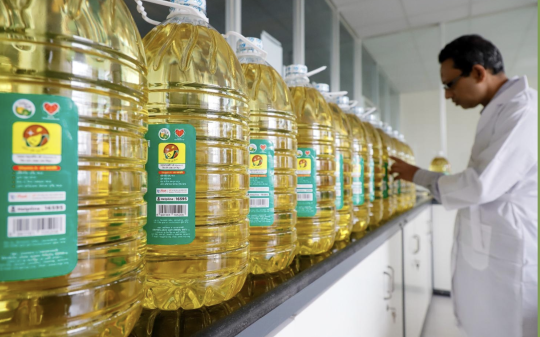
The aim of this study was to assess oil consumption, vitamin A intake and retinol status before and a year after the fortification of unbranded palm oil with retinyl palmitate.
The growing importance of staple foods and condiments used as ingredients in the food industry and implications for large-scale food fortification programs in Southeast Asia

Growing importance of staple foods and condiments used as ingredients in the food industry

- 01/06/2013

This study aimed to estimate the potential contribution certain processed foods can make to micronutrient intake in Southeast Asia if they are made with fortified staples and condiments.
The global, centralized approach of the GAIN Premix Facility has made oil fortification in Indonesia more affordable

The global, centralized approach of the GAIN Premix Facility has made oil fortification in Indonesia more affordable

- 01/06/2013

The objective of this study was to assess the efficiency of the Global Alliance for Improved Nutrition (GAIN) Premix Facility in procuring quality, affordable vitamin A for fortification of edible oil in Indonesia.
Sensory evaluation of foods with added micronutrient powder (MNP) “Taburia” to assess acceptability among children aged 6–24 months and their caregivers in Indonesia

Evaluation of foods with added micronutrient powder

- 06/09/2017

Although it is generally accepted that the addition of micronutrient powders (MNPs) to foods causes no or negligible changes to organoleptic properties, there are anecdotal reports of low acceptability of the MNP distributed in Indonesia. The objective of this study was to assess whether the organoleptic properties of micronutrient powders reduce the acceptability of foods if used as recommended.
Rapid quantification of iron content in fish sauce and soy sauce: a promising tool for monitoring fortification programs

Rapid quantification of iron content in fish sauce and soy sauce: a promising tool for monitoring fortification programs

- 01/06/2013

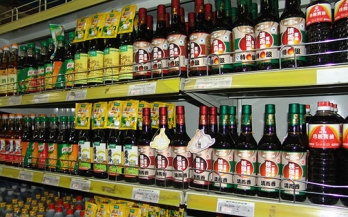
The objective of this study was to assess a new portable device for the quantitative measurement of iron content of fortified sauces that could be used to control fortification levels.
Iodine intake through processed food: case studies from Egypt, Indonesia, the Philippines, the Russian Federation and Ukraine, 2010-2015

Iodine intake through processed food: case studies from Egypt, Indonesia, the Philippines, the Russian Federation and Ukraine, 2010-2015

- 26/07/2017

This paper reports on case studies supported by the Global Alliance for Improved Nutrition (GAIN)-UNICEF USI Partnership Project to investigate processed food industry use of adequately iodised salt in contrasting national contexts.
Iodine intake estimation from the consumption of instant noodles, drinking water and household salt in Indonesia

Iodine intake estimation from the consumption of instant noodles, drinking water and household salt in Indonesia

- 08/03/2018

The objective of this study was to assess the contribution of iodine intake from iodised household salt, iodised salt in instant noodles, and iodine in ground water in five regions of Indonesia.
Improved information and educational messages on outer packaging of micronutrient powders distributed in Indonesia increase caregiver knowledge and adherence to recommended use

Improved information and educational messages on outer packaging of micronutrient powders distributed in Indonesia

- 08/06/2018

The objective of this study was to examine the influence of improved information and educational messages on outer packaging of a micronutrient powder (MNP), locally known as “Taburia”, on knowledge and adherence to recommended use.

Pagination

  • Previous page ‹‹
  • Page 7
  • Next page ››

© GAIN 2026

  • Sitemap
  • Terms and conditions
  • Privacy policy
  • Accessibility
  • Subscribe
  • RSS
  • Ethical Supply Chain Statement
  • Follow us

  • Twitter X
  • Facebook
  • Instagram
  • Linkedin
  • Youtube