Trade-offs or Trade-ups? Policy Coherence between Fostering Trade and Improving Nutrition
Last month the UN Food and Agriculture Organization released its biennial State of Agricultural Commodity Markets report, and we were delighted to see it focusing on a topic close to our own hearts: policy coherence between trade and nutrition.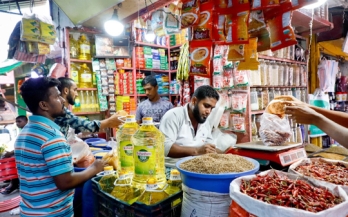
GAIN Working Paper n°45-Returns to supporting agrifood MSMes
- 17/12/2024
Micro, small, and medium enterprises (MSMEs) are the backbone of economic development in many low- and middle-income countries (LMICs). Their role is particularly important since they are estimated to make up the vast majority of food system businesses and play a critical role in achieving food security and supporting nutrition, as well as providing employment. To function optimally, business-support programmes and interventions are often developed based on the assumption that institutional constraints impede MSMEs from maximising their potential. Support services can be broadly grouped into financial assistance (e.g., grants, loans) and technical assistance (e.g., business development services, training, networking).
9 December 2024 | Compassion in world farming
Identifying Indicator Needs for Food System Transformation GAIN Convening Paper n°12
- 09/12/2024
As part of the Nourishing Food Pathways (NFP) programme, GAIN is working to strengthen efforts to understand and measure progress on food system transformation. Clear progress measures can provide decision-makers with the visibility and the flexibility to course-correct as needed to realise the desired impact, and can help to ensure accountability for action. To this end, one of the workstreams under NFP aims to develop, test, and validate novel methods and metrics for assessing food systems transformation. To ensure that this work is grounded in local food system stakeholders’ needs and preferences, GAIN worked with Food Systems Foresight to solicit input from national stakeholders across five African countries (Ethiopia, Mozambique, Nigeria, Tanzania, and Kenya) on priority indicator gaps for monitoring food systems transformation. This paper reports on the outcomes of that work.
2 December 2024 | The Borgen Project
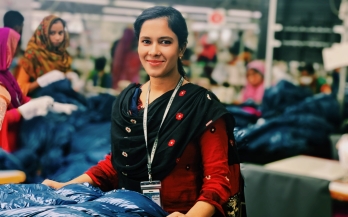
Fuelling the Workforce: How Nutrition Drives Occupational Health and Safety
This Human Rights Day, our panel will bring together experts from GAIN, SUN, ILO, and WHO to discuss the critical issue of nutrition integration in global labour standards. The panel is based on a comprehensive report that analysed the current state of nutrition considerations in international instruments, national legislation, and workplace practicesThis Human Rights Day, a live interview panel will bring together experts from GAIN, SUN, ILO, and WHO to discuss the critical issue of nutrition integration in global labour standards. The panel is based on a comprehensive report that analysed the current state of nutrition considerations in international instruments, national legislation, and workplace practices
Framework for N4G Private Sector Working Group (PSWG)
- 03/12/2024
The PSWG fosters an open dialogue between public and private sector actors on selected priority areas in addressing all forms of malnutrition. It recognizes that many of the root causes of malnutrition cannot be solved without the involvement of those who grow, produce, and market food. These commitments, while important, are part of a larger goal to catalyse sustained private sector action, complementing efforts by other N4G stakeholders.
25 November 2024 | DAIRY NEWS TODAY

29 November 2024 | Business Barometer
Demand For Healthier Diets Is Growing As ‘DISH’ Unveils 15 Solutions