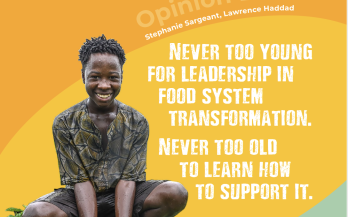
We know in our bones that youth must be part of the solution to the key crises facing
our planet – but why and how exactly? Here we provide government policymakers,
business people, civil society members and development partners in the food systems
space with some ways to advance meaningful youth engagement.
Ethiopia faces persistent malnutrition and emerging diet-related challenges. Nutrition for Growth (N4G), a pledging movement in which the world’s leaders have committed to centre nutrition, offers a platform to mobilize multisectoral action and accountability. GAIN offers technical expertise in food systems and nutrition governance, to support Ethiopia translate its national strategies in its goal of supporting the Government of Ethiopia (GoE) in accelerating its progress towards Food System Transformation.
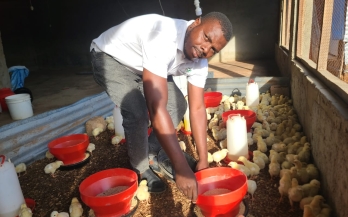
Pemba, Mozambique – From the window of his house in Quissanga district, Cabo Delgado, Andrade Vitorino watched helplessly as his poultry farm collapsed due to strong winds and rains caused by cyclone Kenneth in 2019.
But since the 2017, it is the armed conflict in Cabo Delgado province that affected his business and various economic activities, as well as the functioning of food systems in the province.
“One day, a neighbour shouted that we were under attack, and we all ran away, leaving everything behind. A few days later I heard that everything had been burned down. Houses and everything, including my poultry,” said Andrade.
Seated on a plastic chair and turning his back to his house made of clay, in one of Pemba's neighbourhoods, where he is starting new life he says, “I didn't have time to take anything. Just my documents. My house, my aviary and my dreams were left behind.”
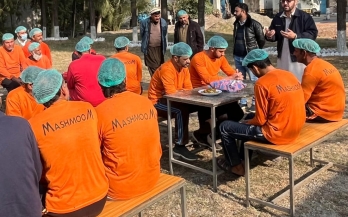
Every day, thousands of workers across Pakistan’s Hattar Industrial Estate (HIE) clock into jobs that power the country’s manufacturing sector. From ceramics and textiles to printing, chemicals, and food production, these industries depend on a steady, skilled workforce. Yet, behind the manufacturing lines are workers whose nutritional needs are often overlooked. Improving workforce health and productivity can yield broader economic dividends by reducing absenteeism, improving industrial output, and lowering healthcare costs associated with non-communicable diseases (NCDs).
The global burden of malnutrition, poor mental health, depression, and non-communicable diseases (NCDs) continues to grow, contributing significantly to mortality and poor health, reduced productivity, and economic stagnation. With over 60% of the population engaged in the workforce and spending more than half of their adult lives at work, the workplace offers a strategic platform to address these challenges. One important aspect of worker wellbeing is nutrition, which fuels the body, improves cognitive and immune function, and reduces sick days and NCD risk.
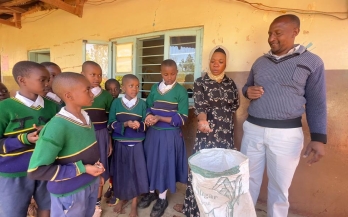
GAIN Tanzania is at the forefront of efforts to tackle micronutrient deficiencies through biofortification, an approach that enhances the nutritional content of staple crops. One of its most impactful initiatives has focused on high iron beans (HIB), a locally accepted, nutrient-rich variety introduced through partnerships with schools and farming communities. By connecting farmers to institutional markets and supporting local seed systems, GAIN is creating a sustainable, scalable model for improving diets and livelihoods. In this interview, Prisca Kokutona Rwezahura, Country Director -GAIN Tanzania, reflects on this journey- sharing insights into policy, partnerships, and what’s next for biofortification in the country.
Rwanda faces persistent challenges with malnutrition, and there is increasing interest in the country in taking a food systems approach to tackling it. However, getting this new approach into the development and agricultural sector’s agendas requires understanding the landscape of actors involved. In response, the Ministry of Agriculture and Animal Resources and the Global Alliance for Improved Nutrition commissioned an analytical mapping of actors involved in nutrition and the food system in Rwanda, which was implemented by the Swiss Tropical and Public Health Institute. This was accomplished by conducting a stakeholder mapping at district and national levels through key informant interviews and Net-Map analysis as well as a policy landscape analysis.
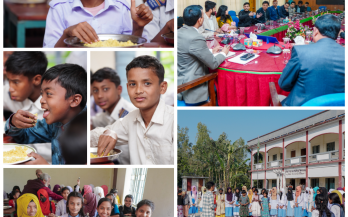
In the quiet riverine village of Khedabagh, nestled within Lalmonirhat Sadar in northern Bangladesh, every morning begins with the sound of boats on the Teesta River and the determined footsteps of a young boy named Minhajul Islam Bappi, making a difference in the lives of young girls and boys in his village.
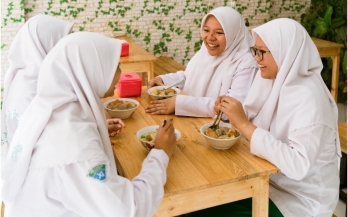
Clear measures of progress on food system transformation can provide decision-makers with the visibility to course-correct to realise desired impacts and can help ensure accountability. To this end, there is a need to develop, test, and validate novel methods and metrics for assessing food systems transformation. To ensure that such work is grounded in local food system stakeholders’ needs, GAIN consulted national stakeholders across four Asian countries (Bangladesh, India, Indonesia, and Pakistan) to identify priority indicator gaps for monitoring food systems transformation. These consultations drew from an analysis of each country’s food system transformation pathway, existing indicators, and the results from similar stakeholder workshops in Africa. National stakeholder workshops were held with diverse participants in three of the countries, while stakeholder interviews were used in India.
Across all countries, some similar themes emerged, such as sustainable and climate-smart agriculture, small and medium-sized enterprises, food safety and quality, consumption behaviour, policy alignment, and food system governance. There was a strong focus on policy actions, sustainability, and resilience as crosscutting themes. Women and youth were mentioned as groups requiring particular attention in metrics development, including the wage disparities between men and women, inclusion of women and youth in decision-making process, and youth access to finance and agri-business. The results from the workshops will be used to inform GAIN’s future work in developing metrics and methods to understand and help countries track their food systems transformation.
The French Society of Nutrition (SFN), the French Federation of Nutrition (FFN), the Federation of European Nutrition Societies (FENS), and the International Union of Nutritional Sciences (IUNS)—and under the high patronage of Mr. Emmanuel Macron, President of the French Republic—is holding the 23rd International Congress of Nutrition, between 24 and 29 August 2025 at the Palais des Congrès, Pris, France.