Reports and publications
Refine your search
GAIN Working Paper n°65: Cities Accelerating Transitions to Regenerative Food Systems
- 09/03/2026
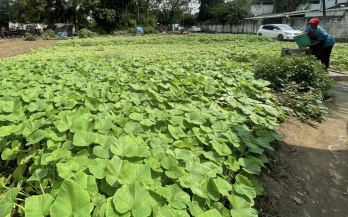
Transformation towards just and sustainable food systems is needed to ensure the health of people and the planet. Current large-scale industrial agri-food systems practices across an increasingly urbanised system are increasing soil degradation. These practices, alongside intersecting environmental challenges and widening socio-economic inequalities, are negatively impacting food security and access to healthy diets and increasing interest in climate-smart, agroecological, and regenerative food production. Cities are dynamic places of human settlement where food systems innovation can be catalysed. This makes them key to food policy and delivering nourishing, just and sustainable food systems. In 2024-5, the Transforming Urban Rural Food Systems (TURFS) Consortium conducted a mixed-methods exploratory inquiry in Dar es Salaam, Tanzania to explore how cities can incentivise regenerative agricultural transitions.
GAIN Convening Paper n°22: Shared Learning, Inspired Action: Insights From Global Exchanges on Strengthening Urban Food Markets
- 13/02/2026
To strengthen evidence and practice about local fresh food markets and food systems governance, in 2025, ICLEI CityFood, the Global Alliance for Improved Nutrition (GAIN), and World Farmers Markets Coalition published two editions of a handbook about markets and resilient cities. The second edition comprises 31 city-market case studies and is structured around the CityFood Market Action Framework. Between May and December 2025, following the launch of the first edition, ICLEI CityFood and GAIN co-convened eight online sessions of a Community of Interest focused on markets and cities. The sessions were structured around four thematic areas: an introduction to how cities shape food markets; gender and social intersectionality; managing food waste; and access to nutrition. Across all eight sessions, a total of 327 participants from 27 cities and 56 organisations took part. This paper shares a summary of those prior sessions and signposts upcoming sessions
GAIN Working Paper n°62: Alternative Sources to Improve Sustainability and Resilience of Tempeh Supply Chains
- 13/02/2026
Tempeh is a popular traditional plant-based protein that plays a vital role in Indonesian diets. Indonesia’s reliance on imported soybeans (2.6 million tons/year) for tempeh production, however, creates market instability and food vulnerabilities, particularly regarding cost and supply fluctuations. This paper analyses the technical, economic, and market feasibility of alternative legumes—specifically, jack beans, mung beans, and peanuts—as sustainable substitutes for soybeans in tempeh production. The aim is to identify the most viable option for immediate scale-up to support local food systems and improve nutritional outcomes.
Territorial Governance and Food Markets for Sustainable Food Systems
- 21/11/2025
This White Paper makes the case for a territorial governance approach that reinforces urban–rural linkages by empowering local actors and enabling their collective agency. Local, traditional, and farmers markets serve as strategic hubs that offer multiple levers and diverse forms of capital for transforming food systems within cities, across urban–rural interfaces, and throughout wider territorial landscapes. Investing in both hard (physical) and soft (capacity-building) market infrastructure, supporting diverse knowledge systems, and advancing inclusive “whole-of-society” governance are essential steps toward unlocking resilient and sustainable food systems now and in the future. With these foundations in place, communities, governments, and sectors can routinely apply best practices and participate meaningfully in decision-making processes that foster a wide range of regenerative, biodiverse food value chains. Such systems create market and food environments characterized by vibrant public spaces; access to affordable, safe, culturally preferred, healthy diets; reduced and valorized food waste; and opportunities for dignified, prosperous livelihoods.
The Cityfood Market Handbook For Healthy And Resilient Cities (Ed.2)
- 13/11/2025
GAIN’s contributions were made possible through the Nourishing Food Pathways programme, which is jointly funded by: German Federal Ministry for Economic Cooperation and Development; Ministry of Foreign Affairs of the Netherlands; European Union; government of Canada through Global Affairs Canada; Irish Aid through the Development Cooperation and Africa Division; and Swiss Agency for Development and Cooperation of the Federal Department of Foreign Affairs. The findings, ideas, and conclusions contained presented here are those of the authors and do not necessarily reflect positions or policies of any of GAIN’s funding partners. The handbook is also supported by the Federal Ministry for Economic Cooperation and Development (BMZ) and Deutsche Gesellschaft für Internationale Zusammenarbeit (GIZ).
Tools to support food systems transformation Releasing the brake on food systems transformation: Africa-focus
- 25/07/2025
Since the lead-up to the UNFSS, we have been supporting countries to draw up pathways to better food systems, and to begin walking the talk. But many constraints still hinder progress, and reforms are sorely needed. That’s why we have worked with governments to develop and implement a series of practical tools to strengthen policy decision making processes and capacities. These are tools created to give users a hand over major, common barriers. They are also designed to align with or to support ongoing national processes, such as monitoring plans, or indeed continental and transnational ambitions, including the Comprehensive Africa Agriculture Development Programme (CAADP), and the seven aspirations of Agenda 2063 which call for a more prosperous, integrated, democratic, peaceful, pan- African, people-driven, and influential Africa by 2033. The tools collected here can be instrumental: in diagnosing food systems to identify critical gaps and untapped opportunities; in shaping nimble action plans in line with national priorities; in identifying much-needed policy reforms to ensure sectors act alongside each other, rather than against; and in providing new ways to effectively navigate political, financial, and technical impediments. Barriers have stood in the path of meaningful progress for too long – we must break through them.
Understanding Moments of Change in Food Systems Transformation
- 21/07/2025
Understanding Moments of Change in Food Systems Transformation Four years on from the UN Food Systems Summit, how well are we progressing in transforming food systems so that they reduce hunger, increase access to healthy diets, reduce climate emissions, improve climate resilience, create good jobs, and nurture the environment? The numbers tell a mixed story. According to the Food Systems Countdown Initiative, itself a creation of the UNFSS, only 20 of 42 global food system indicators are trending positively (1), with none fast enough to meet 2030 SDG goals. These numbers are important but inevitably reliant on data that are 2–3 years out of date.
GAIN Discussion Paper n°19
- 10/07/2025
The UN Food Systems Summit (UNFSS) was the first time youth were actively invited to be equal participants in a global food or nutrition summit. Youth played a pivotal role in UNFSS, contributing diverse perspectives to transform global food systems. Through youth-led dialogues, leadership in action tracks, and the UNFSS Youth Constituency, young people influenced policies, showcased innovative solutions for sustainability, and championed intergenerational equity. A key outcome of UNFSS was the Food Systems Pathways, which set out countries’ approaches for transforming their food systems to be more sustainable, inclusive, and resilient, aligned with the Sustainable Development Goals.
GAIN Working Paper n°49-Empowered Local Agency, Infrastructure Investment, And Governance
- 03/04/2025
Food systems, important for food security, nutrition, prosperity, and environmental well-being, are integral to all 17 Sustainable Development Goals. Traditional food markets are strategic entry points for food systems transformation, since a diversity of stakeholders (including local producers, vendors, consumers, and government), interact routinely in these spaces. These markets connect millions of stakeholders within and across local food systems and levels of government mandates. As food-insecure regions like sub-Saharan Africa (SSA) rapidly urbanise, most urban, low-income, vulnerable communities are reliant on food purchased from markets. As such, markets are key spaces to guide vendor practices, influence consumer food choices, and strengthen inclusive governance. Despite their critical value, markets’ ‘hard’ (structures and equipment) and ‘soft’ (capacities and resources) infrastructure are significantly under-supported. Investment efforts have been challenged by a lack of understanding of how markets are embedded in the wider food system and markets’ wholesale and retail dynamics, inadequate financial models, insufficient public budgets and capacity, and limited empowerment of key stakeholders. This paper introduces and illustrates GAIN’s Inclusive Food Systems Governance Model and supporting tools. The model is designed to strengthen investment and empower voices, alongside increased efforts to ensure sustainability and resilience in traditional food markets. It has been shown to support effective market infrastructure investments, to foster local agency and inclusive and equitable food systems transformation, and to be adaptable across different contexts. The case of Marikiti Market, Machakos County (Kenya) shows the model in action, including details of specific investment components and costs. As infrastructure investments are limited, the importance of making a sound business investment case for public and private (and philanthropic) partnerships and banks to invest in traditional markets is critical.