- 12/10/2026
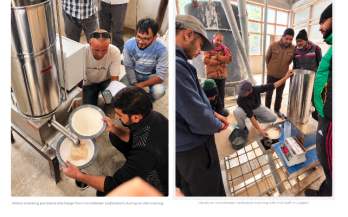
Ladakh’s wheat flour fortification program, launched in 2022, addresses severe anaemia with full government funding, high coverage through the PDS, compliant mills, and micronutrient blend of iron, folic acid, vitamin B12.
Key recommendations include local evidence collection, capacity building, quality testing, storage protocols, behavior change communication, multisectoral convergence, and robust monitoring for sustainability.
- 12/10/2026
The Wheat Flour Fortification (WFF) programme in Himachal Pradesh is a mature example of a state-wide food fortification initiative implemented through the Public Distribution System (PDS), a key food-based social safety net programme in India. The programme demonstrates strong political commitment, effective operational implementation, and high consumer acceptance, while also highlighting systemic challenges related to quality assurance, monitoring, and interdepartmental coordination.
GAIN undertook a process documentation exercise in Himachal Pradesh and the Union Territory of Ladakh to capture implementation experiences, key learnings, and good practices. Based on this exercise, two policy briefs have been developed, one for each location.
- 11/09/2026
This resource page brings together resources from GAIN’s work on THR. The resources capture experiences from states including Telangana, Bihar, Uttar Pradesh and Gujarat, showcasing different approaches to THR production and delivery and the considerations associated with each.
- 09/07/2025
Food culture is often understood as the practices, beliefs, and traditions surrounding food and eating within a particular society or community. It encompasses various aspects of traditional dishes and recipes, culinary techniques and cooking methods, mealtime rituals, social aspects, and symbolism. Food culture in a critical factor shaping food choices by influencing eating and dietary norms and habitual behaviours. Given this, it is essential to clearly define the dimensions of food culture (particular to a country or region) if one is to seek to leverage its profound impact on individuals and communities. This working paper thus explores the multidimensional nature of food culture in India, emphasising its deep-rooted connections to cultural identity, social bonding, and wellbeing.
- 16/05/2025
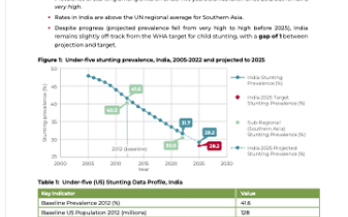
WHA Global Nutrition Stunting Target 2012-2025
Achieve a 40% reduction in the number of children under-5 who are stunted
WHA Global Nutrition Overweight Target 2012-2025
Ensure that there is no increase in childhood overweight
- 09/04/2025
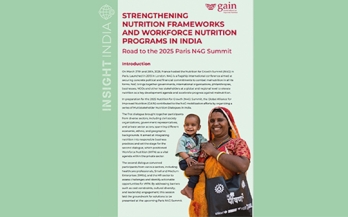
On March 27th and 28th, 2025, France hosted the Nutrition for Growth Summit (N4G) in Paris. Launched in 2013 in London, N4G is a flagship international conference aimed at securing concrete political and financial commitments to combat malnutrition in all its forms. N4G brings together governments, international organisations, philanthropies, businesses, NGOs and other key stakeholders at a global and regional level to elevate nutrition as a key development agenda and accelerate progress against malnutrition.
- 02/12/2024
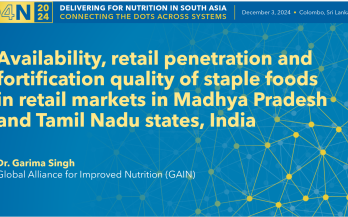
Availability, retail penetration and fortification quality of staple foods in retail markets in Madhya Pradesh
and Tamil Nadu states, India
- 30/10/2024
Poverty and malnutrition are critical challenges in Bihar. Malnutrition is a persistent challenge in Bihar, India – a state that, despite significant progress in recent years, still lag behind the national average in key nutrition indicators. Rates of malnutrition in Bihar are among the highest in the country.
- 11/09/2024
Enhancing nutrition for India’s working-age population through workforce nutrition practices can yield numerous benefits, including improved well-being for workers and their families, better productivity, and a stronger economy. Key pillars include access to healthy food, breastfeeding support, nutrition health checks, and nutrition education.
- 11/09/2024
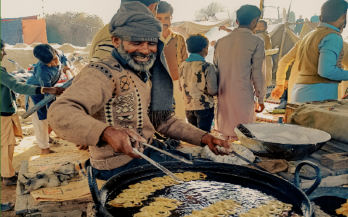
This brief describes a Government of India initiative – the Healthy and Hygienic Food Streets (HHFS) programme that aims to make the country’s street food safer. It shares some of GAIN’s recent contributions to these efforts and provides some implications for national and state governments to consider.