- 03/06/2025
The world is facing multiple interconnected crises, including climate change and escalating conflicts, which pose significant challenges to food systems. These issues highlight the need for systemic transformation to improve food security, nutrition, and environmental sustainability. In response, GAIN's Nourishing Food Pathways (NFP) programme aims to strengthen and support the implementation of food system pathways in 11 countries.
- 16/05/2025
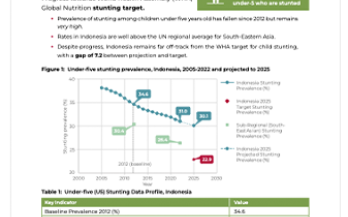
WHA Global Nutrition Stunting Target 2012-2025
Achieve a 40% reduction in the number of children under-5 who are stunted
WHA Global Nutrition Overweight Target 2012-2025
Ensure that there is no increase in childhood overweight
- 28/10/2024
Indonesia is confronting a pressing public health challenge that extends beyond diet: the impact of non- communicable diseases (NCDs) driven by lifestyle factors, including high sodium intake. This issue
is particularly concerning as many NCDs, such
as hypertension and cardiovascular disease, are preventable yet contribute significantly to the country’s morbidity and mortality rates. For instance, Indonesia’s stroke burden remains substantial, with a Disability- Adjusted Life Years (DALYs) rate of 3,809 per 100,000 people in 2021,1 one of the highest in Southeast Asia, reflecting the urgent need for targeted public health interventions.
- 27/08/2024
This brief explains some key findings and recommendations from a recent roadmap report on FLW reduction produced by the Ministry of National Development Planning (BAPPENAS), with key partnerships from the Global Alliance for Improved Nutrition (GAIN). It highlights the crucial role of coordinated efforts in achieving the desired reduction in FLW and thereby mitigating its environmental and economic impacts.
- 31/05/2024
Micronutrient malnutrition remains a significant challenge in Indonesia, particularly among impoverished populations who struggle to afford and access nutrient-rich foods. Iron deficiency anemia is especially concerning, affecting 48.9% of pregnant women and 38.5% of children across the country. To address these gaps, the Ministry of Health, in collaboration with the Global Alliance for Improved Nutrition (GAIN), conducted a comprehensive Micronutrient Gap Assessment (MGA). This assessment aimed to evaluate micronutrient intake levels among Indonesians and identify the potential benefits of rice fortification in meeting recommended dietary requirements.
- 22/04/2024
As countries develop their National Pathways for food systems transformation, one emerging need is to
ensure policies land at different levels. A truly effective ‘national’ policy must span all sub-national areas.
- 16/09/2022
In 2013 Indonesia’s Ministry of Health requested that GAIN support the district governments of Malang and Sidoarjo in East Java Province to reduce stunting by improving maternal and infant nutrition.
- 12/09/2022
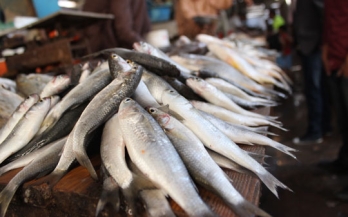
In 2018 GAIN began work in collaboration with the District Fisheries Offices of Indonesia’s Ministry of Maritime Affairs (MMAF) to develop the Indonesia Postharvest Loss Alliance for Nutrition (I-PLAN). I-PLAN aimed to improve the domestic supply of fish by reducing post-harvest losses.
- 08/06/2022
Adolescents in Indonesia face multiple nutritional challenges, including undernutrition and anaemia, as well as a growing prevalence of overweight and obesity. To promote understanding of the Healthier Choice Logo among adolescents as well as to learn more about adolescent food choices, GAIN supported a programme called Pelajar Peduli Gizi (Students for Nutrition).
- 06/06/2021
The COVID-19 pandemic is a multiplier of vulnerability, compounding threats to food security and nutrition (FSN) while exposing weaknesses in food systems. In response, the Global Alliance for Improved Nutrition (GAIN) developed the Keeping Food Markets Working (KFMW) programme to provide targeted support to help sustain core food systems.