Strengthening Family-Led Business Governance: Lessons from Two N3F African Poultry Portfolio SMEs
Blog, 2nd June 2026
Blog, 2nd June 2026
Across Sub-Saharan Africa, most SMEs producing nutritious foods are family-owned enterprises. Often built from modest beginnings, these businesses play an important role in food systems by creating jobs, supporting rural economies, and expanding access to safe and affordable nutritious foods. As these companies grow, the demands for strengthening and streamlining their corporate governance and management structures increase significantly.
What worked in the early stages, such as informal decision-making, overlapping roles, and flexible processes, can become limiting as operations expand, teams grow, and external financing is introduced. Without clearly defined governance frameworks, businesses may face inefficiencies, unclear accountability, and increased operational risks. Family involvement can add another layer of complexity. When ownership and management are closely linked to family relationships, decision-making may rely more on informal norms than structured processes.
Key issues such as succession planning, role clarity, performance management, and the recruitment of external expertise are not always addressed systematically. As companies grow and interact with investors, lenders, and partners, the absence of clear governance structures can create both operational and financial risks. For growing family businesses, governance is therefore not about adding unnecessary bureaucracy. Rather, it provides the systems, processes, and accountability mechanisms needed to support sustainable growth and ensure transparency in decision-making.
Strong governance frameworks help clarify roles and responsibilities, improve oversight, and strengthen internal controls. They also build confidence among investors and partners by demonstrating that the business has the structure and discipline required to manage growth responsibly. Recognising these challenges, the Global Alliance for Improved Nutrition (GAIN) supported two family-owned portfolio companies of the Nutritious Foods Financing Facility (N3F), Couvoir Amar in Senegal and Mkuza Chicks in Tanzania, to address specific governance gaps.
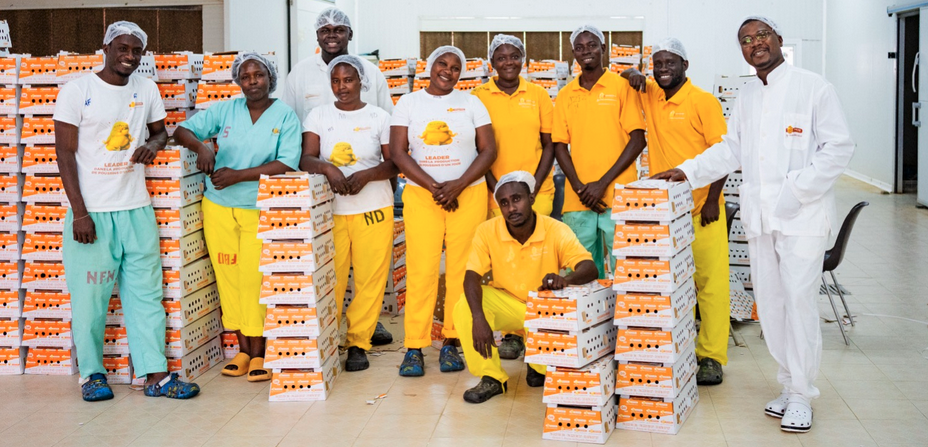
Founded in 2020, Couvoir Amar is a fast-growing, family-owned poultry company operating across breeding, hatchery, and broiler production in Senegal. Within a few years, the company has built a workforce of over 80 employees and expanded production to meet rising demand for locally produced poultry products. In 2024, Couvoir Amar received financing through the N3F, alongside technical assistance. While the company demonstrated strong operational performance and committed leadership, a governance assessment highlighted a key challenge: the business was growing faster than its management systems were evolving.
Decision-making remained highly centralised, roles and processes were not always formally documented, and succession had not yet been planned. To address these gaps, which are common in founder-led enterprises transitioning to more institutionalised operations, N3F’s Technical Assistance Facility, in partnership with ESG Africa, designed a tailored corporate governance strengthening plan.
The process began with a diagnostic followed by the development of a practical roadmap aligned with the company’s growth stage. Several new core governance tools have been introduced, including a code of ethics and conduct, an executive committee charter, a delegation of authority policy, a leadership succession plan, and a dividend policy to guide shareholder expectations. At the same time, discussions with the leadership team focused on strengthening internal coordination and designing governance reforms to align with the company’s culture.
Beyond the development of new tools, the process encouraged a shift in mindset. Governance discussions became more structured, powers and responsibilities clearer, and succession planning entered the strategic agenda. Couvoir Amar’s experience highlights a key lesson: governance is about building the institutional foundations that allow family businesses to grow sustainably and ensure long-term continuity.
“
What I valued most in our collaboration with GAIN and N3F was the technical support provided. Today, companies can invest significant capital expenditure (CAPEX) in infrastructure; however, without strong governance in place, those investments may not deliver the expected results.
”
Founded in 1999, Mkuza Chicks is a family-owned poultry company based in Tanzania that has grown into an integrated business covering breeder farms, hatchery operations, broiler and layer production, feed milling, and an abattoir. Its day-old chicks, eggs, and chicken meat are distributed through farm-gate sales, company retail outlets, and distributors, reaching more than 2,000 smallholder poultry farmers. With 130 employees and with first- and second-generation family members active in management, the company represents a mature family enterprise with strong entrepreneurial leadership.
However, as with many growing family businesses, governance structures had not evolved at the same pace as operations. Many practices remained informal and trust based. Board meetings were not formally convened, delegation of authority was limited, and succession planning had not been documented. Recognising the risks this could pose for future growth and continuity, the company sought support to strengthen its governance and management structures. Importantly, the company realised that governance enhancement could support their ambitions for expansion in a competitive business environment.
Through the N3F Technical Assistance Facility, GAIN implemented a tailored governance strengthening project in partnership with ESG Africa. The initiative combined a governance diagnostic with leadership coaching and focused on three priorities: assessing governance maturity across key areas, developing a sequenced improvement plan aligned with the company’s growth ambitions, and strengthening leadership team dynamics. The process led to the development of several practical governance tools, including a Code of Ethics, a Board Charter, a Delegation of Authority policy, a management succession plan, a business continuity plan, and a family constitution. Importantly, the approach emphasised gradual and practical reforms adapted to the company’s capacity.
The company’s response was encouraging. Shareholders began organising regular Board meetings and seeking external Board members; management policies started to be formalized, and discussions on leadership succession were initiated. Beyond documentation, the process also encouraged stronger leadership dialogue and accountability. Mkuza Chicks’ experience illustrates that governance can prepare family enterprises for generational transition, operational complexity, and sustainable growth
“
The support from N3F opened a new chapter in Mkuza operations, in which we are shifting from a family business to a professionally managed company. Indeed, the company had grown in terms of production but lagged behind in governance. The support was not only helpful but came at the right time. I admit the change is a process, but as of now we have a different mindset. We have started to implement most of what we learned, but one thing in particular I have to mention: Business continuity plan.
We discussed business continuity planning, took action on this matter, and after a few months the US–Iran war came. The war affected many small businesses. But we believe Mkuza will manage the negative effects because we had already made plans to mitigate the effects of such events.
”
The governance journeys of Couvoir Amar and Mkuza Chicks – despite their different levels of maturity – revealed three common lessons:
Committed family leaders, structured boards, clear lines of authority, succession planning, and strong team dynamics lay the foundation for continuity and long-term impact. For nutrition-focused investment initiatives, pairing financial support with strengthening corporate governance helps ensure that growth is sustainable and contributes to building resilient, investable, and nutrition-driven food systems across Sub-Saharan Africa.
Both companies demonstrated that corporate governance is more than completing a checklist; it is about long-term behavioral change. When leadership fully embraces this opportunity to create value in this way, it sends a powerful signal throughout the organization. Embedding these changes, however, takes time, as new practices must first be modeled by leadership and progressively adopted across the company.

Senior Associate, Technical Assistance & Impact: Nutritious Foods

Senior Lead, Innovative Finance for Nutrition
The N3F is an innovative blended finance approach that aims to overcome SMEs' constraints by providing financial support and building technical capacity within high-potential SMEs that produce foods available to lower-income consumers in Sub-Saharan Africa (SSA).