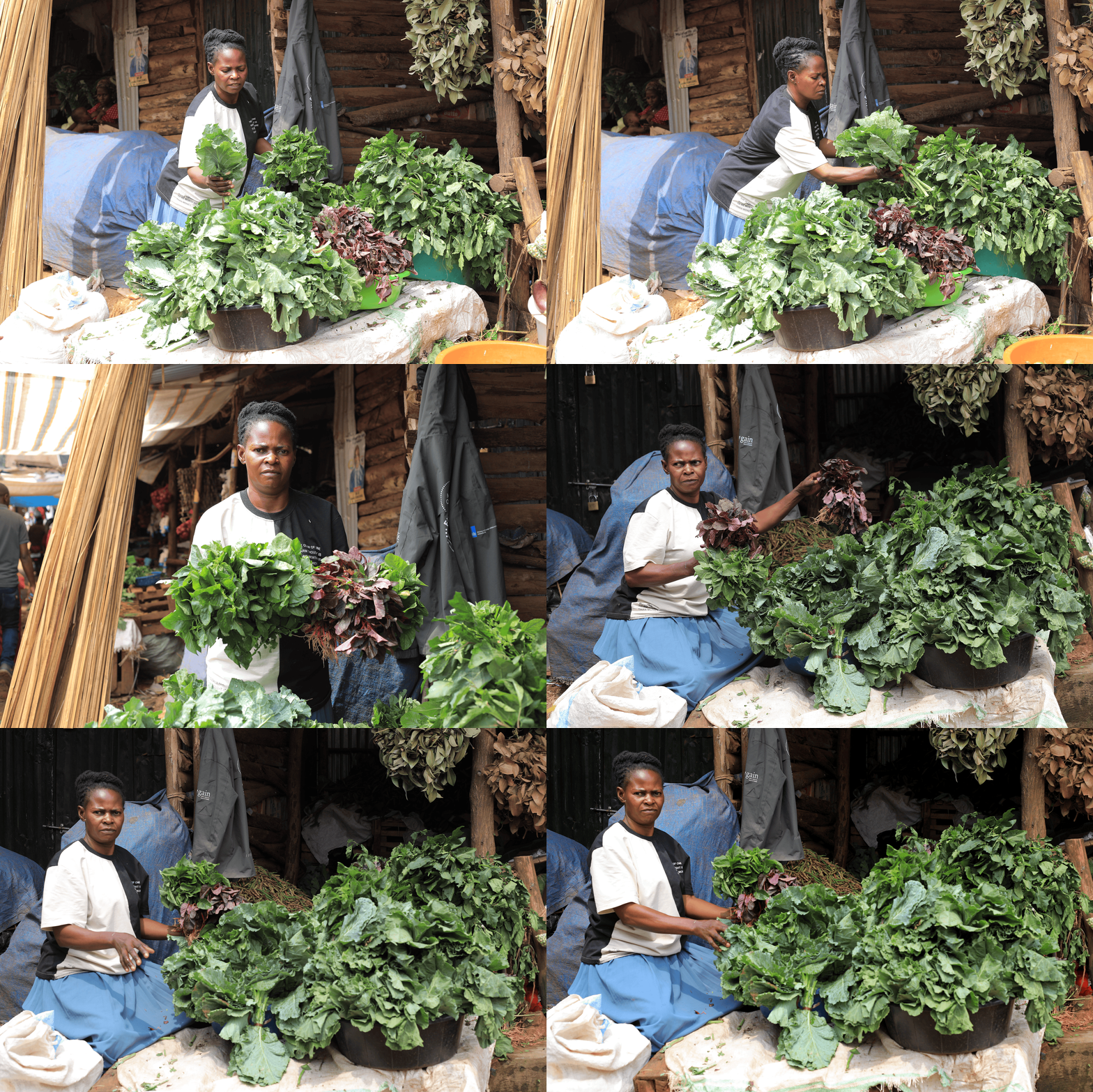
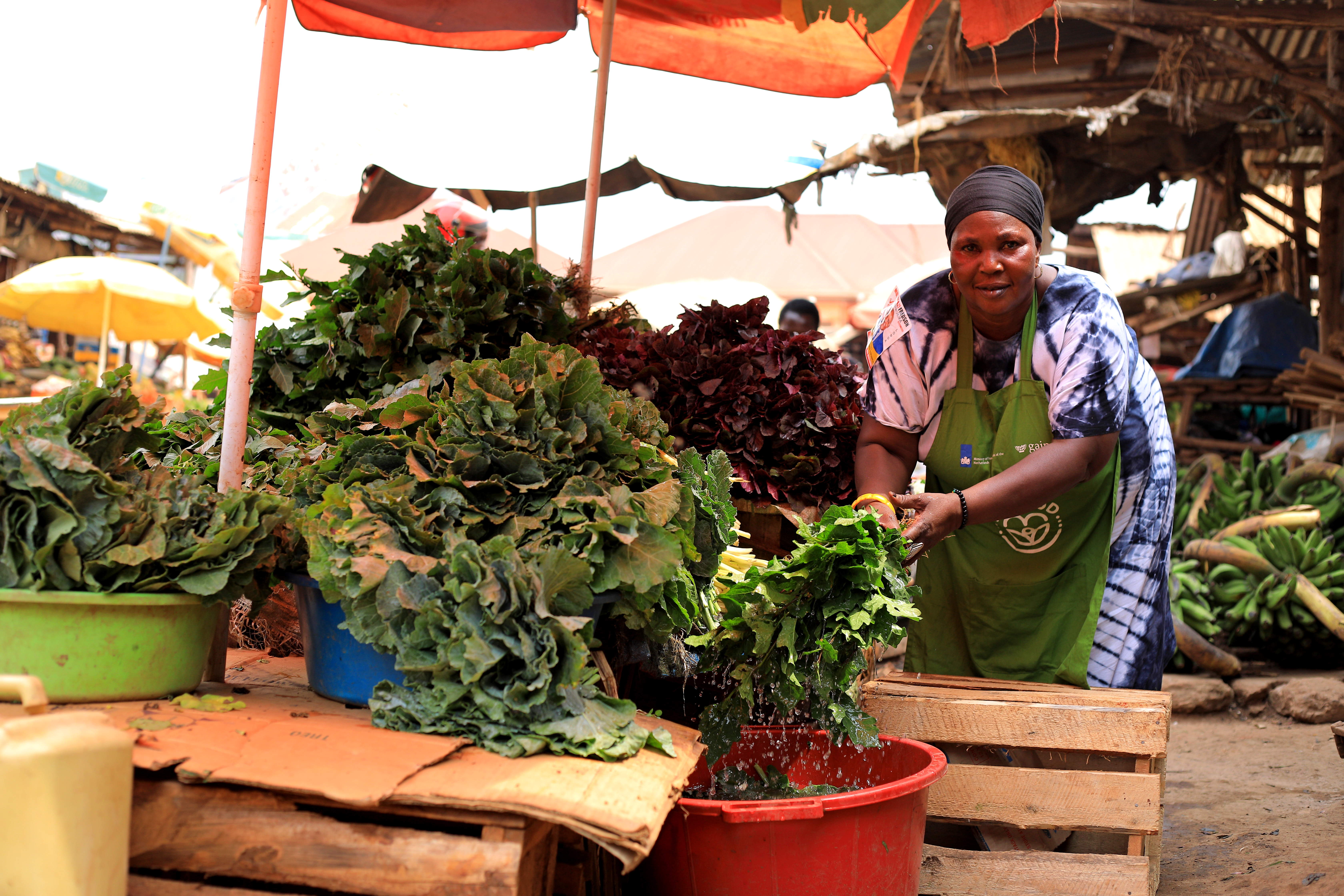
For more than twenty years, Rose Nabasirye has worked in the informal food economy, an ecosystem that feeds millions yet is often overlooked in global health conversations. From her vegetable stall, Rose does far more than sell produce. She translates nutrition knowledge into daily practice, influencing how people cook, eat, and think about vegetables.
“This work is rewarding,” she says, “especially when you have enough capital to expand what you offer.” But for Rose, success is not only measured by sales. It is reflected in repeat customers who return with questions, curiosity, and growing confidence in preparing vegetables at home.
These small recommendations often lead to bigger changes. Customers return not only to buy greens, but to discuss recipes and combinations they have tried at home. By exploring how different vegetables work together, Rose helps transform vegetables from a routine purchase into a creative and enjoyable part of meals. This approach makes healthy eating feel accessible rather than prescriptive.
The Market as a Nutrition Classroom
Rose sees the market as a space for informal education. Through everyday conversations, she introduces ideas about dietary diversity, taste, and balance, core principles of good nutrition. Her influence is built on trust developed over decades and on advice that respects local food cultures. Customers learn by doing, guided by someone who understands their preferences, budgets, and cooking realities. In this way, Rose bridges the gap between nutrition knowledge and actual consumption, a challenge central to global health efforts.