
Adrien Dogo
Senior Associate, Technical Assistance & Impact: Nutritious Foods
According to the 2026 State of Food Security and Nutrition in the World report, an estimated 935 million people in sub-Saharan Africa cannot afford a healthy diet. This stark reality underscores one of the region's greatest nutrition challenges: ensuring that nutritious foods are not only available, but also affordable for the people who need them most. Addressing this challenge requires strong agrifood businesses capable of producing, processing and distributing nutritious foods at scale. This is precisely why the Global Alliance for Improved Nutrition (GAIN) launched the Nutritious Foods Financing Facility (N3F).
N3F is an innovative blended finance approach comprising an investment Fund and a Technical Assistance Facility supporting agrifood SMEs that produce or distribute safe and nutritious foods across Sub-Saharan Africa.
N3F's second Annual Impact Report, highlights how patient capital and technical assistance are helping nutrition-focused SMEs expand access to affordable nutritious foods for millions of consumers across Sub-Saharan Africa.
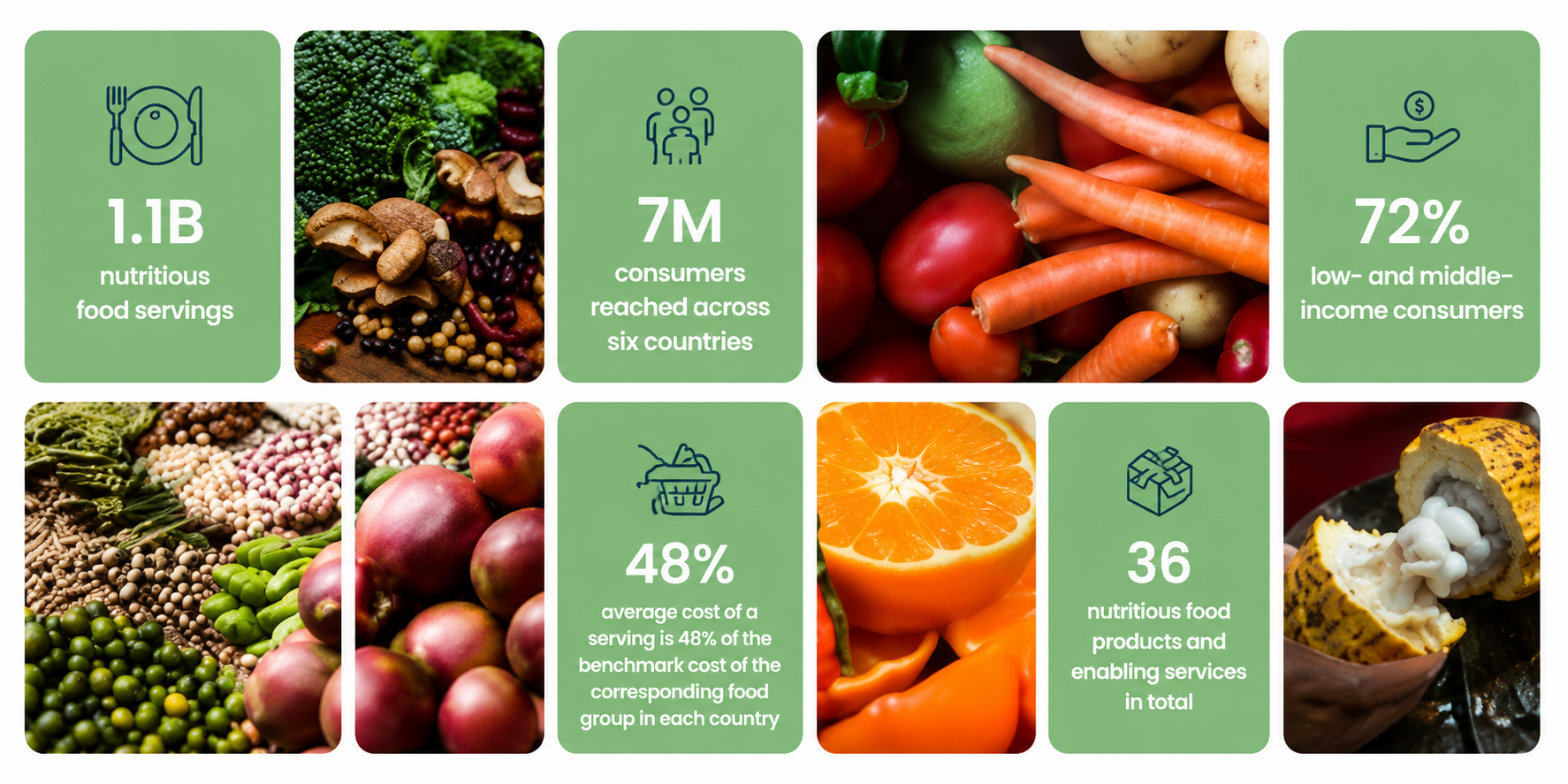
In 2025, N3F doubled both its portfolio and its impact. The portfolio grew from 5 to 10 investees across six countries (Kenya, Tanzania, Senegal, Zambia, Rwanda, Uganda) collectively producing or enabling access to 1.1 billion nutritious food servings and reaching an estimated 7 million consumers.
Nearly half of those reached (46%) are children, highlighting the portfolio’s significant contribution to improving nutrition among young people. This represents a dramatic increase compared with 2024, with N3F more than doubling its nutrition impact in its second year of operation.
Growth has been driven both by the resilience of the first cohort of companies, which maintained strong performance despite global supply chain disruptions, and by the performance of companies onboarded in 2025.
Importantly, the impact is reaching those who need it most. An estimated 72% of consumers reached, come from low- and middle-income households, reinforcing N3F’s commitment to improving access to affordable nutritious foods for underserved populations. Portfolio products also remained highly affordable, with the average cost of a serving equivalent to just 48% of the benchmark cost for the corresponding food group in each country, thereby enhancing access to nutritious foods, particularly for lower-income consumers.
The portfolio now includes 36 nutritious food products and enabling services, spanning dairy, poultry, fish, legumes, fortified cereals, fruits and vegetables, alongside critical supply-chain services that improve the availability and affordability of nutritious foods.
Behind every metric is a business helping transform local food systems.
In Senegal, Couvoir Amar is reducing dependence on imported hatching eggs by expanding local hatchery production, while strengthening biosecurity systems through N3F's Technical Assistance. In Kenya, Soy Afric is increasing access to fortified soy-based foods for young children through improved product packaging and business growth initiatives. These examples illustrate how the combination of financing and targeted technical support can strengthen businesses while delivering meaningful nutrition outcomes.
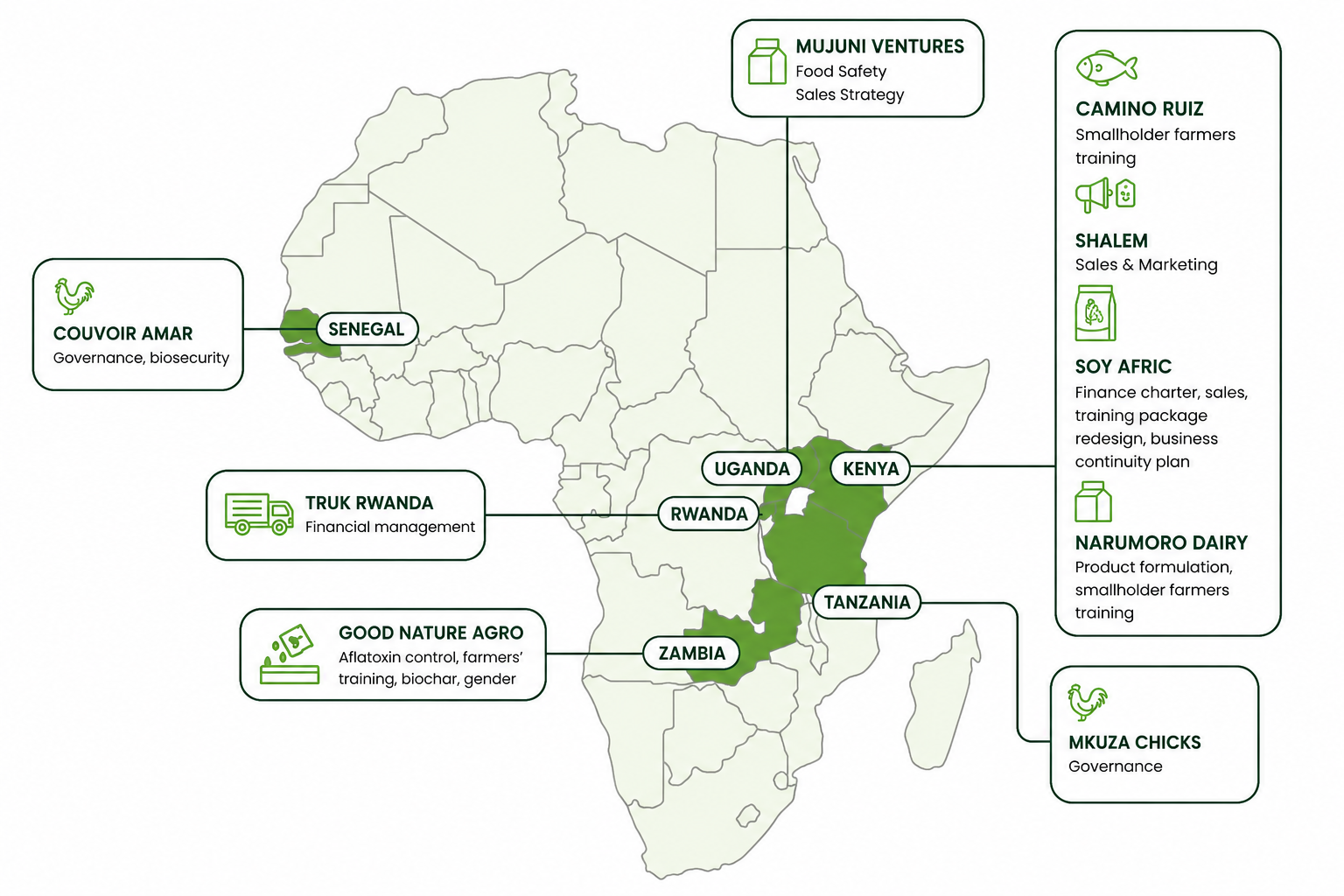
Beyond financing, N3F provides tailored Technical Assistance to help SMEs overcome growth barriers and maximize their impact. Support spans a wide range of areas aligned with enterprise needs and growth stages, including corporate governance, financial management, food safety and quality systems, market development, and business process optimization. This diversified support reflects the facility’s objective to address key operational constraints while enabling SMEs to scale sustainably and improve their contribution to nutritious food systems.
As N3F enters its third year, the results aim to demonstrate that investing in nutritionfocused SMEs and de-risking such investments with tailored Technical Assistance can generate measurable nutrition outcomes, providing further evidence that nutrition is an investable opportunity capable of improving diets at scale across Africa.
To learn more about the portfolio companies, their impact and detailed case studies, explore the full report here.
Senior Associate, Technical Assistance & Impact: Nutritious Foods

Senior Lead, Innovative Finance for Nutrition