
Ibnu Budiman
Environment Manager
Summary: GAIN and Indonesia’s Ministry of Fisheries have launched National Small Fish Restocking Guidelines to support sustainable fisheries, improved nutrition, and stronger local livelihoods. Based on scientific research and field evidence, the guidelines promote ecosystem-based approaches that can significantly increase small fish populations and support long-term restoration of Indonesia’s inland fisheries.
GAIN’s small fish programme in Indonesia is achieving a progressive milestone. The new restocking model—combining nutritional evidence, ecological science, and community engagement—demonstrated ability to significantly increase the availability of nutrient-rich local fish. Species such as Wader and Bilih are important sources of protein and micronutrients while also supporting sustainable livelihoods. The model projected up to a 20-fold increase in fish production, highlighting the potential of small fish restoration to improve nutrition, fisheries, and local economies. This model is currently adopted by the Ministry of Fisheries.
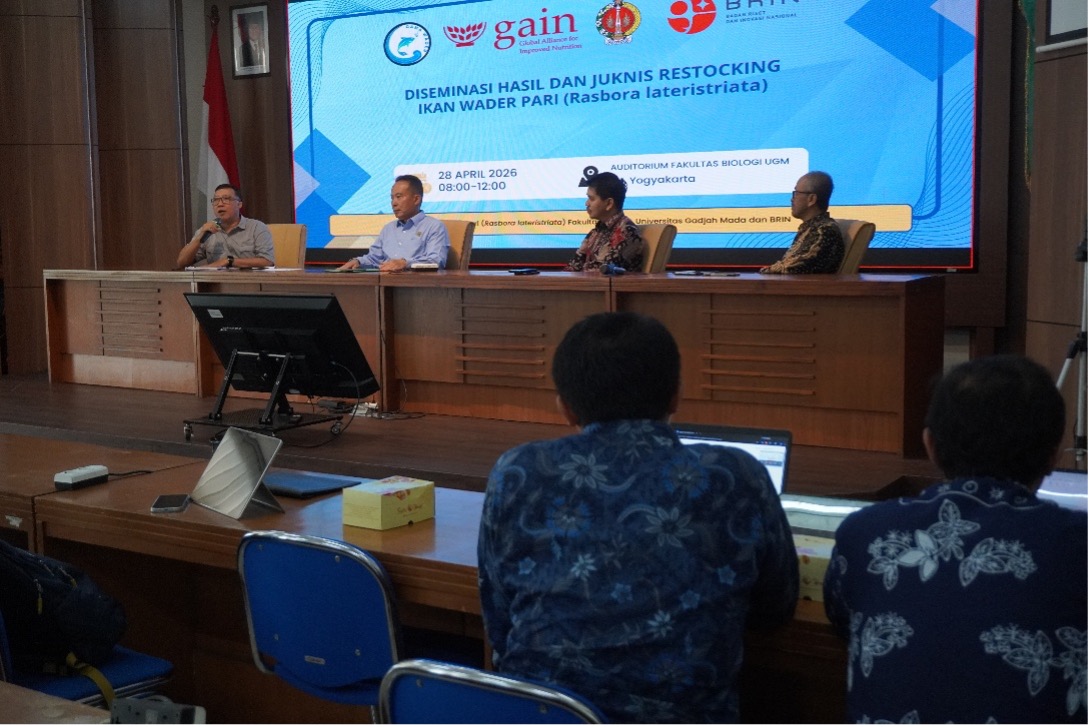
In 2025 and 2026, a series of focus group discussions (FGDs) were held in Jakarta, West Sumatra, and Yogyakarta to discuss research findings and develop practical recommendations. Participants included representatives from the Ministry of Fisheries, Ministry of National Development Planning (Bappenas), Coordinating Ministry for Food Affairs, provincial and district governments, universities, NGOs, donors, community groups, and private sector partners.
Stakeholders provided inputs on:
• Site and timing selection for restocking;
• Fish seed quality standards;
• Monitoring protocols;
• Habitat assessment;
• Community engagement and stewardship;
• Data integration and governance.
The discussions generated broad support for adopting a more science-based and ecosystem-oriented approach to inland fisheries restoration.
GAIN partnered with PKSPL-IPB, Universitas Gadjah Mada (UGM), BRIN, and local stakeholders to evaluate small fish restocking models in Yogyakarta and West Sumatra.
The study compared a conventional government restocking approach with a new model developed by UGM and BRIN.
Results showed that conventional restocking—focused primarily on releasing large numbers of fish—achieved survival rates below 10% and failed to establish sustainable populations. In contrast, the new approach incorporated scientific site selection, pre-assessment, monitoring, and ecosystem management. Fish abundance increased by 1,900–2,400%, while populations reached 16–22 times the initial stocking level within four months, supported by evidence of natural reproduction.
The model also generated substantially higher economic returns, with benefit-cost ratios ranging from 6.99 to 19.48, compared to approximately 0.1 under conventional approaches.
Food fortification programme work
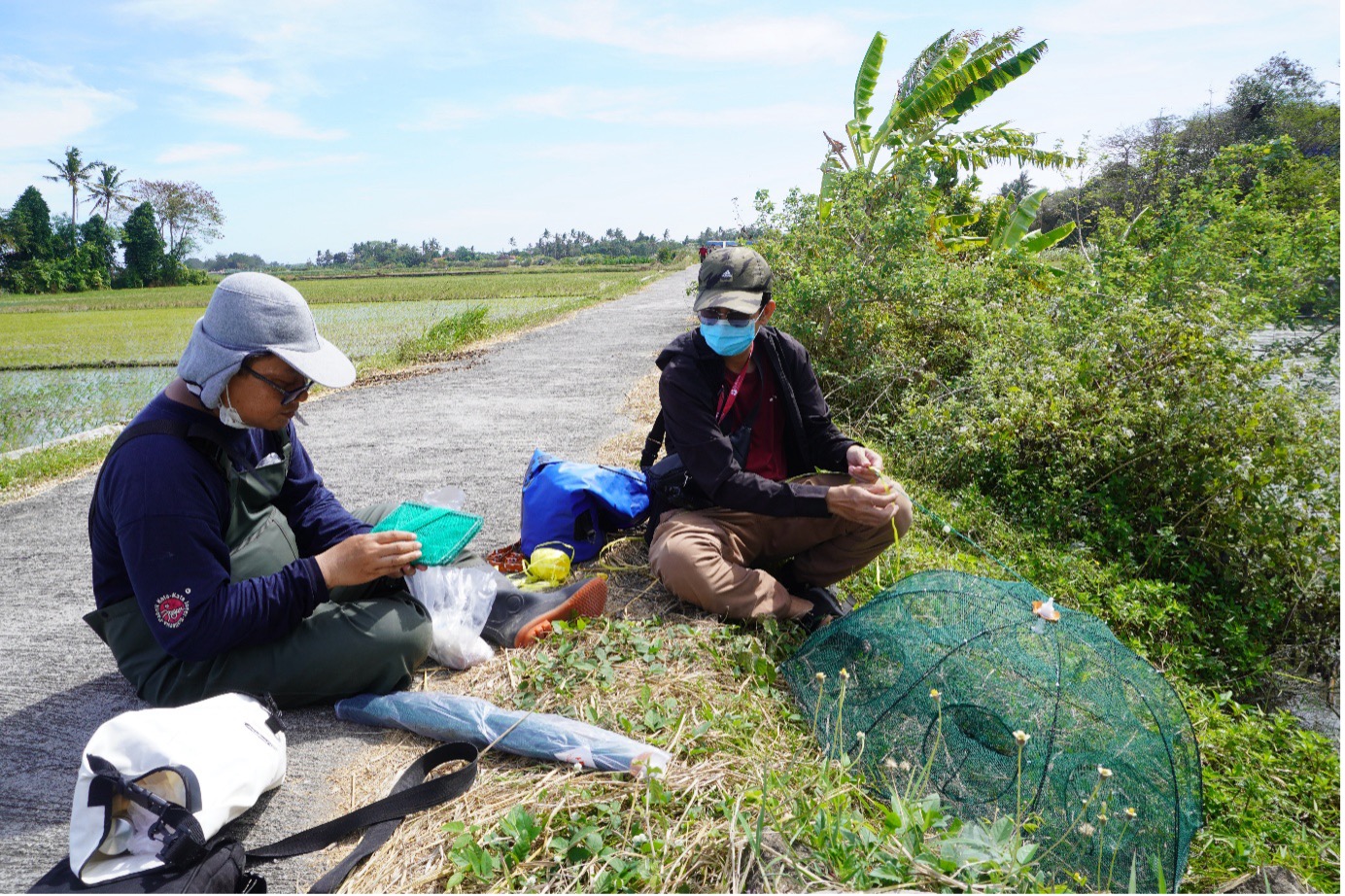
Pre assessment in selecting sites for restocking
Lake ecosystems
The West Sumatra study in Lake Singkarak found that restocking delivers educational, economic, and stakeholder engagement benefits, but alone is insufficient to reverse severe declines in Bilih fish populations caused by overfishing and habitat degradation. Current restocking efforts contribute only a small fraction of the stock recovery required. The bilih stock has been severely depleted due to overfishing and habitat degradation, with production declining sharply and stock indicators such as biomass, abundance, and fish size all categorized as low. In this context, the previous restocking effort by a company CSR—around 18,500–30,000 fish over five years—contributes only 0.01–0.24% of the total stock and less than 5% of actual replenishment needs, far below the threshold for even minimal effectiveness. Estimates suggest that an effective program would require restocking on the order of hundreds of tons (±720 tons/year or over 150 million individuals), indicating a massive gap between current implementation and ecological requirements.
The findings highlight the need to combine restocking with:
Together, the two studies demonstrate that successful restocking depends on habitat suitability, scientific planning, community participation, and long-term management—not simply releasing more fish.

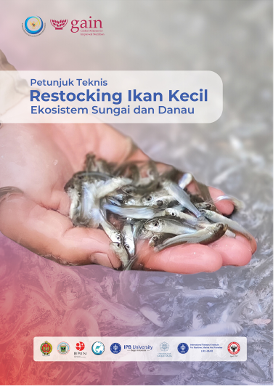
National guidelines
Based on these findings, GAIN and partners developed the National Small Fish Restocking Guidelines for River and Lake Ecosystems. The guidelines provide practical recommendations on:
Small fish restocking guideline
Two versions were developed:
Read more; national guideline for small fish restocking
Although initially developed based on Bilih and Wader experiences, the guidelines can also support restoration efforts for other inland fish species across Indonesia.
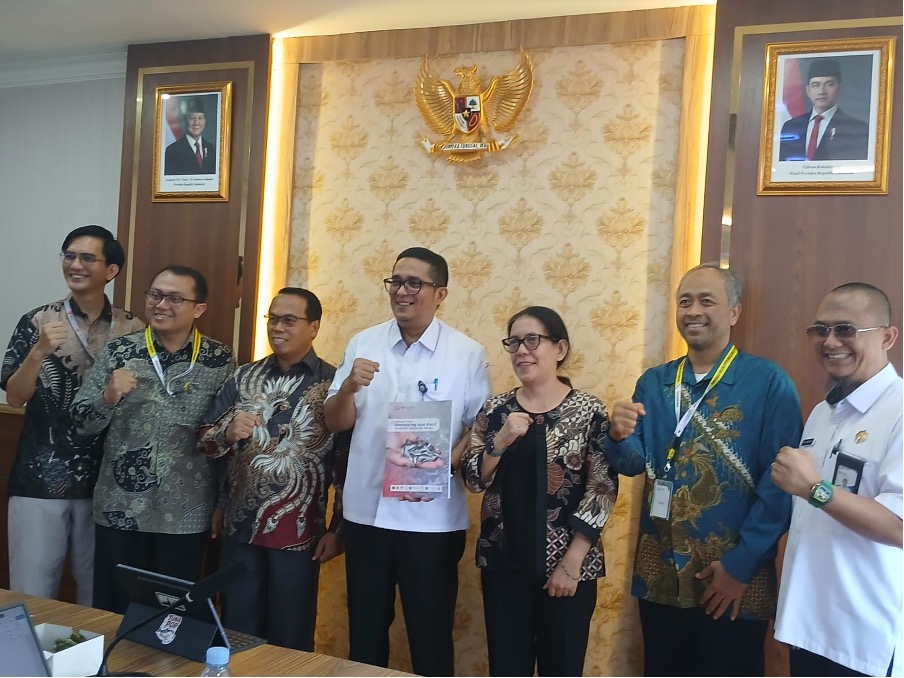
In June 2026, the guidelines were officially launched with the Ministry of Fisheries, attended by government agencies, development partners, NGOs, academics, and donors.
Policy reform
To complement the guidelines, two policy briefs were developed.
The first focuses on Lake Singkarak, recommending better alignment between national and provincial regulations governing bagan (lift-net) fishing. Research showed that excessive fishing pressure from bagan contributed to long-term declines in Bilih populations despite short-term increases in catch.
The second recommends revising Indonesia’s existing restocking regulation to:
Looking ahead
The Ministry of Fisheries is preparing to formalise the guidelines through ministerial regulation and expand their use across Indonesia’s inland fisheries systems. The roadmap includes improving technical guidance, training provincial governments, and scaling up implementation.
Several local governments have already begun adopting the guidelines. In Yogyakarta, they are being used to strengthen restocking programmes in 2026–2027, while in West Sumatra they are informing long-term sustainability initiatives supported by the private sector.
The launch of the national guideline marks an important step toward restoring Indonesia’s inland fisheries while improving nutrition, livelihoods, and aquatic ecosystem health
Environment Manager