Global Alliance for Improved Nutrition (GAIN)
  • About

    About

    About

    The Global Alliance for Improved Nutrition (GAIN) is a Swiss-based foundation launched at the United Nations in 2002 to tackle the human suffering caused by malnutrition.

    Learn more about GAIN

    • Who we are
      • Vision and Mission
      • Strategy
      • Core values
      • Policies
    • Malnutrition
      • Definition
      • Quick facts
    • Partnerships
      • All Partners
      • GAIN Nordic Partnership
      • Global Fortification Data Exchange (GFDx)
      • Act4Food Act4Change
      • Zero Hunger Private Sector Pledge
    • Leadership
      • Strategic Management Team and Country Directors
      • Board of Directors
      • Partnership Council
      • Get to know our Executive Director
    • Sustainable Development Goals
    • Donors
      • See current donors
  • Programmes

    Programmes

    • All programmes

      All programmes

      Our programmatic work directly impacts over a billion people worldwide and drives the policy changes we advocate with partners. These programmes aim to transform food systems, ensuring sustainable, healthier diets for everyone especially those most at risk of malnutrition and vulnerability.

      All programmes

      • Food Fortification
        • Nutrient Enriched Crops
      • Thriving Nutrition Enterprise
        • Nutrition Investing
        • Nutrition Impact at Scale
        • Nutrition Enterprise Development
        • SUN Business Network
      • Empowering Food Systems Actors
        • Food Systems Governance
        • Children and Young People
      • Social Protection
      • Workforce Nutrition
      • Enhancing Value Chains for Underconsumed Foods
        • Explore Enhancing Value Chains for Underconsumed Foods
      • Shifting Demand
        • EatSafe
        • Consumer demand generation
        • Food Culture Alliance
        • Multiple Micronutrient Supplementation (MMS) Project
      • Enhancing Nutrition with Data & Evidence
        • Food Systems Countdown Initiative
        • Mainstreaming Nutrition: Improving the Impact of IFAD Investments on Diet Quality
        • Global Diet Quality Project
        • Food Systems Dashboard
        • Initiative on Climate Action and Nutrition (I-CAN)
        • Exemplars of Food Systems Transformation
    • Cross Cutting Themes

      Cross Cutting Themes

      Cross-cutting themes are co-benefits of work that we do with the primary aim of healthier diets for all.

      All Cross Cutting Themes

      • Environment
      • Food Safety
      • Gender
      • Youth
      • Food System Resilience
      • Reaching the Very Poor
    • Key Projects

      Key Projects

      Driving innovative solutions to improve nutrition and build healthier, more resilient food systems.

      Key Projects

      • A1: Transforming Food Systems To Improve Diet Quality and Resilience For The Most Vulnerable
      • Nourishing Food Pathways
      • CASCADE (CAtalyzing Strengthened policy aCtion for heAlthy Diets and resiliencE)
      • Large-Scale Food Fortification
      • DELIVER Nigeria
  • Impact

    Impact

    Impact

    Explore how GAIN has reached over one billion people since 2001, transforming their lives with improved nutrition through concerted action and effective policy change.

    Read our Stories of Impact

    • Stories of Impact
    • Outcomes
  • Resources

    Resources

    • Publications

      Publications

      Explore a full range of publications and documents related to our work.

      Explore our Publications

      • Reports and Publications
      • Datasets
      • Annual reports
      • Nutrition Connect
    • Multimedia

      Multimedia

      Have a look at our photos, listen to our latest podcast and watch our videos.

      Explore our Multimedia

      • Videos
      • GAIN Interview Cruncher Series
      • Bite the Talk - GAIN Podcast Series
      • Glossary
      • Brand identity
    • Newsroom

      Newsroom

      Our dedicated newsroom that includes our latest news releases and statements, as well as curated blogs and interviews

      Explore our Newsroom

      • News releases
      • Blogs
      • Statements
      • Speeches
      • Programme and project updates
      • Interviews
      • GAIN in the news
  • Countries

    Countries

    Countries

    Headquartered in Geneva, Switzerland, GAIN has offices in countries with high levels of malnutrition: Bangladesh, Benin, Ethiopia, India, Indonesia, Kenya, Mozambique, Nigeria, Pakistan, Rwanda, Tanzania and Uganda. To support work in those countries, we have representative offices in the Netherlands, the United Kingdom, and the United States.

    Countries

    • Country Offices
      • Bangladesh
      • Benin
      • Ethiopia
      • India
      • Indonesia
      • Kenya
      • Mozambique
      • Nigeria
      • Pakistan
      • Rwanda
      • Tanzania
      • Uganda
    • Representative Offices
      • The Netherlands
      • United Kingdom
      • United States of America
    • Headquarter
      • Switzerland
  • Careers
    • Careers at GAIN
    • Open Vacancies
    • FAQ
  • Request for proposal
  • Financials
  • Events
    • All events
    • Campaigns
  • Contact us
  • Donate
Spotting zebras from Dar es Salaam to Nairobi: improving nutrition through investing in agri-food SMEs in East Africa

Spotting zebras from Dar es Salaam to Nairobi: improving nutrition through investing in agri-food SMEs

At GAIN, over the last six months we’ve been building a new Nutritious Foods Financing programme starting in East Africa. The potential of the programme is becoming increasingly exciting as data becomes available showing the scope and viability of SMEs to deliver more nutritious foods, if appropriate private investments are unlocked.
Making the most of the current window of opportunity for nutrition in Pakistan

Making the most of the current window of opportunity for nutrition in Pakistan

I just returned from a trip to Islamabad to meet the GAIN team and some of our partners. I’m no expert on Pakistan, but compared to 2013, the commitment to accelerate reductions in malnutrition seems to have increased significantly. Nutrition is reported to be much more prominent in the next 5 year draft National Development Plan which is waiting to be ratified by the new Government elected in late July.
Food safety and healthy diets: docking, colliding or passing in the night?

Food safety and healthy diets: docking, colliding or passing in the night?

Food safety issues have almost no visibility. This is very strange on both counts. As the presentations at the Pontifical Academy of Sciences – GAIN technical workshop in the Vatican made clear, food safety threats are on the rise as food systems modernise but the capacity to control those risks lags behind.
SUN membership is relevant for ALL countries, no matter their income level. Here’s why.

SUN membership is relevant for ALL countries, no matter their income level. Here’s why.

Since 2010, the Scaling Up Nutrition (SUN) Movement has inspired a new way of working collaboratively to end malnutrition–in all its forms. And yet, 1000 days into the SDG era, no high-income country has become a member of the SUN Movement. Why does this matter? Joining SUN will help high-income countries achieve greater coherence in their battle against malnutrition.
Why GAIN needs more student challenges…

Why GAIN needs more student challenges…

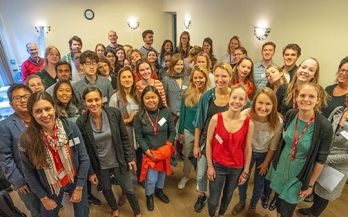
On 28 and 29 September 2018, the Global Alliance for Improved Nutrition (GAIN) Netherlands office organised GAIN’s first student challenge. In small teams, more than 40 students from 10 Dutch universities, with 15 nationalities and more than 20 different academic backgrounds competed against each other to come up with creative ideas to be implemented in one of GAIN’s current projects. 
Food control systems in Kenya; the journey of compliance for food businesses

Food control systems in Kenya; the journey of compliance for food businesses

Food businesses are governed by many food laws and sometimes this doesn’t stand out as an enabling environment for trading in Kenya. Businesses are required to work with a multiple of regulators to ensure that they are compliant to food standards. The number of licences required to run a food business are many and all of them cost a fortune.
GAIN and AGRA to partner for food and nutrition security

GAIN and AGRA to partner for food and nutrition security

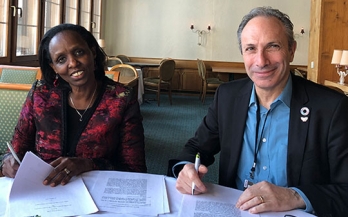
GAIN and the Alliance for a Green Revolution in Africa (AGRA) are to team up to work to advance their shared vision of creating sustainable food systems in Africa. GAIN Executive Director, Lawrence Haddad and AGRA President, Dr Agnes Kalibata signed the Memorandum of Understanding paving the way for the partnership at the World Economic Forum in Davos.
First-ever Nutrition Africa Investor Forum to discuss tackling malnutrition by attracting private sector investment into the dynamic African food industry

First-ever Nutrition Africa Investor Forum to discuss tackling malnutrition by attracting private sector investment into the dynamic African food industry

The Nutrition Africa Investor Forum will highlight business opportunities in a largely underdeveloped market. From farm to fork, nutrient gaps in diets within low and middle-income markets constitute a largely untapped market worth USD 120bn.
Nutrition Africa Investor Forum to help raise finance for high-impact nutrition businesses in the continent

Nutrition Africa Investor Forum to help raise finance for high-impact nutrition businesses in the continent

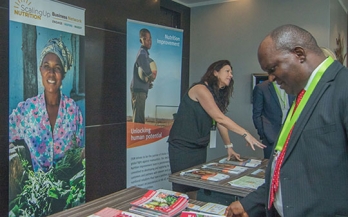
Over 200 delegates, including dealmakers, entrepreneurs and investors will meet at the Nutrition Africa Investor Forum (NAIF) on October 16-17 – World Food Day — in Nairobi, Kenya, to explore partnerships, access business finance and enter new markets.
Why I am driven to fight malnutrition

Why I am driven to fight malnutrition

At GAIN we are passionate about changing the world to abolish the malnutrition that destroys lives, families and undermines communities and nations. In giving his acceptance speech for the 2018 World Food Prize, GAIN Executive Director Lawrence Haddad turned to the personal experiences that shaped commitment its causes and the potential resources to eliminate it.
Pagination

  • Previous page ‹‹
  • Page 73
  • Next page ››

© GAIN 2026

  • Sitemap
  • Terms and conditions
  • Privacy policy
  • Accessibility
  • Subscribe
  • RSS
  • Ethical Supply Chain Statement
  • Follow us

  • Twitter X
  • Facebook
  • Instagram
  • Linkedin
  • Youtube