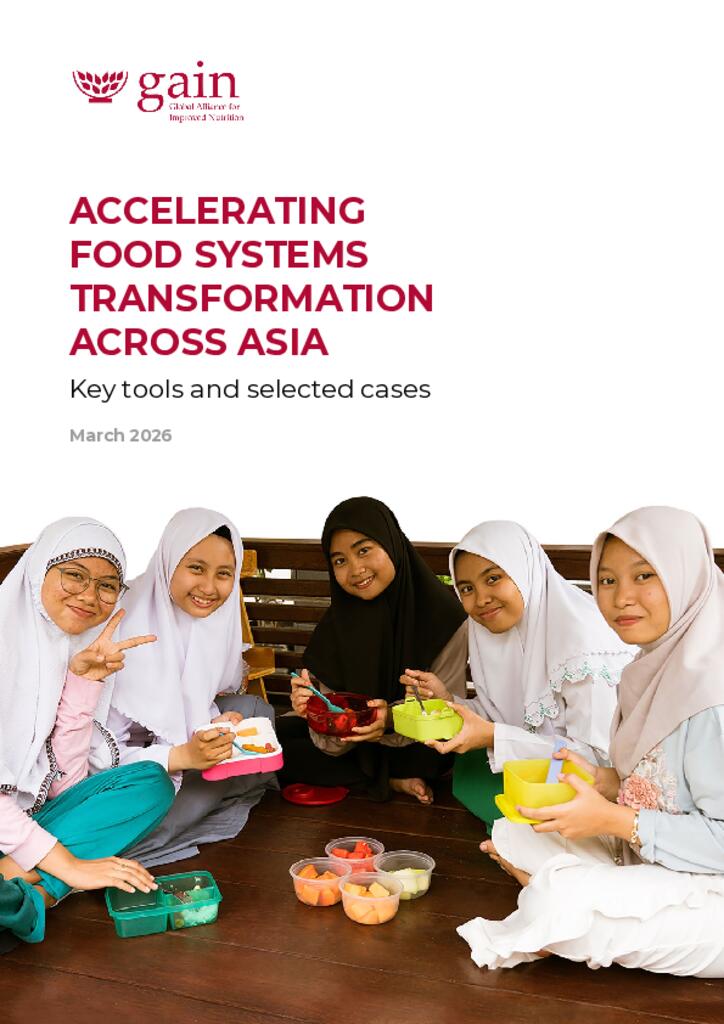
Despite progress in reducing hunger and improving the affordability of healthy diets, the region’s food systems are not transforming quickly enough to deliver equitable nutrition, environmental sustainability, resilience and shared prosperity. This report presents eight practical tools covering food-systems monitoring, data visualisation, diet-quality measurement, policy coherence, climate nutrition integration, political-economy analysis, innovative financing and financial-flow tracking that governments and partners can use to identify gaps and opportunities, develop evidence-based plans, align policies across sectors, overcome implementation barriers and direct investment towards priority areas. Drawing on cases and data from across Asia, it highlights substantial differences between countries and subregions, alongside persistent challenges in food security, diet quality, emissions, water use, governance and financing. It concludes that accelerated, coordinated and government-led action supported by reliable data, coherent policies, inclusive decision-making and better-targeted finance is urgently needed to build healthier, fairer and more sustainable food systems and advance the 2030 Sustainable Development Goals.