Transforming Diets in Low Income Communities_The Impact of PPPs& Nutrition-Sensitive Interventions
- 17/12/2024
Transforming Diets in Low Income Communities_The Impact of PPPs& Nutrition-Sensitive Interventions- 17/12/2024
Transforming Diets in Low Income Communities_The Impact of PPPs& Nutrition-Sensitive Interventions
- 26/12/2024
Participatory Open Access Food Systems Dashboard Empowers South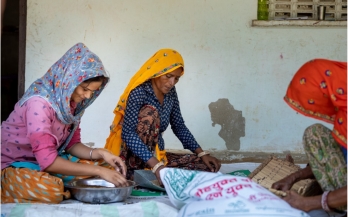
- 20/01/2025
Reducing food waste represents an important opportunity for shrinking the environmental footprint of food systems and supporting planetary health – and if this waste can be repurposed into nutritious foods, then it could also be a benefit for nutrition and human health. To understand the opportunities for repurposing waste products or byproducts into foods, this paper presents a rapid analysis based on desk research and key informant interviews. The analysis considers byproducts across four categories: fruit and vegetable residues, seeds and seed residues, other plant byproducts, and animal byproducts. The assessment considered availability, potential uses, consumer acceptability, food safety, nutritional quality, and feasibility.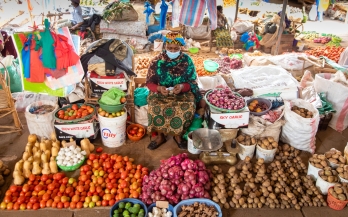
- 16/01/2025
Micro, small, and medium-sized enterprises (MSMEs) play a pivotal role in addressing Nigeria’s nutrition challenges, given their significant contribution to the local food system and economy. MSMEs are essential drivers of innovation, employment, and food production, helping make nutritious foods more accessible to underserved populations. However, MSMEs face an array of systemic barriers that hinder their growth and ability to scale sustainable nutrition solutions, such as high costs, complex regulations, and restricted access to finance. To bring together policymakers and the private sector to discuss these challenges, a Nutrition Policy Dialogue was convened by GAIN and the Scaling Up Nutrition Business Network (SBN) in Abuja on October 31, 2024. Attendees included the Regional and State Hub leads for SBN in Nigeria as well as representatives from businesses, government departments, academia, civil-society organisations, and other key stakeholders. Through a keynote address, a panel discussion, and two breakout groups, the meeting highlighted key challenges, including regulatory overlaps, limited financial access, and policy inconsistencies affecting MSMEs. It also proposed actionable recommendations such as harmonising regulatory frameworks, developing cluster-based financing models, and enhancing financial literacy. Finally, it served to foster stakeholder commitments to training programs, advocacy efforts, and implementation of innovative financing solutions.
- 14/01/2025
Millions of people around the world struggle to afford minimally nutritious diets, and social protection is critical for making healthy diets accessible. GAIN supports governments and other key stakeholders to accelerate system innovations that can make social protection investments work harder for the nutrition of the most vulnerable. Through partnerships, policy advocacy, and programmes, GAIN is working in seven countries to make social protection systems more nutrition-sensitive and better equipped to combat systemic and intergenerational inequities that limit the reach of vital services.
- 14/01/2025
Workforce Nutrition Programmes (WNPs) can improve the health of workers, but with mixed results for a business case—which is crucial to their sustainability. This paper thus explores impact pathways and metrics used to assess the business benefits of WNPs, as well as the factors that influence the business case, with the aim of informing future interventions and research.
- 14/01/2025
Food systems are a foundation of human and planetary well-being and central to achieving the Sustainable Development Goals. Yet they also contribute to ill health, inequity, environmental degradation, and greenhouse gas emissions. These challenges demand urgent food systems transformation. Such a transformation requires understanding the status of food systems across their diverse functions.
- 09/01/2025
Traditional food markets are essential in urban food environments in Kenya and other low- and middle-income countries (LMICs). They provide affordable fresh food, particularly for low-income urban communities, and are vital places of livelihoods and local economic activities. Despite their importance, associations between market-related factors and diet quality for vendors and consumers are underexplored. This study explores these relationships to inform policies aimed at improving diets and nutrition in LMICs. Methods: Survey data were collected from 1042 vendors and 876 consumers in five urban markets in Kenya.
- 09/01/2025
Personal sustainability is a relative concept of time, place, and identity. It shapes how “alternative” or “sustainable” are perceived. It is controversial in terms of agency, scale, and impact. Personal sustainability is transdisciplinary, encompassing food security, nutrition, livelihoods, health, culture, and environment. Food systems are systems upon systems where personal choices, practices, and habits around availability and access, consumption and waste to and of diverse (or less diverse), safe (or unsafe), healthy (or unhealthy) diets influence and are influenced by sustainability drivers like the socio-economic factors, climate change, institutions from government to small and big business, urbanization and culture. In turn, this impacts the wellbeing of people and the planet. Such dynamic within food systems is evident at the individual and household level, extending to small and medium-sized entities within developed and developing countries and formal and informal systems.- 09/01/2025
Malnutrition is a major global challenge. Multiple forms, from underweight to obesity, exist, and several forms coexist within communities and households. Traditional food markets, also known as wet, local, or informal markets, are widespread in sub-Saharan Africa (SSA) and are a key place where people buy and sell food and socially interact, especially those vulnerable to malnutrition. As such they are vital to food and nutrition security. While it is recognized that gender is an important consideration in food and nutrition security, very little has been published in peer reviewed journals, with respect to gender and traditional food markets in SSA. This mini review aims to explore the nexus role of traditional food markets and gender in food and nutrition security. This study presents a narrative literature review, informed by literature identified in a systematic manner. Four databases were searched for key terms, including nutrition, different forms of malnutrition, gender, traditional food markets, and vendors. The papers provided insight into two main topics pertaining to the role of traditional food market practices, gender, and food and nutrition security. While few papers were identified in this mini review, they illustrated insightful nuances into traditional food markets, gender, and food and nutrition security. There is a need for explicitly framed gender studies that can better inform the limited existing knowledge of the experiences of gender and nutritional security of women and men in traditional food markets in SSA.