- 09/01/2025
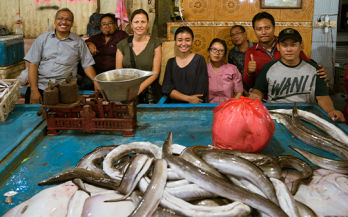
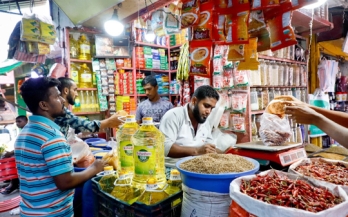
Hunger and malnutrition in all forms continues to rise in Africa and Asia. Urban and rural communities’ diets in Southeast Asia (SEA) are increasingly unhealthy, with consumption influenced by affordability and convenience. The cost of a healthy diet is a major barrier to accessing healthy foods in SEA. Wet markets are key places in food environments where people buy and sell a variety of foods. They are especially important for food and nutrition insecure communities. This mini narrative review explores the role that wet markets, in SEA food environments, play in providing local communities with access to healthy foods. Fourteen peer-review papers, published in English between 2017 and 2022, were identified during screening and analysed according to six food environment domains. Findings highlight that convenient access to wet markets facilitates access to fruits and vegetables in peri urban and urban areas. Fresh foods, most notably fruits, were viewed as being more expensive than processed foods which in turn influenced purchasing behavior. Divergent findings were presented in the identified papers regarding affordability of food in wet markets. Concerns about food quality and the use of chemicals and pesticides were raised. This review was constrained by several factors including the lack of consistent and meaningful definitions and typologies of the varied forms of wet markets. Looking ahead, better defined interpretations of wet markets can enhance the development and refinement of appropriate policies and actions and comparison of wet markets, in respect of access to diverse, healthy foods, vendor practices and consumer food choices.
- 08/01/2025
Traditional food markets in sub-Saharan Africa (SSA) are pivotal urban spaces, especially for vulnerable populations. These markets are vibrant hubs for commerce, cultural exchange, and social interaction, yet they face challenges such as food safety issues, inadequate infrastructure, and regulation that is a complex mix of informal mechanisms in need of a balanced degree of formalization. Rapid urbanization in SSA and the vulnerabilities of informal settlements underline their enduring importance. The COVID-19 pandemic further highlighted their crucial role in promoting food access, supporting local economies, and preserving social connections during crises. However, a comprehensive understanding of their multifaceted impact on urban life remains limited. This study provides a systematic narrative literature review with the aims of mapping the existing literature and evaluating their complex impact on vulnerable communities. The review employed a systematic search strategy, encompassing research studies and gray literature. It highlights the geographic distribution of studies across SSA, with a concentration in East and Southern Africa.
- 06/01/2025
NUTRITION IMPACT AT SCALE (NIS) Through the Nutrition Impact at Scale project, GAIN seeks to scale the impact of its work to increase access to safe and nutritious foods, especially for low-income consumers. By working with other organisations (Enterprise Support Organisations) that are willing and have the requisite capacity to attach a 'nutrition lens' to their work with small and medium enterprises (SMEs), Nutrition Impact at Scale (NIS) will enable a large-scale and accelerated nutrition impact for the larger African population. Funded by the Ministry of Foreign Affairs of the Netherlands, NIS uses a market systems development approach to improve food systems, increase inclusivity, and, ultimately, nutrition outcomes. The project leverages on the extensive experience GAIN have developed over the years of providing quality technical assistance, networking experience, knowledge sharing, building capacity of partners, and the provision of various tools and resources to MSMEs, to attach a 'nutrition lens' to the work of ESOs in Nigeria, Benin, Uganda, Ethiopia, Mozambique, and Kenya.
- 06/12/2024
In 2023 and 2024, one of the focus areas of discussions within the Netherlands Working Group on international Nutrition (NWGN) platform was the nexus between climate change and sustainable healthy diets with a focus on animal-sourced foods (ASFs), reflecting the protein transition discussion in the Netherlands, while realising that this transition to a more plant-based protein diet might not be appropriate for the contexts in Low Middle Income Countries (LMIC)s.
With this position paper the NWGN, and Clim-Eat (a think-and-do tank that aims to accelerate food systems transformation under climate change) aim to stimulate dialogue on the consumption of ASFs in LMICs within the Dutch government at large, within the ministries and embassies as well as among our members and partners. The aim is that these dialogues will translate into policies and programmes, diplomacy and facilitation and will enable partners in the Netherlands and LMICs to take a stand that addresses the nutritional needs of vulnerable people while also considering climate change.
- 20/12/2024
The SUN Business Network (SBN), co-convened by the World Food Programme (WFP) and the Global
Alliance for Improved Nutrition (GAIN), operates within the Scaling Up Nutrition (SUN) Movement’s multisectoral
framework to address malnutrition, through private sector engagement.
- 20/12/2024
KEY MESSAGES Micronutrient deficiencies are widespread globally; recent studies revealed that 1 in 2 children and 2 in 3 women are deficient in at least one micronutrient
Fortifying staple foods with micronutrients is a costeffective and safe intervention that is proven to prevent micronutrient deficiencies and related outcomes
While food fortification programmes are widely implemented around the world, gaps remain. The availability and coverage of high-quality fortified foods are often low, even in countries with fortification mandates, and many countries that could benefit from fortification programmes do not have them.
Countries need support to implement best practices around appropriate programme design, effective monitoring of quality and compliance, and regular review of programme assumptions to ensure they remain safe and impactful over time.
National governments, industry, technical partners, and donors all have diverse roles to play in strengthening food fortification programmes and enhancing impact.
- 17/12/2024
Micro, small, and medium enterprises (MSMEs) are the backbone of economic development in many low- and middle-income countries (LMICs). Their role is particularly important since they are estimated to make up the vast majority of food system businesses and play a critical role in achieving food security and supporting nutrition, as well as providing employment. To function optimally, business-support programmes and interventions are often developed based on the assumption that institutional constraints impede MSMEs from maximising their potential. Support services can be broadly grouped into financial assistance (e.g., grants, loans) and technical assistance (e.g., business development services, training, networking).
- 09/12/2024
As part of the Nourishing Food Pathways (NFP) programme, GAIN is working to strengthen efforts to understand and measure progress on food system transformation. Clear progress measures can provide decision-makers with the visibility and the flexibility to course-correct as needed to realise the desired impact, and can help to ensure accountability for action. To this end, one of the workstreams under NFP aims to develop, test, and validate novel methods and metrics for assessing food systems transformation. To ensure that this work is grounded in local food system stakeholders’ needs and preferences, GAIN worked with Food Systems Foresight to solicit input from national stakeholders across five African countries (Ethiopia, Mozambique, Nigeria, Tanzania, and Kenya) on priority indicator gaps for monitoring food systems transformation. This paper reports on the outcomes of that work.
- 03/12/2024
The PSWG fosters an open dialogue between public and private sector actors on selected priority areas in addressing all forms of malnutrition. It recognizes that many of the root causes of malnutrition cannot be solved without the involvement of those who grow, produce, and market food. These commitments, while important, are part of a larger goal to catalyse sustained private sector action, complementing efforts by other N4G stakeholders.
- 28/11/2024
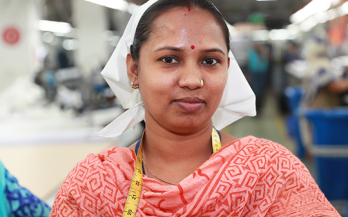
This report presents objective findings on the current levels of nutrition integration in international instruments and guidelines, and national legislations, regulations and procedures. Nutrition is only integrated in a few examples. Many laws, instruments and codes were developed before worker malnutrition was as prominent an issue and before newer scientific evidence emerged linking worker performance to improved nutrition. This new context, married with the evidence in this report, highlights the enormous opportunity presented to future labour standard setting for employees and employers.