Bite The Talk: EP 33
Start Where You Are: A Story of Food, Conflict & Hope With Aida Eyasu
At just 16, Ethiopian youth leader Aida turned wartime scarcity into a calling — cooking for her family, supporting malnourished children, and building vegetable gardens for displaced communities. This International Youth Day episode traces her journey from a conflict-torn kitchen to global food systems platforms, and what she believes young people need to lead change today.
Bite the Talk
In this International Youth Day episode, Bite the Talk explores youth leadership, resilience and food systems transformation through the story of Aida Eyasu, an Act for Food youth leader from Ethiopia.
Watch the International Youth Day video podcast featuring a conversation on youth action, dignity, resilience and the role of young people in transforming food systems.
BITE THE TALK – EPISODE TRANSCRIPT
Guest: Aida Eyasu
Hosts: Mark & Stephanie
What happens when conflict takes away certainty? When markets close? Food becomes scarce and daily life is reduced to survival. And what happens when a young person who is just 16 years old at the time decides not to wait, but to act?
---
MARK: Hello and welcome to Bite the Talk. I'm your host, Mark.
STEPHANIE: And I'm Stephanie Sergeant.
MARK: Welcome to Bite the Talk, a podcast hosted by the Global Alliance for Improved Nutrition, known as GAIN. Join us as we discuss all things food systems, related diets, nutrition, environment, health — you name it. Meet fascinating people working in the nutrition and food community. Tune in to Bite the Talk and let's explore together.
STEPHANIE: Today's episode is not just about food systems. It's about resilience. It's about creativity and the power of youth in the face of crisis.
MARK: Exactly. Because sometimes transformation doesn't happen in policy spaces or in boardrooms. It happens in the kitchen.
STEPHANIE: And today we are honoured to be joined by someone whose journey embodies exactly that. Our guest today is Aida, an Act for Food youth leader from Ethiopia. She is incredibly passionate about food system transformation, community health, and youth-led action. Her journey did not begin in a conference room — it began during a time of war in her community.
MARK: And this is amazing, Steph. Can you believe it? At just 16 years old, during a siege in Ethiopia that limited access to food, Aida began experimenting with cooking, finding ways to create meals with whatever ingredients she could find. That curiosity turned into action. She began supporting malnourished children in hospitals, volunteered in internally displaced people's camps, and helped establish a vegetable garden that improved diets for families in the camp.
STEPHANIE: Amazing. She also launched a fundraising initiative to support school meals and established a youth volunteer group of around 40 young people. She has represented youth voices on global platforms like UNFSS and the Rockefeller Foundation's event, Nourishing the Future. It is such a big honour and a pleasure to welcome you to Bite the Talk. It's good to have you.
AIDA: Thank you. Thank you for having me. I'm really glad to be here as well.
STEPHANIE: Thank you, Aida. I'd love to start at the beginning — from the genesis of it all. Not from where you are right now, but from where it all started. You mentioned that the journey began during a time of conflict and war. Can you take us back to that moment? What was it like and what led you to start cooking?
AIDA: Okay. So when the war started — when the war first began — it was a siege, and it was in the northern part of Ethiopia. My life literally turned upside down. I was displaced from my home. I had lost many family members and even classmates. The school was closed, so everything was shuttered. And I was just 16 years old at that time. I was very confused about what was going on in my life and how it was really unfair — not only for me, but also for my family and my community, those who were around me who faced this kind of situation, because that is the last thing we would like in our lives to happen.
So during that time, my passion for everything literally died. I had many hobbies before that. I had many things I liked doing. But during that time I literally became — hopelessness is a very negative word — but my life literally became very uncertain. I had lost my passion for everything.
But I had this moment where, even in that kind of dark time, in our family there was a dinner that was a very lovely time, even during that time. So we would gather to eat dinner with whatever we had access to. And it was actually during that time that I started to value food very much, because I saw what it could mean. And that was when I started being interested in cooking, because I loved how people were being happy when I cooked dinner and when they liked the dinner. So I started experimenting with just the ingredients we had, trying to cook different recipes. And at some point it became a very interesting hobby of mine. I had a cookbook which I wrote recipes in — and I still have it. So that's when I started cooking as a hobby and something that kept me going.
STEPHANIE: It's incredibly powerful how something as simple as cooking can become something even bigger. Aida, please tell us — how did that personal experience turn into action beyond yourself and into helping others?
AIDA: Okay. So I remember — I think there were many moments I definitely remember — but there was this specific experience that led me into this kind of field and this kind of work. I remember one day I went to visit malnourished children in a hospital, and we took food for them — me and my family. So when I entered the hospital, it was really something I had never seen in my life before. It was very hard to witness. There was a bed shortage in the hospital, so children and the mothers were sleeping literally on floors and in hallways. The hospital was just full of people barely trying to keep themselves alive.
That was when, for the first time after the war started, I felt that my situation was not unfair to me — because I saw the extent to which unfairness could really go. And that was when I decided I should help people. I was okay compared to them. So I asked the hospital workers where those children went after they were treated. They told me they were moved to a camp because they were internally displaced people. And I went to that camp, which is when I officially began my journey in this work.
In that camp, I established vegetable gardens to somehow improve their nutrition and their diets. I involved the mothers and the children themselves. We worked together, we spent our days together, and we did everything together. That was a very personal experience and a very defining moment of my life — that led me from being uncertain about my life and losing hope, into being hopeful, with joy and also satisfaction in what I was doing.
MARK: Steph, there are some very important things that Aida has mentioned. She talked about mothers, she talked about children. And we know these are the most vulnerable when it comes to conflict and war. Aida, just not from a policy perspective, but from what you've seen — when conflict hits, what happens to food and to people?
AIDA: The day the conflict hits, there is an immediate change and shift that happens. I remember the day that conflict hit. It was at midnight. And then the next day, the first thing that came to our minds was: we have to buy food. I'm sure everyone was thinking the same. I remember my mother and my aunt went to buy food, and when they came back, they were telling us the prices had literally tripled in just a day. People had lost the value their money had — they could buy less with what they had. Markets were disappearing. There was this immediate, immediate shift.
And this was just in the beginning — in the first few days of the war. But as it continues and as it goes on, people have to adjust their lives because they are expecting the worse to come. When they adjust their lives, it first begins by eating smaller portions, and then it continues to skipping meals — first adults and then children. And eventually it leads to extreme malnutrition and also hunger.
So war doesn't just take away food. It takes away complete control over our lives, which is something people need to have in their lives to continue with hope and dignity as well.
STEPHANIE: Thank you for sharing, Aida. It's very clear that to you this is more than work. It's obviously personal. Can you share with us what those experiences taught you about food — just beyond nutrition?
AIDA: Yeah. So for me, food was just something people need to survive — something someone supplies and others demand. That's how it was for me before. But after the war, I saw that it's also about dignity and the basic thing that people actually work for. It's when we have control over our lives. It's when we choose the food we eat. It's when we really have access to the foods we want that we keep living and we have hope for everything else — to do anything else, to achieve our dreams and things like that.
So if we lose that basic thing, and if you see that the reality has altered and that's not the case anymore, and we don't have control even over the smallest thing in our lives — I think that's when hopelessness begins. So that's exactly why I believe food is much more about dignity than it is about supply and demand. And it's also — I have seen and I'm still seeing — that recovering from war takes longer than the war itself. The war was just two years in my area, but it's been four years now since it ended. Recovering is taking much more time than the war itself. So that's exactly why I now connect food to dignity, fairness, and stability.
MARK: I like your take on this — you're talking about dignity even in food systems. And we know in conflict-prone areas, or where conflict has taken place, sometimes this is not the easiest thing to find. How have these experiences shaped the way you think about food systems transformation?
AIDA: Okay. So I think the major thing that changed in me, and that I now believe after all those experiences, is my approach to problem solving in food systems. My approach now — which is also my principle in doing any work in food systems — is that those who are going to do the work with me should be those who are affected by the problem the most. Because I believe it's those who are affected the most that can be the most responsible as well for the work.
This has been my principle for as long as I have been in food systems. I'm also running my actual school nutrition campaign right now, and I decided to do it in a way that is more suitable for our reality — for people affected by hunger and malnutrition. That's actually when I decided to establish fruit gardens in different schools — as many schools as possible. I saw that school children were the most affected by nutrition and hunger. I thought that planting fruits that would grow and be consumed by the children made sense. So I am now involving the children in the planting process, in every process of it. And I can see that they are the most responsible for it because they know it will be used by them as well. That's how my approach to problem solving in food systems changed after my experiences.
MARK: Thank you, Aida. I like the fact that she's targeting children and students. We usually say these are the people who are going to be the future leaders and they are our treasures. Good work focusing on the children and the students. Now I want to learn a bit more about the fun part of food. You have a cookbook, you have recipes — what food did you enjoy growing up? What food can you think of and say, oh my God, this was such a nice recipe?
AIDA: Okay. So even though I have a cookbook, I still have one favourite food — which is what my grandmother makes. It is called Shiro. It is a very traditional food recipe and it's made of peas and spices blended together, then cooked in hot water and eaten with injera, which is also a traditional staple food of Ethiopians. I personally believe my grandmother makes it best, and it's one of my very favourite foods. Even during the war, that was kind of the food we ate very frequently. So I also have memories of it from my childhood, when my grandmother makes it — and that's still my very favourite food. And that's also how I started to learn how very healthy foods can also be tasty, which is now what I work towards — how to make foods healthy and tasty at the same time.
MARK: If I do like injera with some beef, I've had it. We have a restaurant here I can recommend to you.
STEPHANIE: I love it, Mark. I remember going to UNFSS with Aida and indulging in Ethiopian food. So thank you for sharing your culture with me. I absolutely loved it. So Aida, let's move on to solutions. Can you tell us a little bit about what young people are currently doing today, and how young people are stepping up in their communities?
AIDA: So I think young people are building local solutions that can be used by farmers, suppliers, and even consumers. They are also being creative and rethinking how food systems should be in a crisis or in any situation they are in, and trying to make the most of it. And I think youth are very core connectors. They connect communities with information, with aid, with markets, with different things. I also believe that youth are the generation in between the old and the new. They know the current realities we are in. They know what future needs could be and might be. And they also know the tools we have right now and that are available. So I think that's what makes them the most incredible and effective connectors as well.
MARK: Fantastic. Good to know where youth fit within society, especially when it involves food. You talked about impact, Aida — I'd like to know what kind of impact you are seeing from your work.
AIDA: Okay. So I remember when I had my first session in one school, I was asking the children what they knew about nutrition. What do they think nutrition is? They literally knew nothing. They were just trying to guess. And now, halfway through the journey, when I ask them something, they start to give me good answers. They know what nutrition is, they know how nutrition should be, and I have been teaching them about how we can make healthy and nutritional food from just the ingredients we have. So now when I ask them something, they give me very incredible answers. I have seen that I'm teaching them and they are learning well. They know more now, and they are more attached to their environment and to their health. So I think that's what my work has been doing — fantastic things.
MARK: That's great. Any change towards transforming food systems is something that we appreciate. Steph, just talking about change — you've heard about conflicts happening in different parts of the world. It's not pretty. People are suffering. Just the other day I had a report about the possibility of fuel prices going up, and that can easily impact the cost of food throughout supply chains. Aida, if you could change one thing in the world to respond to conflict and food insecurity, what would it be?
AIDA: So I think I would love to change how people are placed within the system. Usually even in politics, food gets reduced to just supply and demand. But food is also about dignity. So I'd love to change the perception of how people are placed in food systems — not just as consumers, but also as human beings who have to protect their dignity, be stable, and have control over their lives. I think that's the one thing I would love to change.
STEPHANIE: Thank you for that answer, Aida. And what do you believe that young people like yourself need to support the work that you're doing?
AIDA: I believe young people need more representation in decision making. It's about a future that is being decided, and they should definitely be part of the planning, the talking, and the decision-making process — every process of it — because it's about the future as well. And they should also have more trust, more access to resources and things like that. I think that's the very main thing young people need.
STEPHANIE: I completely agree, Aida. And as we're coming to a close today, I wanted to talk about what we can leave the listeners with. So what gives you hope today?
AIDA: The thing that keeps me going is when I see the voices of local youth like me and others being represented and added up to create a greater impact. And also when our work — it can be little, it can be small, or it can even be great work — but when our work in our respective local backgrounds combines to create a very meaningful and beautiful global impact, I think that's what keeps me going. Because it shows me that when we do more, we can achieve more as well.
MARK: This is very inspirational. Aida, if you are in a room full of young people — let's say it's a huge conference — what message would you share with those young people, and also those who are listening to this podcast? What would you tell them?
AIDA: To every young person, and even to those listening to this podcast right now, I would say: start where you are now. The knowledge you have — whether it is little, whether it is very great — does not matter. Just start with what you have and make sure to create something meaningful with it, in whatever situation you are in. And also do it passionately.
Let me add a bit of personal experience here. When I first joined Act for Food, I knew I didn't have enough skill and knowledge about the sector, but I joined anyway. And I still don't think I have enough knowledge — because I believe there is no such thing as enough knowledge. It's as you keep progressing, as you keep working, and as you keep participating that you build skills. So to the young people, I would say: just begin with what you have. Just start with what you have, and you will be amazed by how you are progressing.
MARK: Fantastic. That's a very powerful way to end.
STEPHANIE: I like that. Just start with what you have — and learning never ends. You can never have enough knowledge. Keep on learning. Thank you so much, Aida.
MARK: Today we've heard a reminder that food systems transformation is not just about policies or programs. Sometimes it begins with you, or me, or any other young person in a kitchen choosing to create something out of scarcity. And that's the real trademark of a resilient person. Aida's story reminds us that even in the most difficult circumstances, there is always space for creativity, compassion, and leadership.
STEPHANIE: Aida, thank you very much for your courage, your work, and your voice that you've shared with us today. It's really, really impressive and we wish you all the best with your initiatives and your work.
AIDA: Thank you for having me. And to our listeners, thank you for being a part of this conversation.
MARK: Until next time — this is Bite the Talk. Bye bye.
STEPHANIE: Thanks for listening. Stay safe and eat healthy.
Passionate about nutrition, dedicated to bringing you the most insightful conversations that matter.
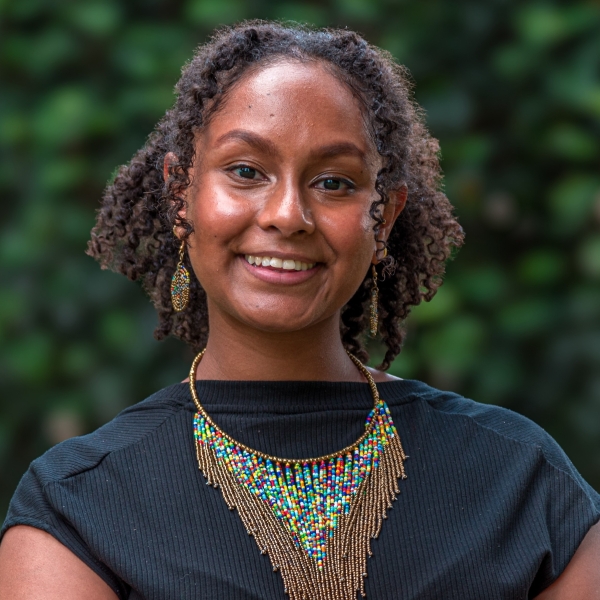
Global Youth Campaigns Coordinator, Act4Food & GAIN
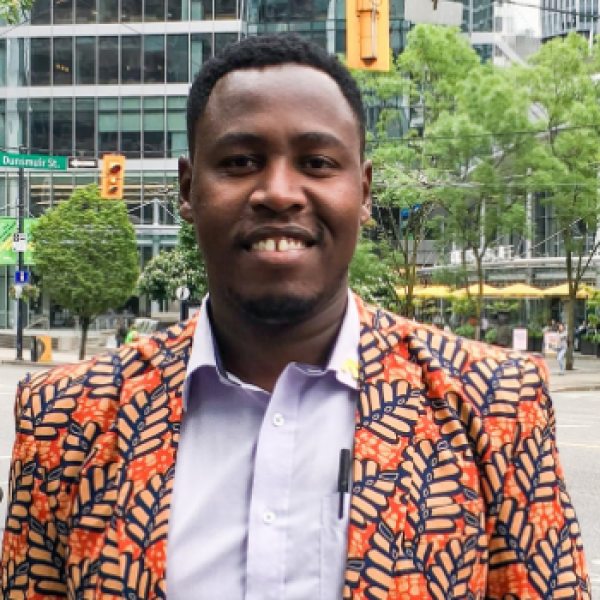
Senior Associate, Policy Engagement and Advocacy Support
 Spotify
  Apple Podcasts