Blog Thursday, 18 June 2026

Workforce Nutrition in Textile Factories: Progress Toward Industry Buy-In

GAIN Ethiopia Workforce Nutrition

Read article 

In Ethiopia, the growing Textile industry is powered by the youth, typically aged 18 to 35 years, more than 85 percent of whom are women. Yet, behind the machines lies a hidden challenge: malnutrition.

Evidence reveals that poor diet on the job is costing countries up to 20% in lost productivity due to malnutrition1 and this is further impacted by food inflation2. .

In this lies an opportunity for intervention. By improving workplace meals and making menus more nutritious, companies can boost workers’ wellbeing and unlock greater productivity, creating a win-win scenario for both employers and their workforce.

The Global Alliance for Improved Nutrition (GAIN)- Ethiopia, through its Workforce Nutrition Programme, supports organisations to strengthen and implement workforce nutrition interventions across sectors including textile sector.

Leveraging a joint voice to advocate for healthier diets

To build momentum and strengthen national ownership of workforce nutrition in Ethiopia, GAIN initiated and deepened collaboration with key government organisations and private sector actors, including the Industrial Park Development Corporation (IPDC), the Ministry of Health (MOH), the Ministry of Labor and Skills (MOLS), Ministry of Industry (MOI), Ethiopian Textile Industry, Research and Development Institute, and Sector Association. These partnerships helped build a shared understanding of Ethiopian workforce nutrition challenges, and potential collaborative solutions. Moving through this demanding and exhaustive process, the actor organisations, key stakeholders, and the factory managers developed a strong interest in collaborating in the workforce nutrition project intervention. Furthermore, government institutions are developing a deeper understanding of the importance of implementing such interventions.

Despite this growing interest, textile industry managers were initially reluctant to implement or strengthen existing workforce nutrition programs. A major concern was around added operational costs, which they felt may balloon over budget if they improved their cafeterias. Secondly, managers were anxious about maintaining employee expectations once a new menu was introduced.

1Wanjek, C. Food at work: Workplace solutions for malnutrition, obesity and chronic diseases Geneva, International Labour Office, 2005

2D. Alemayehu, F. Bachewe et al. Food Science and Nutrition Research Directorate Scientific Newsletter, Food Science and Nutrition Research Directorate Scientific Newsletter, 2023
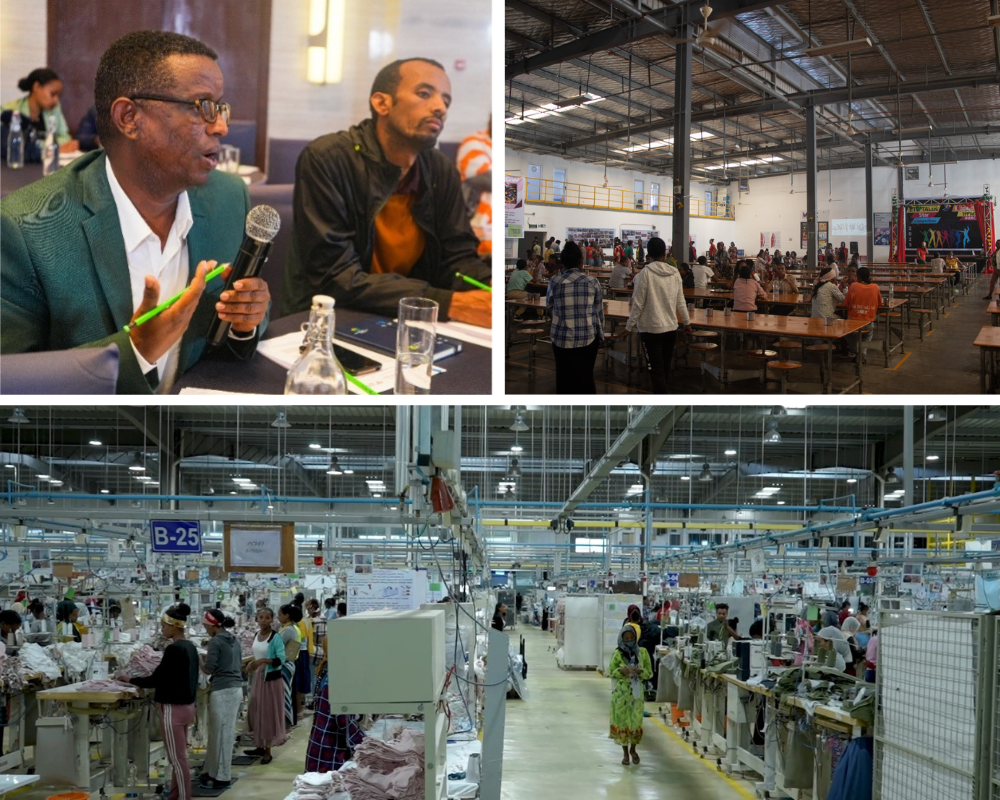

Industry Collaboration and Practical Implementation

Industry Collaboration and Practical Implementation However, awareness creation, alliances with other stakeholders, continuous engagement, of the workforce nutrition interventions gradually strengthened industry buy-in. At the factory level, managers are now actively collaborating and moving forward with practical implementation of the workforce nutrition interventions, including optimising the existing workplace meal services and improving workers’ nutritional awareness. 

The contribution and outcomes of the intervention on their employees’ attendance, loyalty and motivation are recognized and appreciated by the factory managers, who then share their testimony as a lesson for other factories and large-scale farms. “We understood from the workshops the benefits we, as an organisation, would get from workforce nutrition - like in productivity, fewer sick leaves and lowered absenteeism, employee satisfaction.” Natnael Gosaye (HR Manager, Kingdom Ethiopia Linen PLC)

As confidence in the intervention continues to grow, implementation is also expanding across the sector. Today, 15 textile industries with about 36,000 workers are engaged in implementing a workforce nutrition program. GAIN is further expanding the collaborative intervention to 23 companies, of which 8 are textile industries and 15 are large scale farms. 

The project team learned a lesson in understanding target audiences from engaging the private sector in workforce nutrition programs - such as considering the busy work schedule of industrial workers and adapting processes, such schedule flexibility, Industries’ management and the IPDC leadership now champion workforce nutrition, as a matter of duty to their employees, and believe it could be a strategic move that improves their companies’ productivity. 

“This enhanced menu is a reflection of our shared responsibility.”

— Mr. Matheos Ashenafi, Manager: Hawassa IPDC

Championing Health, Productivity, and Progress

Today, beyond the shared understanding that workforce nutrition is linked to improving workers productivity, the management sees this initiative as a means of national development. "What GAIN is doing [Workforce Nutrition] is what we should be doing as a nation! The young workforce is something we need to support,” says Yemane Gosaye, Deputy General Manager of Shint’s Textile.

As for the employees, they are excited to see their meals offer more.  

“The food here has transformed,”

— Kassech, an employee at Tal Garment in Hawassa.

Another employee at the factory, Mulunesh, reflects on changes she feels since the introduction of a new menu “I don’t feel dizzy anymore. I’m not as tired as before.

GAIN will continue to support the sector in adapting workforce nutrition programmes. Our next plan of action focuses on strengthening the ongoing work through continuous technical support and expanding the project intervention to large-scale flower farms and other sector industries. 

For scaled impact, strengthening our collaboration with high level key actors and stakeholders, generating evidence, and advocating for policy shifts on workforce nutrition will take centre stage.