
Ibnu Budiman
Environment Manager
How does climate change affect not only how much food we produce, but also the nutritional quality of the food we consume?
Climate change is already affecting Indonesia through rising temperatures, changing rainfall patterns, sea level rise, droughts, floods, and increasingly frequent hydrometeorological disasters. Without adequate interventions, economic losses from climate change are projected to increase significantly in the coming years.
While most climate adaptation efforts focus on agricultural productivity and food security, evidence increasingly shows that climate change also affects the nutritional content of food itself. This emerging risk has not yet been explicitly integrated into Indonesia's Pembangunan Berketahanan Iklim (PBI) or Climate-Resilient Development and National Climate Adaptation (NAP) framework.
Indonesia continues to face a triple burden of malnutrition, including undernutrition, micronutrient deficiencies, and overweight or obesity. Despite progress, stunting remains at 19.8% among children under five, while one in four adolescent girls experiences anemia (MoH 2025). At the same time, more than 23 million Indonesians are still unable to meet their nutritional needs, and blue food continues to play a critical role in supplying dietary protein nationwide.
Climate change threatens to exacerbate these challenges by reducing the availability and quality of nutrient-rich foods and by increasing vulnerability among already at-risk populations, including children, pregnant women, and coastal communities.
One of the most striking findings relates to rice, Indonesia's primary staple food.
Given that rice contributes more than half of daily calorie intake and over one-third of protein consumption in Indonesian households, the implications for public health are substantial.
Indonesia's oceans are also under pressure.
The study highlights projections showing a 20-30% decline in marine capture fisheries potential by 2050 under high-emission scenarios. Rising sea temperatures are causing coral bleaching, habitat degradation, and shifts in fish distribution patterns.
This is particularly concerning because fish provide highly bioavailable protein, calcium, iron, zinc, and omega-3 fatty acids. Climate-driven disruptions to blue food systems therefore represent both an environmental and nutritional challenge.
For coastal communities, these impacts directly affect livelihoods, food security, and child nutrition outcomes. There was a direct causal link between El Niño-induced coral bleaching caused by rising sea surface temperatures and a 29.6 percentage-point increase in the probability of severe stunting among children in fishing households.
The study identified three principal pathways through which climate change degrades nutritional quality:
High temperatures reduce crop productivity, disrupt pollination, and lower protein accumulation in cereals and legumes.
Water deficits impair nitrogen fixation, reduce mineral uptake, and lower the nutritional content of crops such as legumes and vegetables.
Heavy rainfall leads to nutrient leaching, waterlogging, and post-harvest nutrient degradation, particularly for temperature-sensitive vitamins such as Vitamin C.
The study identifies several highly vulnerable food groups: Rice and other cereals crops, Marine fisheries, and Groundnuts.
Meanwhile, several climate-resilient food options emerged as promising alternatives: Cassava, Sweet potato, Sorghum, Millet, Indigenous leafy vegetables, and other climate-adapted local food crops
These findings underline the importance of dietary diversification and climate-smart food systems.
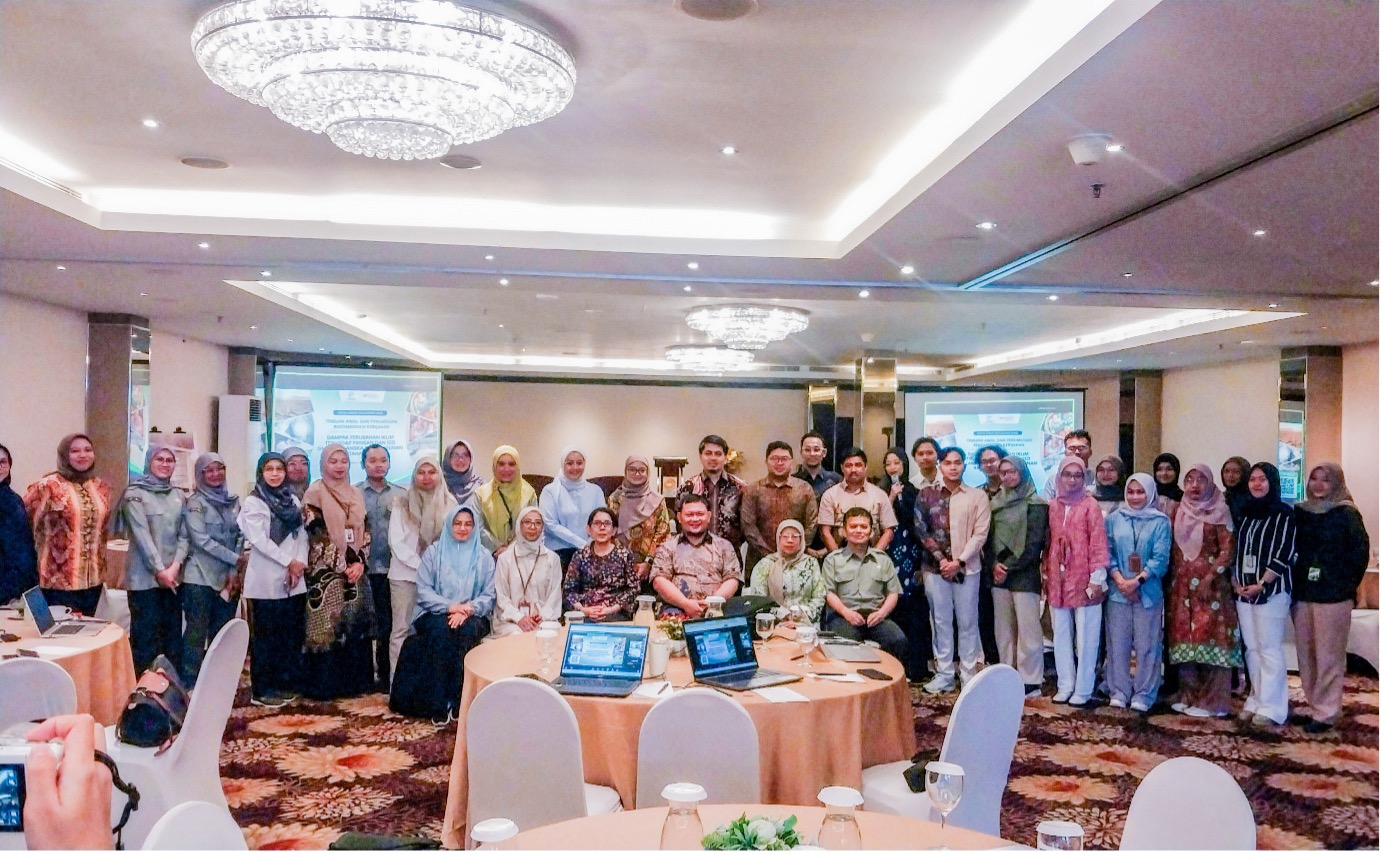
This blog was written following a multi-stakeholder Focus Group Discussion (FGD) on 31 August 2026, organised by Kementerian PPN/Bappenas (Ministry of Planning) together with Global Alliance for Improved Nutrition (GAIN) Indonesia, on Initial Findings and Policy Recommendations on the Impacts of Climate Change on Nutrition Composition among Food Groups. A key objective of the FGD was to gather expert feedback to strengthen future policy recommendations and incorporate nutrition considerations into Indonesia's climate resilience policy.
Environment Manager