Elizabeth Maddison
Director, Strategic Operations
Recently, I accompanied a friend from undergraduate days speaking at a women’s alumni event, on how women can thrive in the workplace. My friend founded and runs an award-winning business with majority women staff including in senior leadership. The event explored shared insights from 40 years of women graduates, to support younger women graduating today. As a parent of a one such young woman, I was keen for tips and insight.
Inevitably, much of the discussion was anecdotal and that’s fine - after all, if you can’t imagine it, you can’t realise it. But it got me thinking about how GAIN’s commitment to gender has evolved since the first Global Health 50/50 report and the importance of systems and structures which the reports explore and expose. And it prompted reflection on the context in which young women – including my daughter - are graduating today.
GAIN has taken part in GH50/50 since it started, because we are committed to assessing ourselves against global comparators using its independent scorecard. The reports have a set of constant indicators but a different focus each year, giving a time-series but also a provocative fresh ‘take’ each year. Whilst it is relatively light-touch to complete, assembling the information requires us to think hard about what we say and what we do: we try to have something extra to say each year and we try to challenge ourselves using the reflections offered in the successive reports.
Leadership and pay are obvious, powerful and critical places to start and the Index counts both, consistently.
Globally, we know from UN data that it will take more than 100 years to achieve gender pay equity; more than 140 years to achieve equal representation in positions of power; and more than 40 to achieve balanced representation in national parliaments.
More than 100 years for gender pay equity. More than 140 years for equal representation in positions of power. More than 40 years for balanced representation in national parliaments.
For GAIN, in response to one of the early GH50/50 reports, our Board adopted two targets for its voting members - that at least 50% should be women and at least 50% should have significant lived experience in the Global South. We have achieved both targets. We have a woman Board Chair and woman Vice Chair. 10 out of 19 senior leaders are women.
GAIN also measures other operational activities by gender – including pay, promotions, representation and decision-making, participation in learning and development. We look across our policies and support for staff to see where we can improve, with examples including wellbeing sessions on women’s and men’s health, on neurodiversity, on the menopause, and valued sessions for women staff with women Board members. The intention is to build an organisation where women can thrive. We test this with regular surveys in which we disaggregate responses by gender and ask ourselves what the daily experience for women is working at GAIN.
At GAIN
The intention is to build an organisation where women can thrive.
GH50/50 therefore helps keep us ‘on task’. For the last few years, GAIN has featured in the strongest performing category. In 2026, we are in the top 19 of nearly 300.
GH50/50 2026
GAIN is in the top 19 of nearly 300 organisations assessed.
GAIN’s Board holds us to account for that ranking. Our standing gives us credibility when talking with donors looking to invest and job candidates looking to join us as a staff member.
Importantly, this credibility owes as much to our work in the field as in the office: we believe you cannot have one without the other.
We believe you cannot have one without the other.
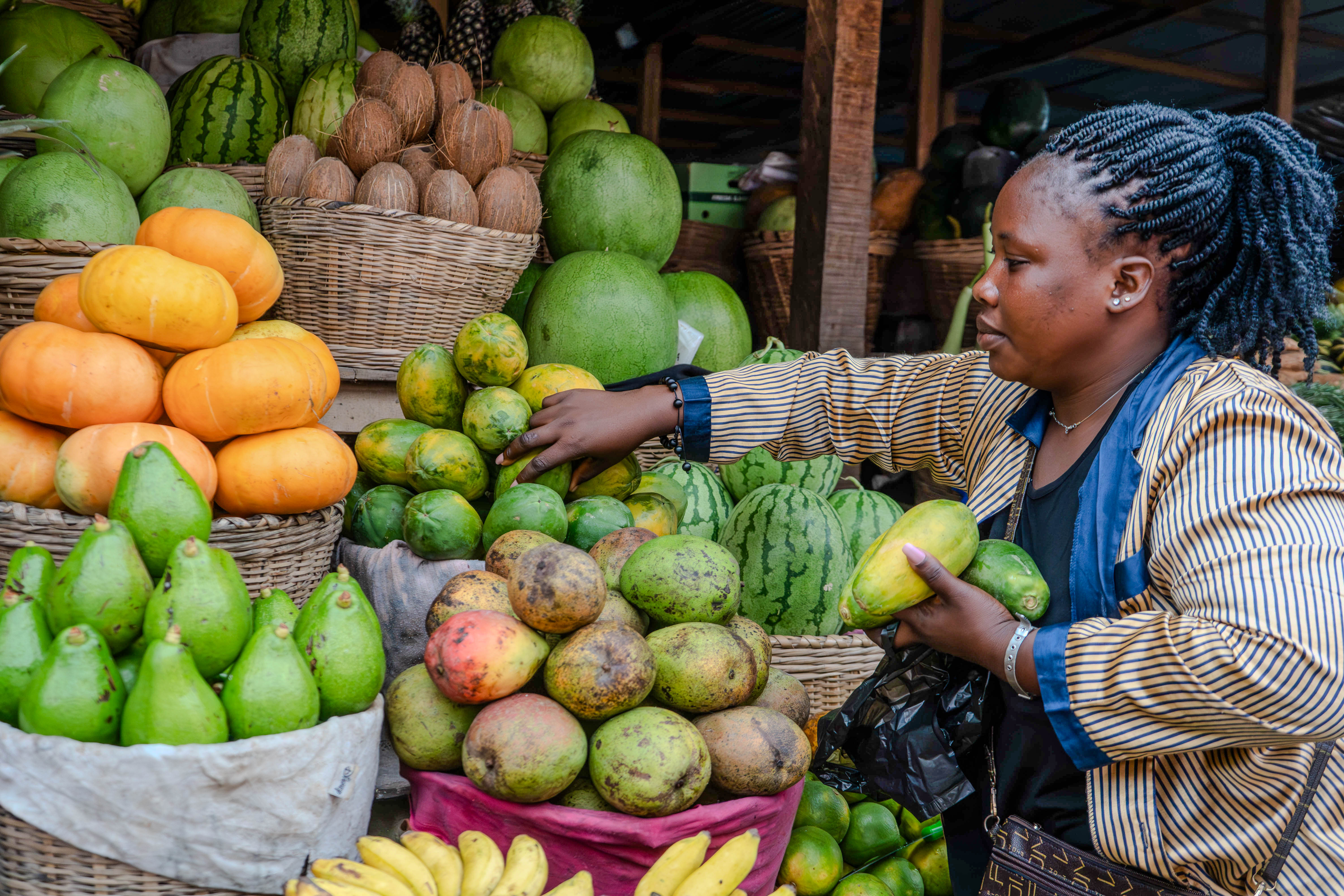
In the same week as the GH50/50 2026 launch, our Board explored emerging data from the hugely ambitious ‘Vegetables For All project’ in Kenya, which promotes increased consumption of leafy vegetables. Whilst the data show a positive uptick in consumption, some of the most powerful impacts are across the nearly 13,000 participating Mama M’boga’s – the almost entirely women-owned street market stalls selling vegetables to consumers near the bottom of the income pyramid in and around Nairobi. The Mama M’boga’s participation has included nutritional education, new sales and marketing techniques and a different approach to food quality and food hygiene. In two years, their sales of leafy green vegetables have increased by 41%, or 8 customers a day – equivalent to 37m purchases a year. That’s good for nutrition and families – and potentially life-changing for the Mama M’boga’s.
Vegetables for All
In two years, their sales of leafy green vegetables have increased by 41%, or 8 customers a day – equivalent to 37m purchases a year.
But our work in the field takes place against the backdrop where we know that crises affect the vulnerable first and most deeply and that the vulnerable will always be largely women and girls. We know Covid 19 had more profound impacts on women and girls – including through increased gender-based violence and increased unpaid care work, amplifying pre-existing vulnerabilities.3 In 2025, the GH50/50 report noted a rolling back of gender commitments in the face of political attack from the new US administration (albeit now with some welcome signs of recovery in 2026).
Newly emerging crises threaten real progress. Another report published in the same week as GH5050 2026, from Plan International, shows how climate change disproportionately impacts women and girls, including via decreased education and health outcomes, increased unplanned pregnancies and increased child and arranged marriage.4 The 2024 Notre Dame Global Anticipation Initiative (which ranks 190 countries for their readiness and exposure to climate change) includes only one of GAIN’s 12 countries in the top half of that index. 5 This is not auspicious for gender progress.
This is not auspicious for gender progress.
And we know that AI is deeply gendered. Many LLMs perpetuate and intensify gender bias. This is powerful in shaping how users see the world; and the impact on labour will also likely be gendered, reflecting existing labour market inequalities 6 7
Given these huge external forces, for GAIN to retain and restate our commitment to gender equity – to counting what matters, to quiet innovation in how we are as an organisation, to telling the truth about gender and to consistent championing in our programmes – is an imperative. We and other organisations need to imagine ‘better’; we have data from GH50/50 that shows us what ‘better’ looks like and examples of policies that support ‘better’ into practice. We can and should use these reports not just to imagine ‘better’ but to choose and create ‘better’- with our staff and those with whom we work, so young women entering today’s workforce can thrive.
Director, Strategic Operations