Kenya Takes a Giant Leap Toward Food Systems-Based Dietary Guidelines
A landmark four-day workshop in Nakuru brings 29 technical experts together to shape what Kenyans eat — for generations to come.
Blog, 28th May 2026
A landmark four-day workshop in Nakuru brings 29 technical experts together to shape what Kenyans eat — for generations to come.
Blog, 28th May 2026
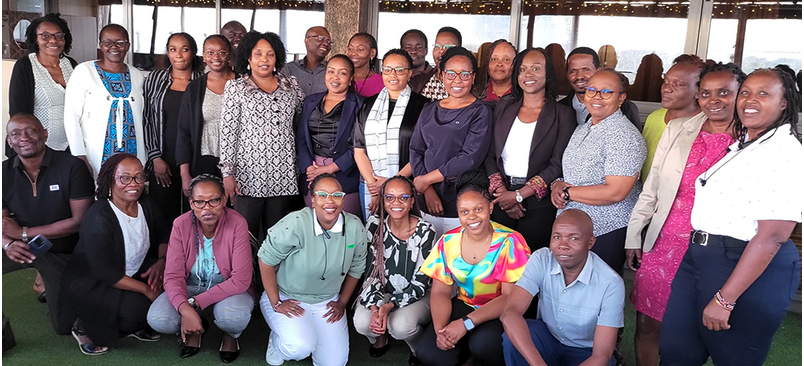
That is precisely what Kenya is building. From 12–15 May 2026, a multi-disciplinary team of nutrition scientists, policy experts, academics, and development partners gathered at Oleken Hotel, Nakuru, for the most technically intensive session yet in the development of Kenya's first-ever Food Systems-Based Dietary Guidelines (FSBDGs). FOLU Kenya, operating through GAIN Kenya, is proud to be a convening and coordinating partner in this transformative process.
Kenya is in the grip of a triple burden of malnutrition: 18% of children under five are stunted, 41.6% of pregnant women are anaemic, and nearly half of women of reproductive age are overweight. Meanwhile, diet-related non-communicable diseases cost the country an estimated 6.9% of GDP every year. These are not isolated statistics — they are symptoms of a food system that is not working for everyone.
The FSBDGs represent Kenya's most ambitious response to date. Unlike traditional dietary guidelines that focus narrowly on nutrients, Kenya's new guidelines will integrate health, environmental sustainability, cultural appropriateness, economic feasibility, and food system dynamics — following the FAO's gold-standard six-stage methodology.
“
The technical decisions made in the coming months will shape dietary guidance for millions of Kenyans for years to come.”
”
The Nakuru workshop was designed as an immersive, residential working environment — the kind of sustained, focused deliberation that complex technical decisions demand. Here is what was accomplished:
| ✓ | All four SAER thematic sections reviewed and validated with substantive technical inputs from the full task team. |
| ✓ | Two diet modelling tools — FAO DietSolve and SNI iOTA — explored in depth through back-to-back hands-on sessions. |
| ✓ | Diet Modelling Decision Matrix deliberated in plenary; FAO DietSolve identified as most aligned with Kenya's national FSBDG process. |
| ✓ | Initial population cohort framework agreed for diet modelling across five age and life-stage groups. |
| ✓ | Terms of Reference for the Multi-Technical Task Team reviewed and progressed toward formal adoption and signing. |
| ✓ | Steering Committee structure and TOR agreed and shared. |
At the heart of the workshop was a rigorous, group-by-group review of the Situation Analysis and Evidence Report — the foundational evidence document that will underpin Kenya's dietary recommendations. Four thematic groups presented their revised sections and received plenary inputs:
Group 1 — Policy Landscape:
The group surfaced a critical insight: Kenya has excellent policies on paper, but systemic implementation failures persist. Participants pushed for a guidelines framework that is actionable — with explicit links to county budget cycles, the government's current manifesto, and a built-in mid-term review mechanism. Coherence with the Food and Nutrition Security Policy and School Health Policy — both under active review — was flagged as a priority.
Group 2 — Food Systems Landscape:
The food production analysis was significantly strengthened. Participants called for full representation of Kenya's seven agro-ecological zones, inclusion of fisheries (including Lake Turkana) and livestock, a complete food value chain analysis, and elevation of food loss and waste — estimated at up to 50% in Kenya — as a cross-cutting priority.
Group 3 — Nutrition and Health Status:
The group applied methodological rigour — pushing back on over-reliance on a single data source, calling for neutral scientific language throughout, and affirming the 'triple burden' framing — undernutrition, micronutrient deficiencies, and overweight/obesity — as the central lens for the entire document.
Group 4 — Emerging Issues and Underlying Causes:
Urbanisation, climate change, food safety, and technology's double-edged role in nutrition knowledge were the defining themes.
A particularly innovative discussion emerged around 'food sheds' — the geographic regions that supply food to non-producing areas — as a strategic entry point for food system intervention.
Perhaps the most technically intensive sessions of the week were the deep dives into two cutting-edge diet modelling tools. These tools are the engine room of Kenya's FSBDGs — they will determine what recommended dietary patterns actually look like for each population group.
| ⭐ FAO DietSolve Recommended for Kenya | SNI iOTA Model Also Explored |
|---|---|
|
|
Following both deep-dive sessions, the plenary reached a clear directional consensus: FAO DietSolve is the most appropriate tool for Kenya's national FSBDG process, given its peer-reviewed methodology, free accessibility, FAO's confirmed in-country technical support, and proven track record across countries with similar data environments.
“
DietSolve seems to be the most ideal for the national process — it already has technical support available, and we are running out of time to deliver the guidelines within the agreed timeframe.
”
One of the most consequential decisions in any dietary guideline process is determining for whom the guidelines are written. Dietary needs differ dramatically by age, physiology, and life stage. The Nakuru workshop reached an initial consensus on five cohort groups for diet modelling:
| Population Group | Rationale |
|---|---|
| Children under 5 years | Highest vulnerability to stunting, wasting, and micronutrient deficiencies |
| Adolescent girls (10–18 years) | Elevated anaemia risk, undernutrition, and early pregnancy nutritional deficits |
| Women of reproductive age (15–49 years) | Pregnancy and lactation requirements; highest national overweight/obesity burden |
| Adult men and women (19–59 years) | General population dietary patterns and NCD prevention |
| Older persons (60+ years) | Emerging micronutrient deficiency and NCD-related nutrition concerns |
With the Nakuru workshop complete, Kenya is well-positioned to move directly into comprehensive diet modelling under Stage 3. The action plan below sets clear, time-bound milestones:
| 1 | Finalise the revised SAER incorporating all technical inputs |
| 2 | Formally document collective decision on FAO DietSolve as Kenya's national diet modelling tool |
| 3 | Circulate MTTT Terms of Reference for signing by all 29 members |
| 4 | Convene inaugural Steering Committee breakfast meeting |
| 5 | Complete Conflict of Interest declarations for all Task Team members |
| 6 | Commence comprehensive diet modelling under Stage 3 |
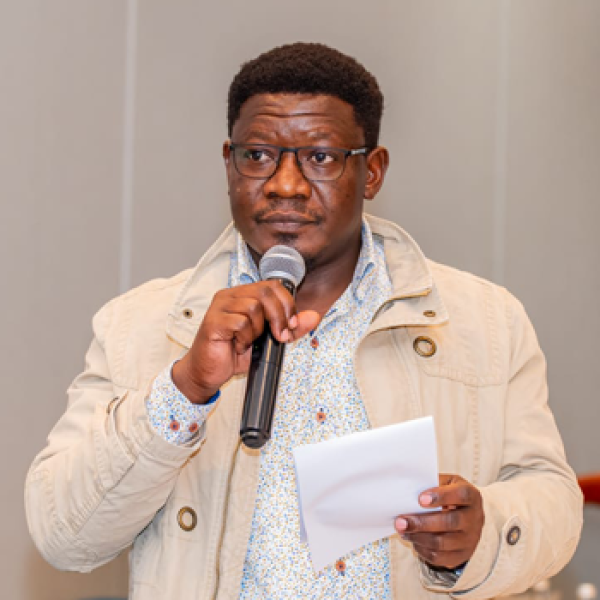
Project Coordinator, FOLU.